

Stormworks: Build and Rescue

Stormworks: Build and Rescue

评价数不足
SM Type 3 | Multipurpose missile
   
奖励
收藏
已收藏
取消收藏
文件大小
发表于
更新日期
1.028 MB
8 月 16 日 下午 12:58
10 月 11 日 上午 6:34
5 项改动说明 ( 查看 )

订阅以下载
SM Type 3 | Multipurpose missile

描述
Changes from SM Type 2
  • Improved tracking performance
  • Radar gimbal support
  • Increased active radar range
  • Compatible with general-purpose VLS standards
  • Impact sensor removed
  • Cruising altitude can now be changed in properties

Overview
  • Multi-purpose vertical launch missile
  • P missile Shoot-down rate approximately 94%
  • Command guidance + active radar homing
  • Uses new radar
  • Equipped with a medium warhead
  • Length 4.75m, 204 mass
  • Maximum speed approximately 200m/s Approximately 8km range
  • Compatible with ELI1/ELI2 and MTX1 inputs
  • Easy expansion
  • Equipped with cruise mode, top attack mode, and sea skimming mode
  • Laser coordinate specification and manual coordinate setting possible
  • Includes FCS Type 3A, FCS Type 6, VLS Mk. 10, HMD V3, and Map V3

Description
This is an improved version of the SM Type 2. Variable sample count least-squares linear approximation method achieves both accuracy and tracking. The kill rate for P missiles at 200m/s is approximately 94%.
It is also designed for submarine launch, so it can be launched from underwater.
If the target is lost en route, it will proceed toward the target based on the information transmitted up to that point.
Please adjust engine power as needed.

Flight Mode List
1: Direct Attack Mode
Fly straight toward the target immediately after launch. Designed for anti-aircraft use.
2: Normal Cruise Mode
Cruises at a constant altitude.
The default cruise altitude is (target altitude) + 100 m.
3: Top Attack Mode
Cruises at a high altitude and attacks the target vertically from directly above.
The default cruise altitude is (target altitude) + 1000 m.
4: Sea Skimming Mode
The default cruise altitude is 5 m above sea level.

How to Use
Lock-on with FCS Type 3A (ELI Guidance)
  1. Turn the FCS key to turn it on and lock onto the target.
  2. Use the up and down buttons to select the flight mode.
  3. Turn the active radar on or off.
  4. Turn the key to release the safety and press the launch button.

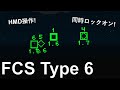
Lock-on with FCS Type 6 (MTX Guidance)
  1. Turn the FCS key to turn it on.
  2. If you want to lock on and launch immediately, press the VLS launch button at this stage. If you want to launch all at once later, press the launch button when you want to launch all at once.
  3. Sit in the seat and center the HMD on the target you want to lock onto.
  4. Shortly press the space bar to select the target.
  5. Use the up and down buttons to select the flight mode.
  6. Turn the active radar on or off.
  7. Press and hold the spacebar to lock on and fire.

Specifying Coordinates Manually
  1. Enter the coordinates of the target point.
  2. Turn on the Manual Coordinate Specification button to enable manual coordinate specification.
  3. Use the up and down buttons to select the flight mode.
  4. Turn the active radar on or off. If the active radar is on, it will charge toward the object closest to the destination that appears on the radar.
  5. Turn the key to release the safety and press the fire button.

How to Install
  1. Copy the VLS and place it anywhere you like.
  2. Connect the To VLS node output from the Central Control Unit to the Central Control Unit node of each VLS.
  3. Connect the VLS hardpoint / radio / next launcher nodes to the Previous Launcher in the order you want to launch the VLS. Connect the last VLS node to the from last VLS node on the Central Control Unit.
37 条留言
MumenR  [作者] 12 月 12 日 下午 10:04 
By the way, this system identifies targets by equally evaluating all radar responses, regardless of the order of responses.
MumenR  [作者] 12 月 12 日 下午 10:02 
I have not implemented a system that changes the guidance method depending on the number of radar responses, so there may be other causes, such as inappropriate PID gains.
At least, I understand that the ground-based type operated normally no matter how many radar responses there were.
MumenR  [作者] 12 月 12 日 下午 9:58 
By inputting four times the input value to the radar gimbal into the laser, the direction of the radar gimbal can be visualized.
OSCH04 12 月 12 日 上午 8:53 
OSCH04 12 月 12 日 上午 8:49 
I tested a bit more and I’m still confused. I think that when two targets are close together inside the radar cone, the missile starts to wobble and then spin. The distance to the target itself doesn’t seem to be the problem.
Could it be that you are only using the input for the first target?
Which would cause the missile, upon seeing two targets with nearly equal signatures on the radar, to constantly switch between them and become unstable.
Even more interesting is that it becomes stable again after re-locking onto the plane.
https://youtu.be/amyjSA5VNzE
OSCH04 12 月 12 日 上午 8:23 
It’s not the plane. After a bit more testing, even when it locks onto the plane after launch, it still follows the GPS.
When there are multiple targets close together, it starts spinning.
OSCH04 12 月 12 日 上午 8:08 
i put a laser on it that is connected to the same node as the Radargimbal but i cant really tell mutch if that is the issue
OSCH04 12 月 12 日 上午 7:45 
how can i do that ?
MumenR  [作者] 12 月 11 日 下午 8:08 
It's possible that the active radar is locking onto the aircraft. Visualizing the gimbal direction of the active radar might be useful for debugging.
OSCH04 12 月 11 日 上午 9:21 
maybe matrix ploblem is related to this