


安装 Steam
登录
|
语言
繁體中文(繁体中文)
日本語(日语)
한국어(韩语)
ไทย(泰语)
български(保加利亚语)
Čeština(捷克语)
Dansk(丹麦语)
Deutsch(德语)
English(英语)
Español-España(西班牙语 - 西班牙)
Español - Latinoamérica(西班牙语 - 拉丁美洲)
Ελληνικά(希腊语)
Français(法语)
Italiano(意大利语)
Bahasa Indonesia(印度尼西亚语)
Magyar(匈牙利语)
Nederlands(荷兰语)
Norsk(挪威语)
Polski(波兰语)
Português(葡萄牙语 - 葡萄牙)
Português-Brasil(葡萄牙语 - 巴西)
Română(罗马尼亚语)
Русский(俄语)
Suomi(芬兰语)
Svenska(瑞典语)
Türkçe(土耳其语)
Tiếng Việt(越南语)
Українська(乌克兰语)
报告翻译问题






 奖励
奖励


 4
4 


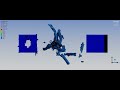
Also for reproduction purposes the processor used whould be a nice thing to know, as the simulation time of 8 hours means something different on an fx6350 laptop than it does on an ryzen 7 desktop pc. Or are the simulation very simple and you just hit rerun for 8 hours.
If you have a modern setup and it took 8 hours to simulate such an relative simple test assembly it would be a tad bit discuraging to try and simulate this assembly filled with aerogel and adjusted wipple shield and main hull material as i might not get to use my pc until new year.
And excerpt to me sounds like what i was describing.
Furthermore it really might be a bug as i cant detect any entry point on the ship i shot at and yet the back end of the opposing craft is shredded.
Though I would love to see a realistically simulated impact of a 1 gram, 5 meter rod of osmium hitting different types of armor at 102 km/s to really see how far off from actual reality we are here.