

1 人觉得这篇评测有价值
推荐
过去 2 周 0.0 小时 / 总时数 25.0 小时
发布于:2018 年 8 月 21 日 上午 11:17
更新于:2018 年 8 月 26 日 下午 4:54

Behold, Child
Basic premise/Story

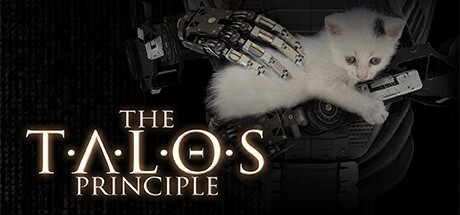
From Developer studio Croteam comes a new IP of a first person/third person narrative puzzle game. Risen from slumber, you play as an autonomous robot who’s tasked by a voice in the sky called Elohim to collect sigils. Sigils in the form of Tetris models. You have to complete a set of the Tetris models and then can you proceed to unlock doors using these models. However, before you can receive a sigil, you need to work for it. Each sigil is blocked by a puzzle, and each puzzle is designated with a number for teleports. Each number teleports you to a small hub where several puzzles are placed. You must solve each of these puzzles and receive your sigils to progress according to Elohim. Of course, it’s also likely that these sigils within these teleport hubs aren’t the only one to look for. Perhaps something lies greater beyond the walls, grounds, and horizon beyond.

The Path to Learning Never Ends
Unique Gameplay to be aware of

Several tools are essential when entering these puzzle levels like Jammers which can unjam blue obstacles in your path that leads to a new corridor or pathway. These jammers are also useful in other mechanical pursuits in jamming electronic devices. The second tool you’ll be familiar with is connector modules. These connector modules are capable of relaying a power source usually designated as blue or red to a relay point connector to power or door or another device.

There are other tools that will become usable as you progress further into the game. And each tool within a puzzle level is instrumental to the overall gameplay design to complete a puzzle and collect your sigil. It should be noted, that you can’t cheese other puzzles by bringing the tools from one puzzle into another. Each puzzle level is blocked by a purple entrance doorway that blocks the tools from being usable in other puzzles. Trust me, I wanted to cheese it, but couldn’t. Although… If you do think hard enough it is sometimes possible in order to collect rare star sigils to unlock a more challenging hub level puzzle.

It’s also vital to understand dying in Talos principle resets the current progress you have already achieved to work to collect a sigil. Dying can occur through enemies like moving mines Or machine gun turret placements. Staying out of the range of these enemies is a foreseeable and likely outcome than trying to witness death once more. But, this detriment isn’t really a deal breaker because each puzzle doesn’t take very long to complete. Some puzzles can even be completed in less than thirty seconds or less!

The Nature of the Worlds
The Graphics

The game takes several liberties and inspiration of Greek mythology that some worlds built in the likeness of ruins of Rome, and even medieval architecture. I could see the roughness of the texture of each brick and the swaying grass is spread evenly throughout. Even trees are no strangers to admire at and the ensuing shadows from the trees create a lifeless world to move in. This lifeless, lonely world is a solemn setting. Oftenly, being in a lonely world would be a sad sobering thought. But, The Talos Principle manages to grasp your attention with great detail towards each puzzle and each teleport hub. Every time I would go to a new hub world I’m astounded by the differences each makes. Sure aesthetically they follow a theme in each hub world, but the contents are different and easy on the eyes to appreciate. It’s even cooler as you progress through the game and unlock new world hubs to explore.

Instrumental Peace
The Usage of Sound And Music.

Piano, soothing tunes, and tranquil atmosphere all enhance the overall sound design. The low drums permeate in certain songs giving off a flair of peace and ominous tingles. It’s a bewildering and bewitching sound design that is complemented by a mystical and not mystical soundtrack. There are many instrumental relaxing tracks in Talos Principle, that it became routine for me to finish puzzles so quickly only to walk around each hub world and enjoy the tranquil atmosphere just bursting to be heard and appreciated. It’s a liberating, powerful and memorable set pieces that served to heighten my playthrough.

Final Words
Final thoughts/Ruminations

In my over twenty hour playthrough with The Talos Principle, I found it to be quite puzzling. It’s weird. In a good appreciative manner. First, I initially thought the game would be very challenging to the point of taking hours for each puzzle. I’m really glad I was wrong. Instead, Some puzzles require thinking ahead 3 maybe 5 or more steps ahead. Kind of like chess in a way. By no means, do I mean the puzzles become something like “Oh crap, need to think seven steps ahead." The puzzles vary in difficulty and range from easy to moderate. And it’s a slow pace to ease players in the overall structure and perhaps what strategy one should employ. In a weird way, at least in my playthrough, each puzzle level was titled which helped me countless times to solve puzzles. I'm not sure if the name of the puzzle level was intended that way or if it's just me. More often than not, I was exploring ruins of each hub world and reading data entries from the past usually on various topics from pop culture, work emails, philosophy, history, and more.

While I won’t say any spoilers it’s nice to know the lore and background of the world you live in is broken up in parts in data entries in computers and time capsules in the form of audio logs by a certain recurring programmer named Alex. Alex’s time capsule audio logs were a nice touch to add the game and brings more meaning in the creation of all things of what shall be, what has been, what has lived, and more.

By the end of my playthrough, I’m super glad I took the time to read the data entries and listen to Alex’s audio logs to present a clearer image of the world you live in. While players can skip these data entries and audio logs, I would highly recommend reading some of it for anyone curious for the background and lore of the world.

The game ran beautifully after tweaking some settings to maintain a constant 60 fps, and there were loads of settings to tinker to adjust towards your preference. The game could’ve ended much earlier, but I took my time wandering around and reading the lore of the game. There are a lot of puzzles, over a hundred. And I’ll admit there were more than probably ten that really pushed my brain’s processing power to its utmost limit. Yet, by the final puzzle and self-reflecting most of those moments were “D’oh or why didn’t I try this?” The game loves to play around with boundaries and limits and the capabilities of each tool to their fullest capability. I encountered lots of brilliant puzzles that led me to think in a circumspect manner. It's doable, don’t get me wrong. The Talos Principle plays remarkably, the gameplay is nothing to scoff at it, and the soundtrack complements the overall aesthetic in theme match with settings. The slices of crossbreed in philosophy and other branches stretching even deeper notions to ponder. Were a welcome treat to read and listen to.

Developer studio Croteam have created a narrative beauty paying excellent homage to some of the greatest philosophical debates recorded in human history. Yet, beneath the game’s varied ruins, a nameless leading android robot, and booming voice in the sky. Lies a worthy puzzle narrative game that endeavors to be something greater. Beyond the discussions. Beyond puzzles. And most certainly, beyond the gameplay lies a new spin on narrative philosophical gameplay to immerse new players with the wonders of worlds within words.

Total Times Beaten: 1
Score: 9/10
(Score is based off how much I enjoyed the game)
Date Finished: 8/20/18
Date Reviewed: 8/20/18
Date Posted: 8/20/18
Date Edited: 8/20/18, several paragraphs cut to fit into steam review.
这篇评测是否有价值? 欢乐 奖励