


安装 Steam
登录
|
语言
繁體中文(繁体中文)
日本語(日语)
한국어(韩语)
ไทย(泰语)
български(保加利亚语)
Čeština(捷克语)
Dansk(丹麦语)
Deutsch(德语)
English(英语)
Español-España(西班牙语 - 西班牙)
Español - Latinoamérica(西班牙语 - 拉丁美洲)
Ελληνικά(希腊语)
Français(法语)
Italiano(意大利语)
Bahasa Indonesia(印度尼西亚语)
Magyar(匈牙利语)
Nederlands(荷兰语)
Norsk(挪威语)
Polski(波兰语)
Português(葡萄牙语 - 葡萄牙)
Português-Brasil(葡萄牙语 - 巴西)
Română(罗马尼亚语)
Русский(俄语)
Suomi(芬兰语)
Svenska(瑞典语)
Türkçe(土耳其语)
Tiếng Việt(越南语)
Українська(乌克兰语)
报告翻译问题

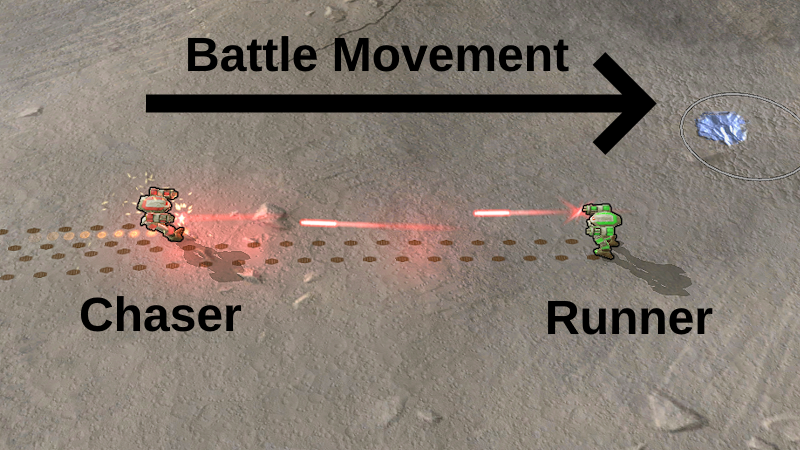 The paradox of the retreat range bonus is that it was not added; it is just the inevitable result of the common type of game physics. If a game physically simulates its projectiles, then it probably has some form of retreat range bonus. Many, possibly all, first-person shooters have it, and there might even be a term for it in that space. Games like Supreme Commander and Planetary Annihilation should have it too, but to this day I have not found any discussion of retreat range in those games. I am often met with confusion when I ask people about it, even after explaining the generality of the mechanism.
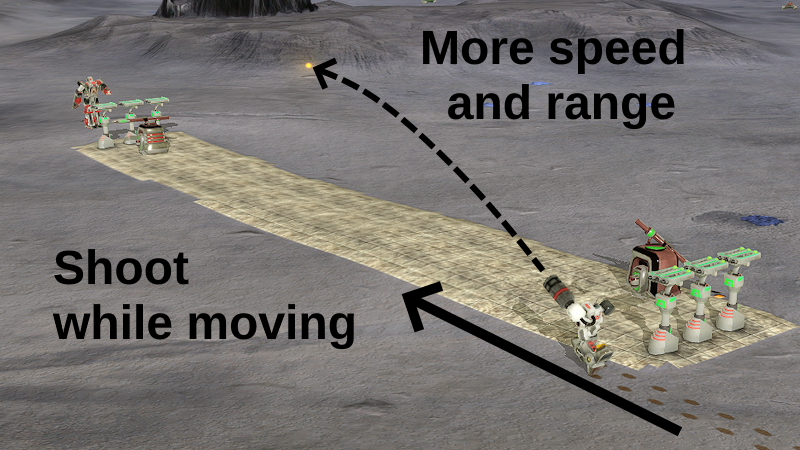 So far so good. The retreat range bonus is baked into the game, and removing it would make less sense than leaving it in. The problems arise when we consider the tactical implications. The Chaser-Runner battle can be in one of three states, depending on the distance between the participants:
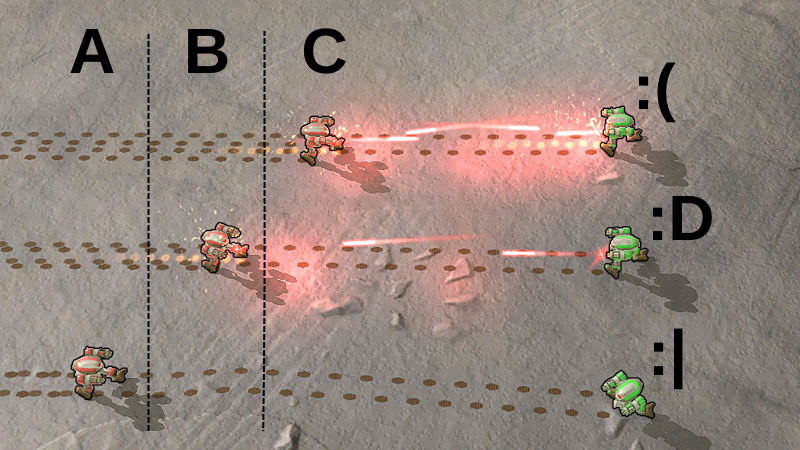 The retreat range bonus came up as part of a broader set of feedback about the swinginess of the early game. In short, some 1v1 players felt like too much hinged on the first few raider engagements, and that too few games made it out of this stage. This was by no means a universal take, but it was prevalent enough to be worth some experimentation, as we could end up somewhere that most people would prefer. Chasing feedback from players that are particularly sensitive to an issue can be useful, as this can reveal things that generally improve the game, yet were below the complaint threshold for most people. The feedback and testing culminated in the Superfluid Update
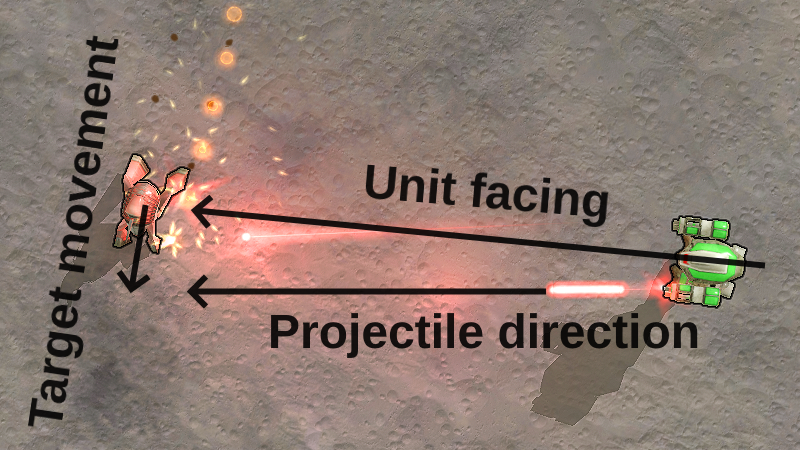 On the technical end we removed the retreat range bonus by forcing units to not lead their shots, then hacking physics to cause their shots to lead themselves. Every time a Bandit shoots, its projectile is reoriented slightly to point towards the predicted location of its target. This lets raiders shoot very slightly beyond their range, breaking the No Void Ray rule, but their high projectile speed makes the effect barely noticeable. Unless you pause the game, zoom in, take a screenshot, then draw some arrows. If you cannot unsee the small deviation ingame, then I am sorry, but that is the risk we take when pulling back the curtain.


 奖励
奖励 2
2


 Introduction to Unit Classes and Factories


 Basic Gameplay / Multiplayer Guide
 Introduction to Basic Economy
 Anti-Turtle Tactics


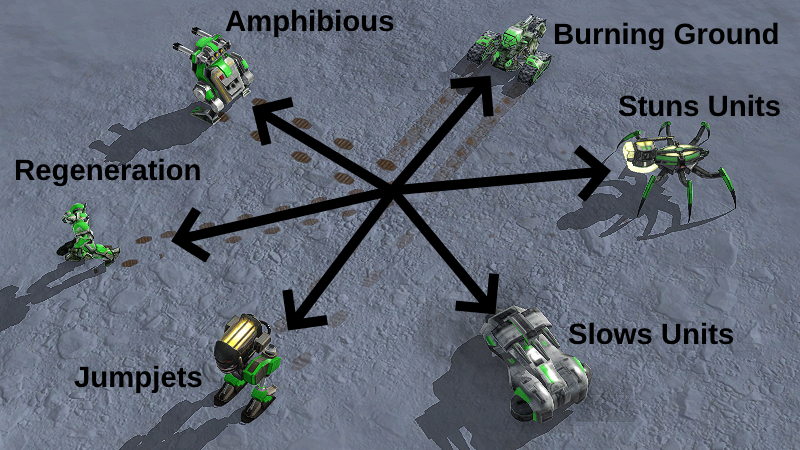 Some design principles encourage special abilities. Quant's Rule reflects a desire for units to be unique and interesting, and special abilities are certainly a way to achieve that. More importantly, special abilities are fun, and not just to use. Zero-K steadily accumulates special abilities as a result of its open source laissez-faire development style, with many contributors working on whatever they find most interesting. This process predates Complete Annihilation, as early engine developers added features such as bubble shields and the deformable terrain that makes terraform possible.
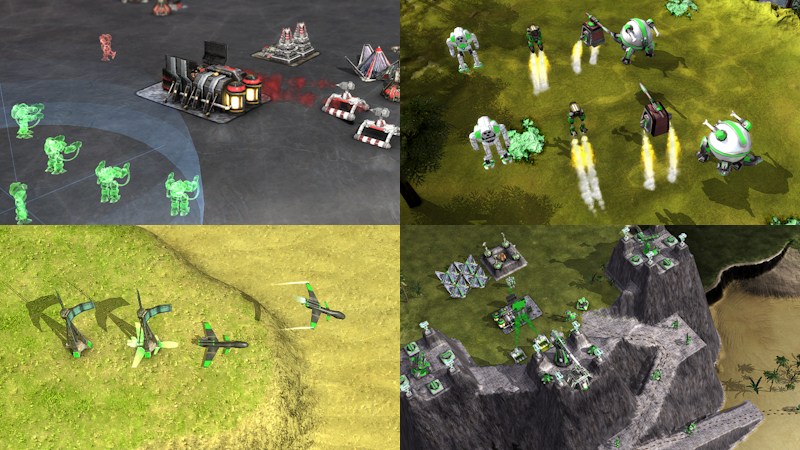 So Zero-K allows, and even encourages, special abilities as long as they fit into the design. In practise this means abilities have to pass two tests: they need to make sense within the game world and they should not be too hard to use. Whether an ability makes sense is the easier of the two to judge, since we have reasonably clear rules about things like armour classes, and the "theoretical ideal ability" test from Aim and Fire can be used for more than weaponry. How hard an ability is to use, i.e. how fiddly it is, can be harder to judge, since it involves tradeoffs against how much the ability adds to the game. The two guiding principles for fiddliness are that players should not fight the UI, and that abilities should avoid making units implicitly stupid. A lot of fiddliness comes down to how much attention is required to use it.
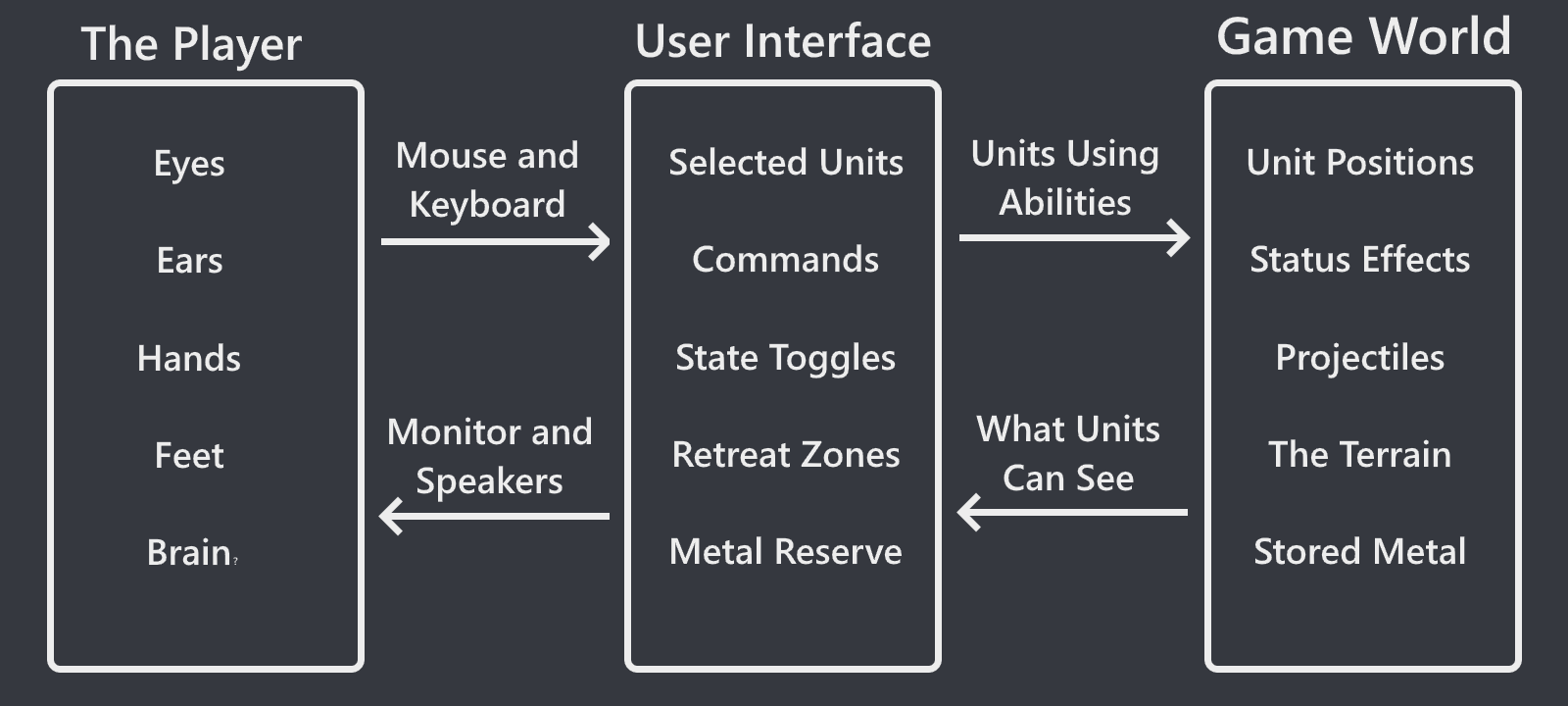 The third type of ability, beyond passive abilities and automated active abilities, is manual abilities, which require direct player intervention to use. This category causes the most trouble, with the fiddliness of a manual ability largely depending on two things: the type of command used to control the ability, and how often the ability is used.
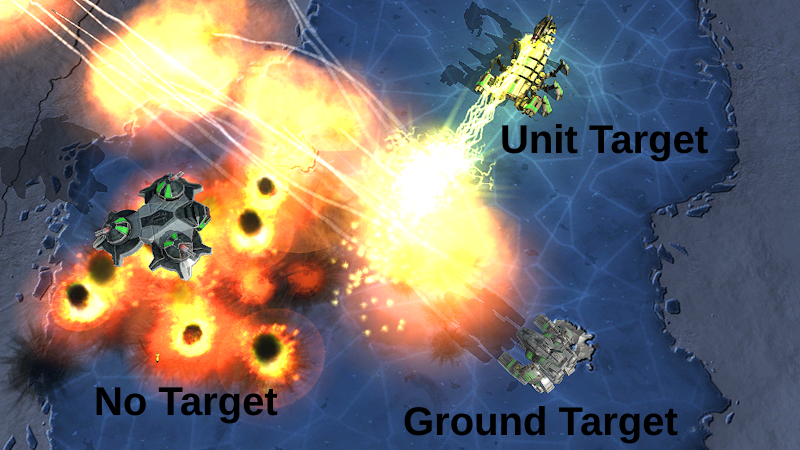 Ground targeted commands are the next-easiest type of command, the reason being that the ground is large and static while units are relatively small and often mobile. Ground targeted commands could be broken down further into line moves and area commands, but the added complexity of dragging a line or a circle trades off against increased expressiveness. Every targeted manual ability in Zero-K can be shot at the ground, and most are designed with this use in mind.
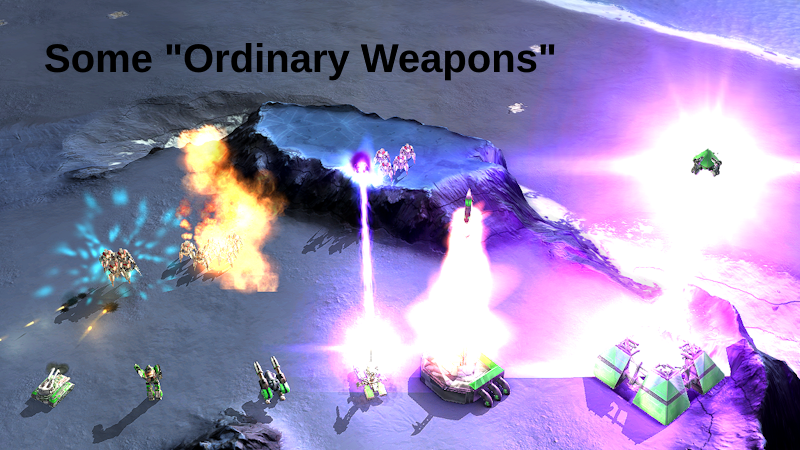 Quite a few of the ordinary weapons in Zero-K would be implemented as special abilities if they were to appear in other games. Some artillery units have reload times in the teens, with Lance even taking 23 seconds to reload. Firewalker fires bursts of fire that linger on the ground, while Placeholder launches miniature black holes to trap units in place. Players frequently set these units to Hold Fire and use them manually, just like a special ability. Even our nuke and missile silos use ordinary weapons, although these structures are set to Hold Fire by default. The only weaponless unit with a targeted special ability is the Lobster, as it caused too many accidents back when it responded to Force Fire.
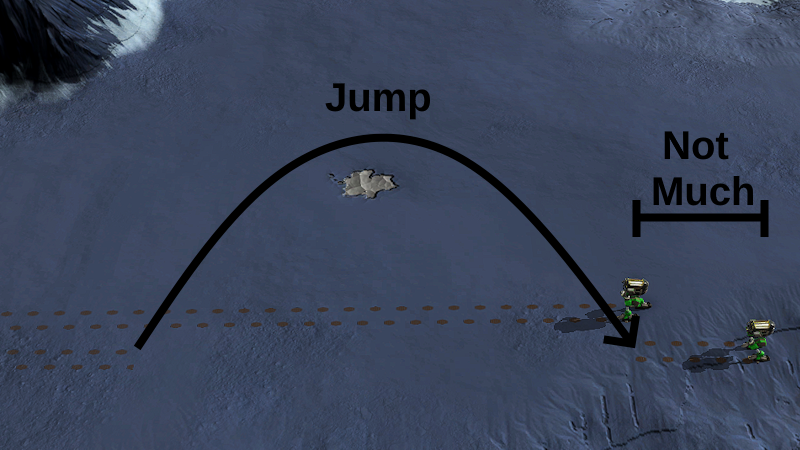 A good manual ability for Zero-K is one that players regularly have available, but do not use. Consider the alternative, if an ability takes 30 seconds to reload, and your aim is to use it as much as possible, then you now have a chore that requires your attention every 30 seconds. There is no decision in whether to use it, even though there may be some decisions to make in how it is used, it is just something that needs doing. This is why there are no ground-based sprint abilities: it is too easy for a sprint to be spammed to cross the map faster. Swift only gets away with it because it does not need boost to cross the map very fast.
 Types of units for the basic factories (Cloak/Shield/Rover)







 载入中
载入中

