

《神力科莎:拉力》Assetto Corsa Rally

《神力科莎:拉力》Assetto Corsa Rally

47 个评价
Understanding Pace Notes - Full Guide
由 Rwaggy505Games 制作
This guide is a quick guide on the core information needed to understand Pace Notes in Assetto Corsa Rally.
4
4
5
   
奖励
收藏
已收藏
取消收藏
Pacenotes are your lifeline!
Co-driver notes are a fundamental part of rally racing. Unlike circuit racing, the driver generally tackles each corner only once in a rally. Additionally, the use and layout of public roads often offers limited visibility of curves and hazards ahead. On top of this, unpredictable weather, changing light conditions, and irregular, variable road surfaces make it essential to have assistance to face these challenges.
This is where the co-driver comes in, sitting in the passenger seat during each rally stage and providing detailed information about the course ahead.
Co-driver notes include:
- The difficulty and characteristics of the corners
- Presence of straight sections and the distance to the next corner
- Information about the sequences of corners and how they connect
- Warnings of Hazards on the road or specific points of the stage that require extra attention
- Course details such as jumps or potholes
- Race instructions and regulatory information
Moreover, the co-driver helps the driver understand what is happening with the car or the race by providing additional useful information such as:
- The status of key vehicle components
- Changes in weather or road surface
- Unexpected events and mistakes
- Support in maintaining focus and the proper level of attention
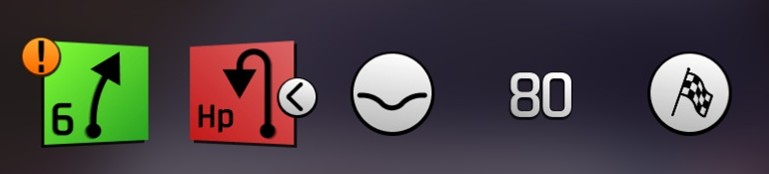
An example of a sequence of notes might be as follows:
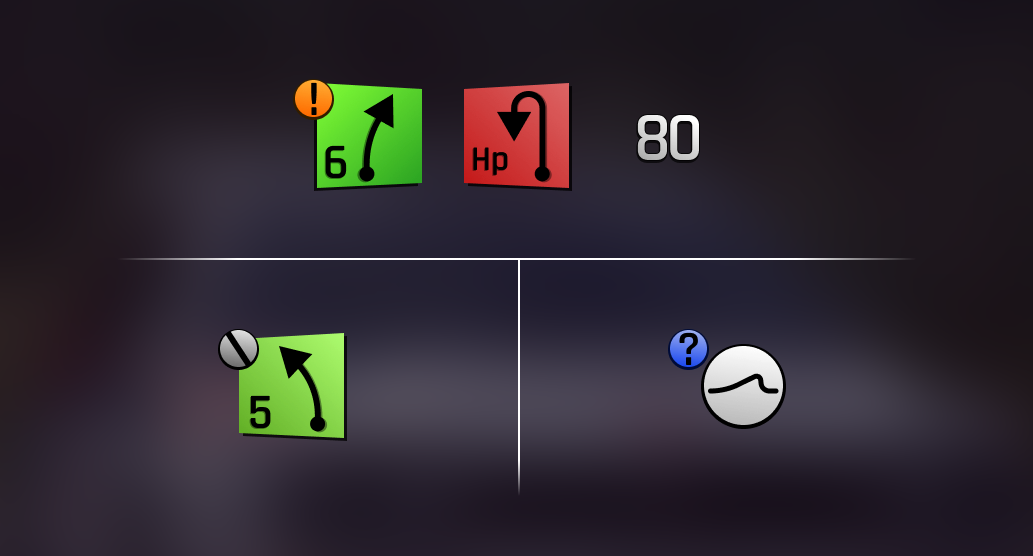
Caution, Right 6 into hairpin Left, Opens, and pothole, 80, Finish!


Corner Direction and Severity
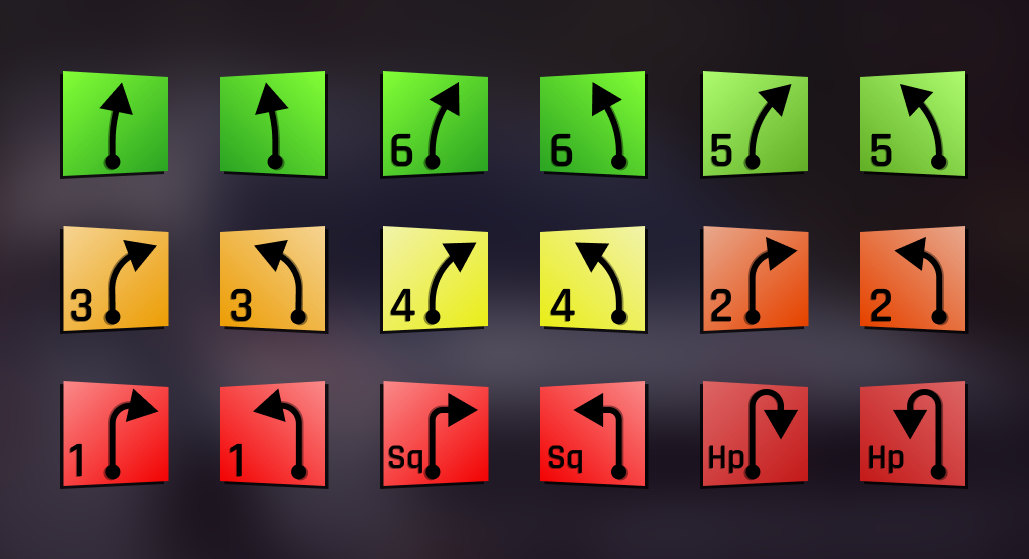
The notes indicate the direction (left or right) of the curve and a difficulty level from 1 to 6. A lower number (e.g. 1) represents a tight, difficult curve to be taken at low speed, while a higher number (e.g. 6) indicates a shallow and relatively easy curve to be taken at high speed.
Some directional notes do not include a difficulty rating but instead describe the type of curve, adding details necessary to best approach it. Examples include Hairpins or very fast Flat curves.

Here is a description of the curve notes, ordered by increasing difficulty (from easiest to hardest):
- Kink Left/Right: a slight bend on a straight section of road, to be taken at full speed.
- Flat Left/Right: a gentle curve to be taken at very high speed.
- 6 Left/Right: a very simple curve usually not requiring braking but may need some speed reduction.
- 5 Left/Right: a medium/easy curve that may require braking and attention in specific cases.
- 4 Left/Right: a curve of medium difficulty that requires speed moderation and the use of brakes.
- 3 Left/Right: a medium/high difficulty curve needing precise speed control at entry and proper braking.
- 2 Left/Right: a difficult curve requiring careful use of brakes and, in some cases, the handbrake.
- Square Left/Right: a curve similar to difficulty 2 but with a 90° angle, often at junctions or intersections
- Sudden Left/Right: an abrupt curve changing direction opposite to the previous one or hidden from the driver’s view.
- 1 Left/Right: a very difficult curve to be taken at low speed, often requiring the handbrake.
- Hairpin Left/Right: a 180-degree turn to be approached carefully at low speed, using the brake or handbrake.
- Tight Hairpin Left/Right: a very tight 180-degree turn, often at junctions or intersections
- Chicane Left/Right: a sequence of two or more closely spaced curves alternating in opposite directions (e.g. right, left, right)


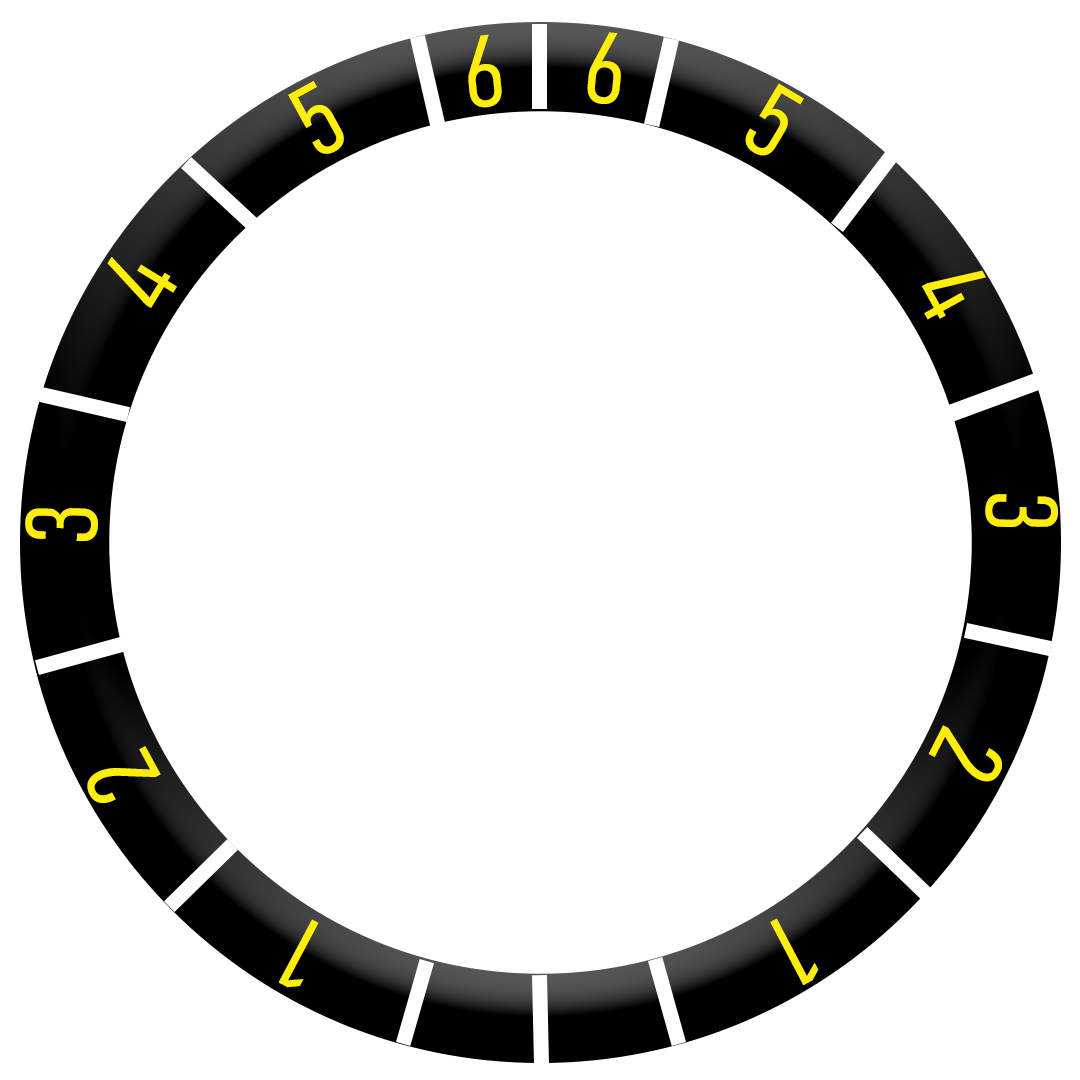
Additionally, a lot of Rally drivers tend to learn how to read pacenotes by adding numbers to their steering wheel to show an approximate amount of steering angle required for each number called.


Distance Measurements
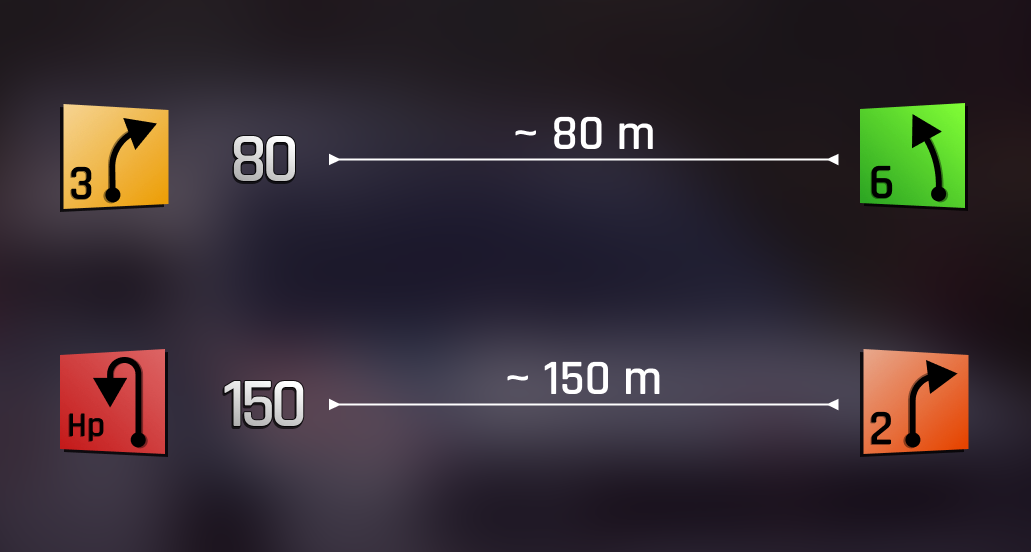
The distance between one corner and the next, or more generally the straight sections of the course, is communicated by the co-driver to allow the driver to anticipate and better interpret the rhythm of the special stage.

For example, when the co-driver indicates: “4 left 50”, it means that after the left corner of degree 4 there is a short straight of about 50 meters, at the end of which the next corner will be called.
Similarly, with the note “4 Left, 200”, the driver knows they can exploit the straight of about 200 meters, free of particular hazards or rhythm changes, following the left corner.
Generally, distances shorter than 40 meters are not communicated, as they are too short to significantly influence driving style and can be implicitly indicated through the conjunctions between notes.

To ensure clarity, even distances under 100 meters are expressed as even numbers (40, 60, 80, etc.), while distances above this threshold are preferably odd numbers (130, 150, etc.). This helps minimize misunderstandings, especially in multilingual communications.
Accurate communication of distances is essential for managing speed between corners, allowing moments of recovery and preparation. However, even the longest straights can hide hazards, such as changes in grip, surface imperfections, or undulations in the track, which at high speeds can compromise vehicle stability and safety.

Conjunctions of Notes
The conjunctions between notes provide important information to the driver about a sequence of corners and how they are positioned relative to each other on the stage. Thanks to these, the driver can better understand the rhythm of the stage, the difficulty of different corner sequences, and the unique characteristics of the track.

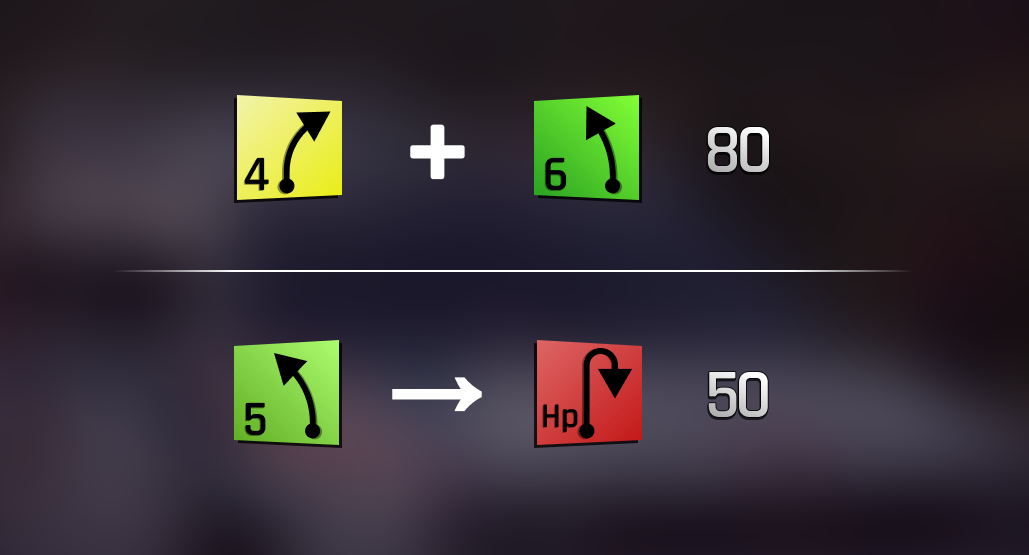
Conjunctions can be “AND” (usually represented by the symbol “+”) or “INTO” (represented by an arrow symbol). These symbols are not used in the visual notes of AC Rally.

AND Conjunction
The AND conjunction is used in the following cases:
• The previous corner is of equal or greater difficulty than the next one (for example, a 4 precedes a 6). The conjunction can be interpreted as an opportunity to push and attack the second corner at a higher speed.
• There is a small distance between the first and second corners. The second corner is not immediately after the first, so the driver can treat this as a short “pause” between the two. The distance is still less than 20 meters.
Example: 4 Right AND 6 Left 80
In this case, the first corner (a 4 Right) is two difficulty grades easier than the following 6 Left. There is also some space between the two corners, allowing the driver time to set up each corner individually.

INTO Conjunction
The INTO conjunction is used in the following cases:
• The first corner is of lower difficulty than the next (for example, a 5 precedes a hairpin). Here, the driver must pay close attention to the next corner and reduce speed progressively.
• The two corners follow immediately one after the other. There is no pause between them, so the driver must set up the sequence knowing that the next corner comes right away.
Example: 5 Left INTO Hairpin Right 50
In this case, the two corners come one immediately after the other. A fast 5 Left is followed by a tight hairpin in the opposite direction. The driver must exit the 5 Left already prepared to tackle the hairpin.

Conjunctions and Details
Sometimes, the AND and INTO conjunctions are used to connect a corner to a descriptive element of the track, highlighting additional challenges such as jumps, ditches, or fords.
Example: 6 Right AND Jump INTO 3 Left
In this case, after a fast corner, there is a short pause before a jump, which is then quickly followed by a more complex left corner.

Warnings
Notes highlight sections of the road where the driver must pay particular attention or perform specific manoeuvres to ensure the best performance.
When the driver hears one of these warnings, they should pay extra attention to driving and make sure they fully understand every instruction given by the co-driver, so they can best face the hazard.
The warnings can be of various types; the most commonly used are:

CAUTION
The CAUTION alert is by far the most used and is often found before a particularly complex sequence or before an element of the track that represents a danger to safety or to the successful completion of the stage.
At a CAUTION alert, pay extra attention to the following notes and prepare for any kind of hazard by slowing down or focusing more on the road.

WARNING INSIDE/OUTSIDE
In some cases, the danger may be located on the INSIDE or OUTSIDE of a corner.
In these situations, the driver must pay extra attention to that part of the road to avoid risks.

DON'T CUT
When there are hidden or obvious dangers inside a corner, the co-driver's notes generally indicate DO NOT CUT that corner.
This means avoiding putting the wheels off the road, maintaining a certain safety margin from the edge, to prevent any danger that could damage or slow down the car.

CUT
In certain corners, the co-driver may suggest the driver to CUT the inside of the corner to save time or simplify the approach.
Cutting means it is safe to take the wheels outside the road section without risking accidents or damage to the car and tires.
Sometimes it may be indicated whether to cut a little or a lot, to better assist the driver in setting the corner.

BRAKE
The BRAKE warning suggests the driver to apply the brakes and slow down the car at that specific point of the track.
This may precede a particularly difficult corner or serve to highlight the presence of hazards or especially complex sections.

HANDBRAKE
The use of the HANDBRAKE is generally indicated before a hairpin or an extremely tight corner, signaling that using the hand brake will make the car change direction more quickly, facilitating the entry and exit of the corner.

KEEP IN/OUT or LEFT/MIDDLE/RIGHT
Similarly to the inside/outside warning, the co-driver can instruct the driver on how best to position the car on the road to avoid hazards or adapt to particular surface shapes.
For example, the note KEEP IN suggests placing the car on the inside of the corner, while “KEEP RIGHT” suggests moving the car to the right side of the road, relative to the driver.

BAD CAMBER
The note BAD CAMBER describes a section of the road where the slope is opposite to the direction of the corner.
For example, a right-hand corner that is counter-banked will be raised on the inside rather than the outside of the corner.
This can make it difficult to set the proper line and cause problems both entering and exiting the corner, destabilizing the car.

BLIND/HIDDEN
A BLIND corner generally has an exit not visible to the driver, preventing them from setting the final line in advance.
A HIDDEN corner, on the other hand, has an entry not visible to the driver, making it harder to set the initial trajectory correctly.

SLIPPERY
The note SLIPPERY indicates a section of the road that is particularly slippery, where the driver must pay extra attention to avoid wheel lockup and the risk of going off the road.

MAYBE
The MAYBE note is less common but can be useful in particular situations, especially before a jump.
It indicates that, depending on speed or car setup, we might face a jump or simply a "significant" bump that does not cause the wheels to leave the surface.

6 条留言
LungZ 11 月 24 日 下午 1:14 
guys, doesn't matter if most of it is copied from the game. It's all here in a single thread which you can reference without opening the game or you can have it open on a second monitor with the game running. If it doesn't benefit you then don't mistaken that to be the same for others.
Unholy 11 月 16 日 上午 7:12 
most of this is in the game. i do appreciate the steering wheel with numbers though.
Stigro 11 月 15 日 下午 3:55 
Most of this is just copied straight from the in-game rally encyclopedia lmao
Xavi Augusto 11 月 14 日 下午 3:42 
WoW!! Thanks a lot.
Schroeder B 11 月 14 日 上午 9:29 
Great Job. Thx.
goblueteam 11 月 11 日 上午 9:57 
Wow Great Job on the guide, Cant wait to try AC Rally out it looks amazing!