

Going Medieval ( 前往中世纪 )

Going Medieval ( 前往中世纪 )

182 个评价
Creating Cold Cellars
由 Lyosha 制作
With the changes to the temperature system cold storage has become a bit tricky. This guide will cover all the ways to best maximize your cold storage for optimum coolness. While your food may not last forever anymore, you can still preserve it longer with the right methods.
7
6
11
2
2
   
奖励
收藏
已收藏
取消收藏
The Very Basics
This guide is still up to date for the 0.27 version.

If you are new to Going Medieval or to Cold Storage, hi! This section is for you. If you already have the basics down, feel free to jump to the next section.

Cold Storage in a nutshell is basically a way to make a "freezer" in Going Medieval. The basic premise is to either dig down, or into the side of a mountain allowing layers of dirt to insulate your room keeping it colder during summer months much like a real life cellar would.

  • Shelves are unlocked in the Research Panel under the section Preserving Food and can be found in the build catalogue in the furniture section [F3]. This is the best way to store food as it helps decrease the amount of space you need for your food items.

  • Needless to say putting items that make the room warmer is a bad idea. Avoid placing any braziers, torches or candles in your underground storage area.

  • Structural integrity matters in Going Medieval! This means you will have to build beams and support posts for large rooms. At 7x7 the center tile will "cave in" basically deleting all the layers of soil above it. Make sure to create support posts often in your rooms to keep the roof from falling in. For example if you make a 7x7 room the very center tile shouldn't be dug out. perafilozof on Youtube has a good guide to explain more about stability if you need.

With the very basics out of the way, let's get into what makes a good cold storage!
How Many Levels?
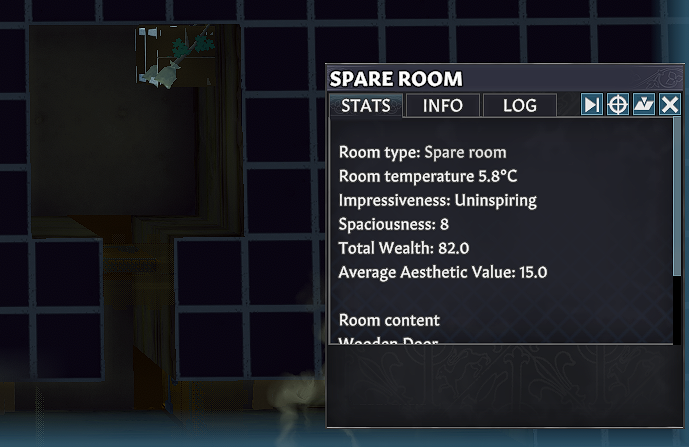
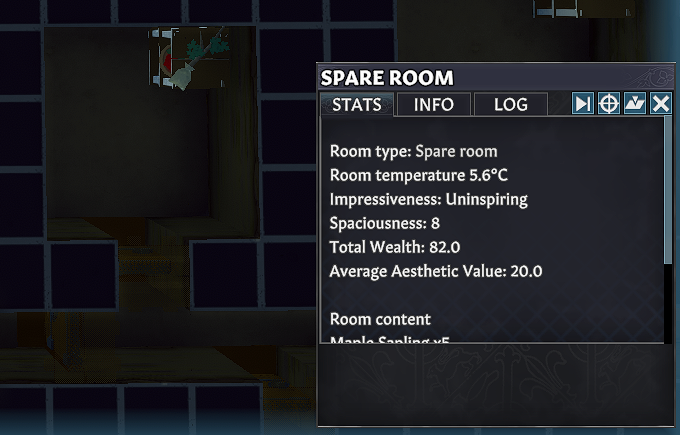
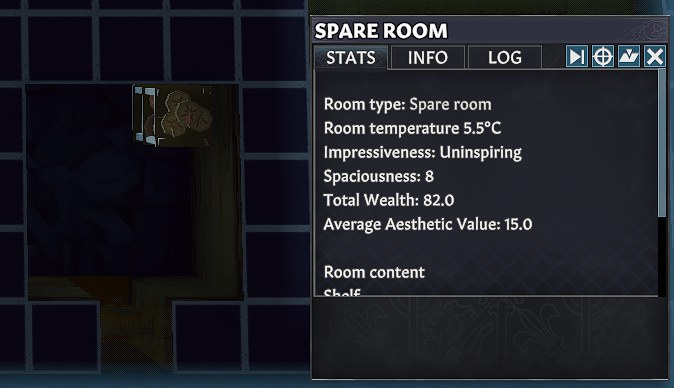
Previously the amount of dirt above your cellar mattered a lot, however while extra layers of dirt can help, the effect is a lot less than what it was previously. From left to right we have one level (5.8°C), two levels (5.6°C), and three levels (still 5.5°C) of dirt above the room.
One Level of Dirt Above
Two Levels of Dirt Above
Three Levels of Dirt Above

So continuing to dig down might not be the best use of your time day one when you are hurrying to get your storage setup before your food disappears, but can be slightly beneficial when setting up a proper storage slightly later in the game.
Flooring: Yes or No?
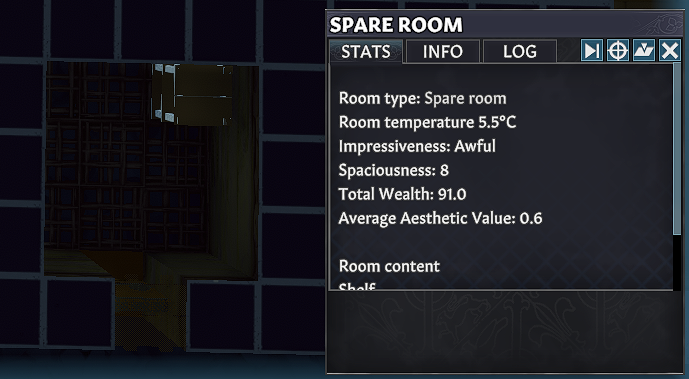
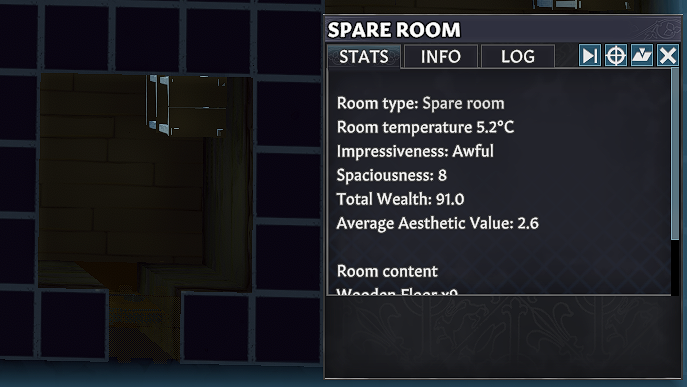
Flooring now acts properly as a thermal insulation rather than a heat source. This means you can safely put flooring in your storage rooms without heating them. In this comparison I used the new wicker grated floor which has 0.05 thermal insulation and the wood flooring with 0.75 thermal insulation. Both have three levels of dirt above them.
Wicker Grated Floor

Wood Flooring

As shown the grated flooring kept the room at the same default temperature for that level (5.5°C) while wood flooring lowered it very slightly (5.2°C) It’s a small difference, but important. Alternatively try out limestone or clay tile floor with a 0.8 thermal insulation!
What about Walls?
Well since thermal insulation works to trap temperatures then we might want as much of it as we can get. While dirt walls have an insulation point of 0.95 something interesting happens when we add some walls.

Room with Dirt Walls

Room with Clay Walls

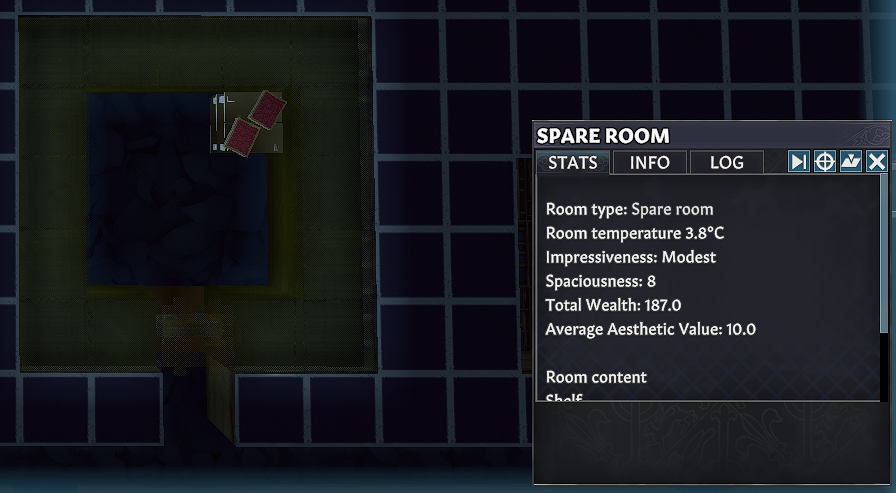
Putting them around a room we find that a 3x3 space now has a temperature of 3.8°C! From player testing we have made the judgement that layers of walls using the same source has diminishing returns. Since material of a different type can stack to further increase the insulation, adding a second material source makes the room colder!

Of course, the immediate thought is to add a third material. While you certainly can, the effects is fractions of a degree cooler. Not worth the extra mining and resource cost unless you want to hide ugly clay walls.
Size Matters!
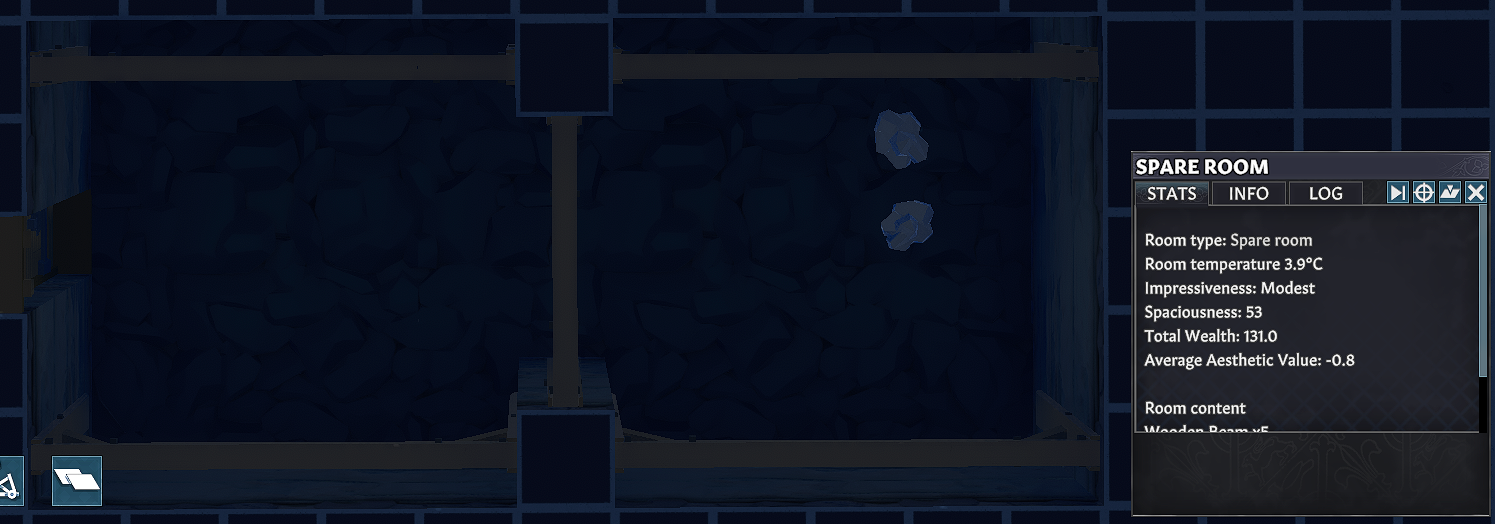
Alright final factor. Does size really matter? Well in terms of storage cellar size, it sure does. The bigger the better in fact. Heat gets trapped in smaller rooms causing the room to stay warmer. Here we can see a room with 28 free squares of space and a temperature of 3.7°C
28 Square Room
Tying it all Together
Combining all these features should give us the best storage room possible right?
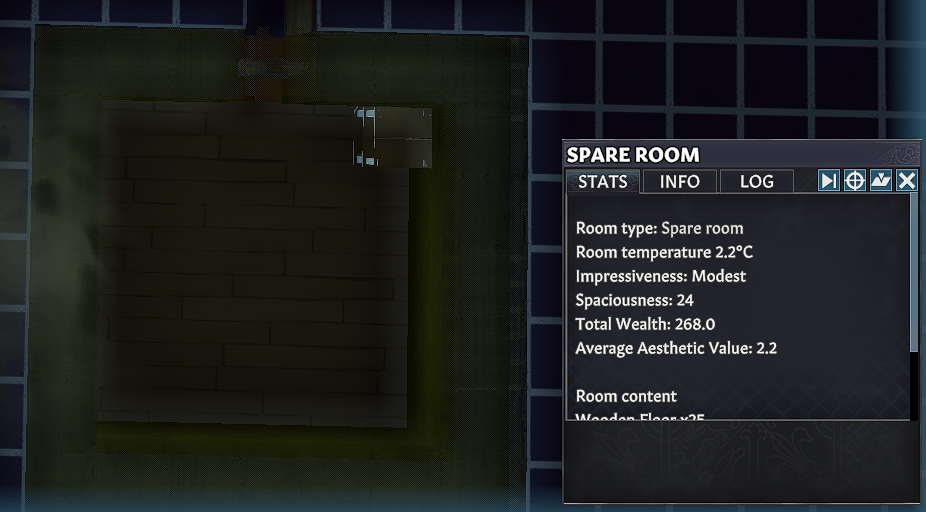
Large Room with Clay Walls and Wood Floors

As you can see the temperature dropped to 2.2°C. Hurray! While this doesn’t stop your food from slowly rotting or decaying this will keep your food as well preserved as it possibly can be. And let's be honest food doesn't like sitting in our real freezers for over a year as it is anyways.
Bonus Notes and Disclaimers
  • Dirt Walls:
    It has been brought up many times that dirt walls have higher insulation. While this is textually true, thermal insulation has some limitations and combining sources results in colder temperatures. You can see the comparison between the same size room surrounded by dirt and surrounded by clay is around 2°C different. You are more then welcome to try this yourself and see the difference!

  • Ice:
    Ice is also really helpful in keeping temperatures down during the summer months. With the underground no longer going below 0°C, ice making is a limited time production. Ice needs to be made above ground during the winter months. Ice cannot lower a room's temperature below 0°C but will help ensure temperatures stay as low as possible over warmer months.

  • Winter:
    In winter you can also open doors to lower the temperature of your storage below freezing. If you use ladders the only wild animal that will be able to access your storage is polecats. Alternatively you can also place an outer wall to block off access to the stairs while leaving the area un-roofed, or use windows.

  • Pet Hauling:
    Also keep in mind most pets cannot use ladders. While it's an easy way to save space building down, you will need to set out food for your pets in alternative locations so they can eat.

Disclaimers:
This testing was done on a valley map on normal difficulty settings. Screenshots were taken during spring time. Temperatures during summer, at 32°C, saw the final storage room at 2°C. Sadly I didn't get to test a heat wave before I ran out of patience speed running while waiting for the event.
18 条留言
Lyosha  [作者] 10 月 11 日 下午 1:33 
@PapaPanthers. Not quite your looking to lock in temperature so having higher thermal insulation keeps the cold in and the hot out. It also works in reverse if you have a heat source in the room (trapping heat).
PapaPanthers 10 月 11 日 上午 6:47 
My question is, if the lower Thermal insulation is lower, wouldn't brick walls help keep the cold in a cold room?
blackhand_lost 2 月 6 日 上午 3:43 
Optimal temp for creating fine wine is 3-5 degrees, so you shouldn't go below 3 if you plan to do it in the main storage. 3-4 is ok for your food anyway
oliverrook 2024 年 11 月 21 日 下午 12:18 
I will mention, soil/terraformed walls have an even better insulation of 0.95
Porocuddler 2024 年 8 月 12 日 下午 1:36 
Edit to my Ice post:
- ice block stockpiles can be put between shelves, people/animals walk over them just fine.
Porocuddler 2024 年 8 月 12 日 下午 1:35 
Some tips to using ice:

I tend to plaster my food storage with single stockpiles for ice blocks every few blocks, lowers the temp by 1-2°C.

For ice management, playing with stockpile priorities is great:
- one dumping stockpile (outside and/or near heat), very high prio, with maximum 5% HP,
- the many individual stockpiles for single blocks, set with prio high or medium (copy/paste stockpiles is a life-saver :D)
- a few underground rooms with little/no constructed floors and walls, and large stockpiles for ice blocks, prio low (store ice before blocks in the food area need replacing)
-> those ice storage rooms will be 0°C anyway, no need to waste resources on walls/floors, and make for a great place to dump carcasses before they can be butchered (I remove single strips of ice stockpile, put floor there, and a stockpile for animal carcasses)
-> then simply have plenty of ice boxes to make ice during winter :D

Be prepared for lots of 'Ice block has melted' pings though!
Spotter 2024 年 7 月 30 日 下午 12:10 
Clay Walls and CLAY BRICK FLOORS lowers Temperature far more than Wood! Digging to Granite level or a Minimum of 5 levels deep, helps lower it more. 👍👍👑🤴
lcplfourte 2024 年 7 月 19 日 上午 5:55 
Clay beats Soil walls?
PBCake 2024 年 3 月 3 日 上午 2:13 
Wonderful guide with plenty of detail and great visuals! :lunar2019coolpig:
FyreMouse 2024 年 2 月 20 日 上午 6:16 
does water running on the outside of the walls lower temperatures now?