

Hot Dogs, Horseshoes & Hand Grenades

Hot Dogs, Horseshoes & Hand Grenades

43 个评价
A not very brief look at the AR Rifle platform.
由 G O R B A C H A V 制作
The AR Platform of rifles is a purpose built weapons system that often has its nuance overlooked when individuals use or build them. In this guide I intend to delve deep into some things a user of this rifle platform can do to make their AR platform weapon as effective as possible, both in game and in real life. This includes topics such sight placement, optics choice, caliber choice, and some user tips and tricks from someone who's used AR rifles for quite some time. This guide was made with the intention to be used alongside the ModulAR mod, without it a solid chunk of this guide is useless, however you'll probably learn something anyway. Sit back and enjoy!
6
2
4
2
   
奖励
收藏
已收藏
取消收藏
The general idea of the guide.
The AR platform of rifles are a large family of weapons with sister designs and derivatives across the planet, however it is seen as the quintessential American rifle. Images of AR-15 rifles and pistols are oftentimes accompanied by American flags, hotdogs, and a clip of The Undertaker throwing Mankind something like 5 meters onto a folding table during the 1998 King of the Ring match. The point is that this thing is as American as can be, so pick up your rifle, grab your Murican flags, fill your glass to the brim with your Eagle Rare Bourbon, and sit in with your 5 big macs because I will be getting extremely technical.

The point of this guide is essentially to help people understand what type of thought process goes into an AR platform rifle, why they are the way they are, and what neat tricks you can use while you're at it. I also intend to go over the mechanics of this rifle so that you understand its method of operation, and I'll be giving some advice on what is considered Kosher with this rifle. This guide can be used alongside my sniping guide if you intend to use a AR for distance.

I would also like to put this here up front and center. Not all of this information is useful in the game. I wrote this to not just help you in game but to also be interesting reading that teaches people about the platform so that they can get some enjoyment out of guns in general. This guide was intended for people who are not only interested in the game itself, but who were wanting to sit through an extremely anal guide on firearms technology.

With this brief introduction in mind I'd like to remind you that as this is a game, some of the build aspects aren't really that important, I'll still go into them but just understand that it is a game and unless this is a generic Isekai power fantasy anime where if you die in game you somehow get brain fried in real life then you probably don't need to take it as seriously as I present it. If you set your rifle up in a dumb or funny way it's not like a hobbit will crawl out of your air vent and punch you in the balls while you're in VR.

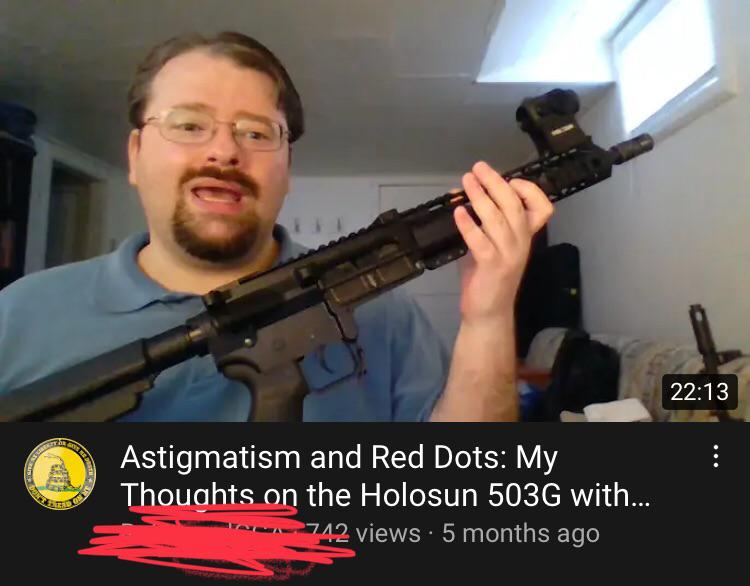
Now, if I had to put this guide in one picture, I'd say it's to make sure you know not to be this person.


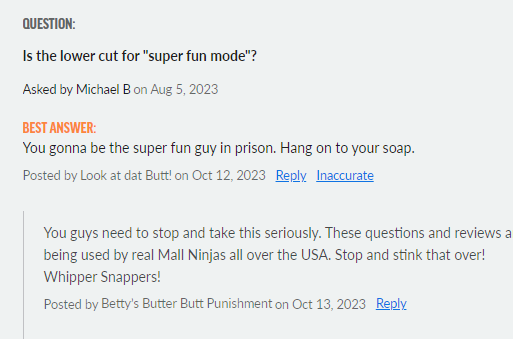
As an aside if you ever are in the mood for some nice comedy, go to the Palmetto State Armory Q&A and look at some of those. They're great.
The AR15, AR10, AR50, Whats the deal?
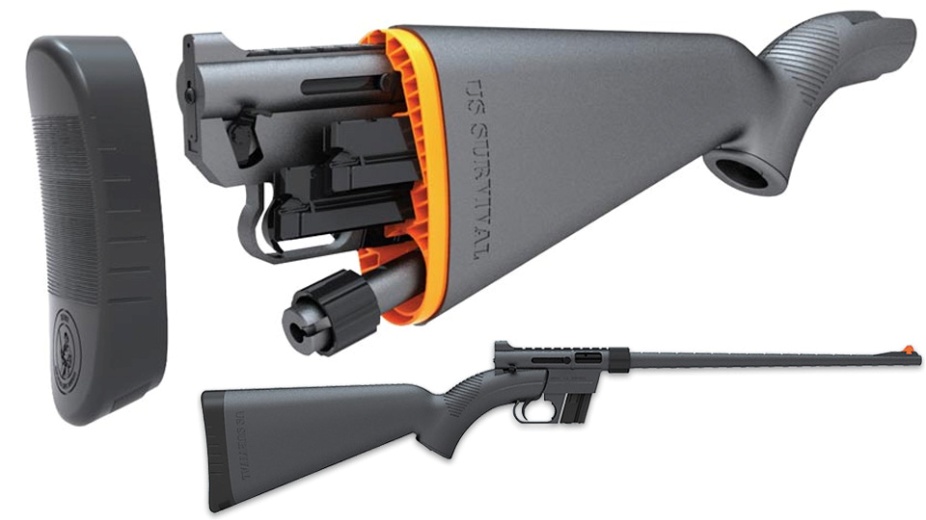
The AR platform is a weapons system of many faces, and with each face comes questions of things like reverse compatibility, new engineering techniques, and more. In short: People want to know how they're different. This is not exactly a dumb question. We've gotten to the point where we have weapon systems that are absolutely worthy of ridicule which are 'AR Derivatives'. It is important however that we do draw some lines. The main line that should be adhered to is that not everything labeled AR is a AR, the AR18 is not an AR derivative in the strictest sense. It's operation functions completely differently then an AR platform rifle, and it only shares the same company and designer. If we were to refer to the AR18 as a AR platform rifle then we'd have to concede that the .22 caliber AR7 survival rifle is also a AR rifle, which I think for all intents and purposes we can agree is not part of the family.


I think we can agree the AR7 is not part of the AR platform family. Nice rifle anyway.


The main rifle styles to encompass the family tree we will look at are the following:

1: The AR15.

2: The AR10.

3: The 416 and other piston derivatives

And lastly

4: The AR9 and other pistol caliber derivatives.

The basic lineage

The AR family can be effectively split into a couple groups: Intermediate caliber rifles, Full caliber rifles, and Pistol Caliber Carbines. Intermediate cartridges are things like .223, 7.62x39, and .300 blackout. The full caliber rifles are those which fire full size centerfire cartridges such as .308, 6.5 Creedmoor, .300 Winmag (yes they exist and they're beasts), and other similar cartridges. For Pistol Caliber Carbines (PCCs) these rifles are chambered in things like 9x19, .45, and other handgun calibers. These rifles however are relatively needy and have issues we'll touch upon in their own brief section.

Intermediate cartridge AR rifles are the ones you all know and love. They're the ubiquitous rifles like the AR15 which is most likely the most common rifle in America, the M16 or M4 military variants, and the exceedingly and ridiculously expensive M416 (there are other piston AR rifles, I am lumping them in with the 416 because nobody knows about the Taiwanese Type 91 or LAR-PDS). These rifles fire the intermediate cartridges, most commonly the 5.56 (Most AR15s can shoot .223 as well), however the AR15 has been chambered in all sorts of wacky calibers such as .300 blackout, .458 SOCOM, 6.8 Remington SPC, 6.5 Grendel, and even recently I witnessed a exceptional individual machine an AR15 that chambered 7.62 Tokarev. The point is that these rifles are incredibly versatile.


On the right is an Ar-10 platform rifle, whereas on the left is an AR-15 pattern rifle. Note the difference in size and setup. There's a clear use for an AR10 and a clear use for an AR15.
The AR15
The AR15 is the lego set of guns, with a rather insane amount of OEM parts available on the internet, and with only handful of parts that actually should be on the rifle in general. It's a weird situation where sure you could get your super special can launching upper receiver[mfburchick.files.wordpress.com] which completely justifies itself but you could also get your incredibly stupid Molon Labe Handguard. [www.cheaperthandirt.com] but I digress. The AR15 is probably the rifle your father or uncle who was in the USMC owns and calls an 'M4' or 'M16".

Either way, the AR15 is a semi automatic locked intermediate rifle in the AR family that does share many features with its military counterpart, and as such much of this information will carry over when discussing the military variant of the rifle. There are a few things that are important to mention however. The first is that AR15s have far more options when it comes to customization then M4 or M16 rifles on the pure fact that they are civilian firearms, and therefor you are actually allowed to say, swap handguards or muzzle devices without getting in a ♥♥♥♥ ton of legal trouble.

With this in mind AR15s have come in a myriad of good to absolutely terrible builds in their time with American civilians, but this is not what we're here to document. Instead what should be known is that the AR15 can be used pretty similarly to the other variants except you're stuck on semi. With this in mind we will discuss where the AR15 shines in the 'build your own' section of the guide.


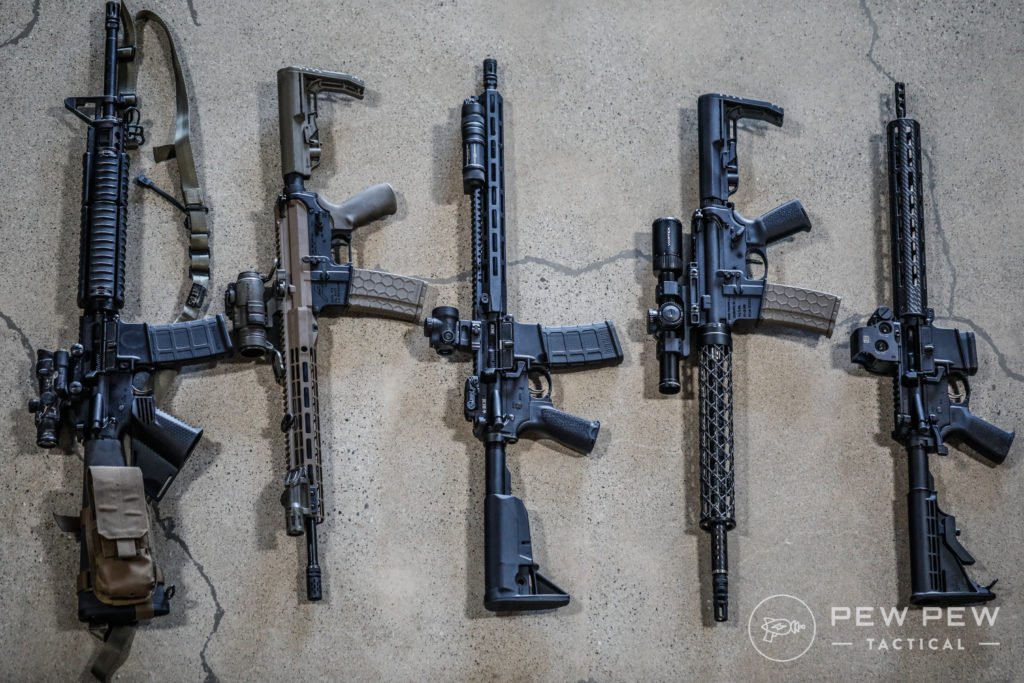
Some solid examples of good AR15 rifles


Literal garbage AR build.
The AR10
Now for the big boy of the (Mainline) AR Family, the AR-10.

The AR-10 is, as mentioned prior, the full sized center fire caliber platform. The AR10 lends itself incredibly well to a myriad of applications because of this. This ranges from hunting, as it can be chambered in most of the popular hunting caliber options, all the way to long (not extreme) range precision shooting. Although the reasons that this can make a great hunting rifle are straightforward, and frankly hunting isn't normally very demanding on a rifle unless you're hunting in the midwest where you may take a 900-1100 yard shot on a mountain goat, the reasons they make a excellent choice for marksman rifles have plenty to be said about. The main realistic competitor in the whole 'semi automatic precision shooting' category is the M14 rifle. These guns stand head and shoulders above most competition with their main perk being that you can actually get your hands on them. The edge that the AR10 has over the M14 is its ergonomics, incorporating modern handing characteristics and features, as well as its weight. Anyone who has lugged around an M14 knows what I mean when I say those things are heavy.


You know things are rough when people make entire guides on how to walk with one.

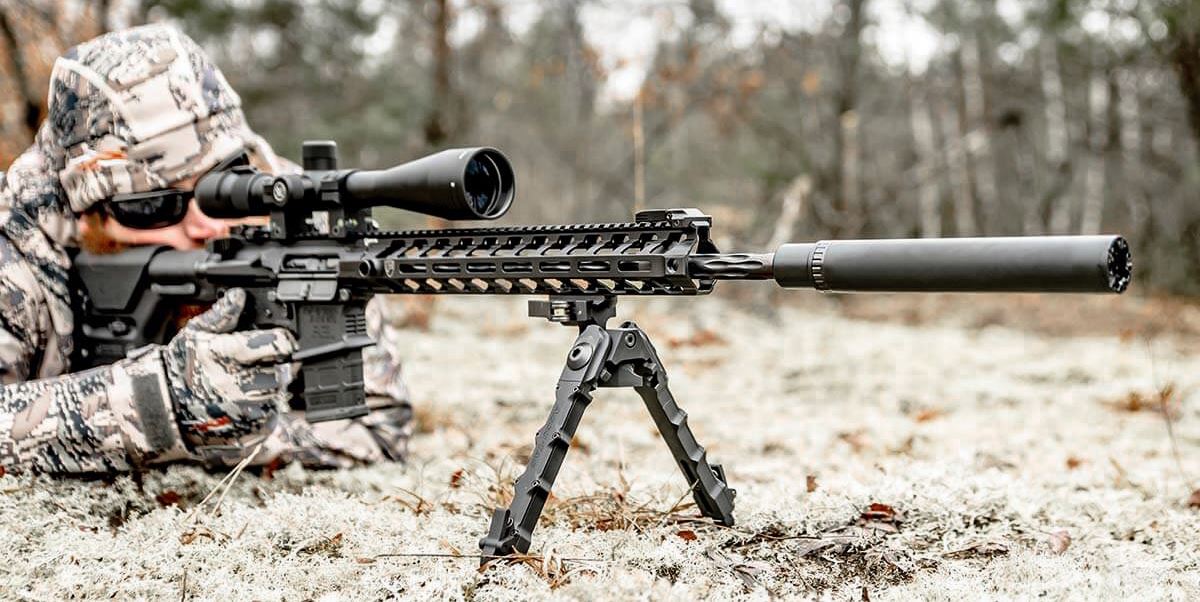
As a precision rifle the AR10 comes into its own. Give a good AR10 a nice bipod, free floated rail, high magnification optic, and some TLC and it will absolutely be a rifle far more accurate then the person shooting it. A good AR10 can routinely shoot half MOA, or even a quarter if the person shooting at it has the skill to do so.

This comes with its own caveat however, the AR10 has only had a few versions of it ever be adopted by any military. Those are the Danish AR10 rifles that everyone gawks at, and the KAC SR25. Because of this many companies have taken 'liberties' making these rifles, and so there is no 'military spec'. Due to this you'll need to pay very close attention to what company made what parts, otherwise you'll put the whole thing together to wind up with a paperweight.


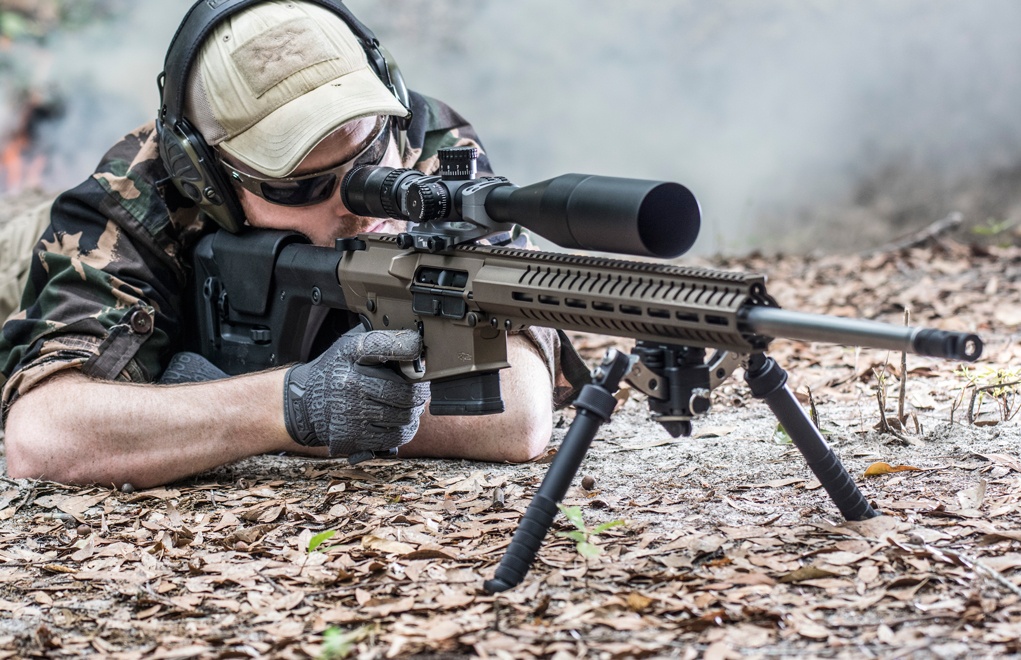
The AR10 comes into its own with good optics, a good bipod, and a good shooter.


The AR10 however suffers from a lot of 'misuse'. By misuse I do not mean that people are beating their rifles up or are throwing them off cliffs, I mean that people try to make AR10s do things that they should not. I see people try to make these into close quarter fighting rifles all the time as if they were using AR15s. They are not the same gun, so do not try to make them do the same thing. The logic of 'Bigger bullet do more haha must be better' should be thrown out in its entirety. A .308 cartridge flying out of a 12 inch barrel is identical to a 7.62x39 flying out of a standard 16 inch length, while that sounds great, 7.62x39 ballistics aren’t exactly worth the massive trade off of only having 20 round mags and using a rifle that weighs exponentially more then it’s similar use alternatives. This is due to the fact that the barrel does not have enough length to allow all of the powder of the .308 or other full size cartridges to burn, essentially you're using only about as much powder as your x39 or .300 blackout rifles. This also has the nasty side effect of throwing unburned powder all over the range and potentially all over yourself. Just stop.


Don't do this.
The piston driven AR, and why it exists.
The piston driven AR rifle is a gun that, to many, will seem identical to the average AR platform firearm. This can be forgiven, as to the untrained eye (hell, even to the trained one) they are very similar and only have one or two major differences depending on rifle, as there is no standard 'piston AR'. Those seemingly minor differences however drastically change the rifle's handling, performance, reliability, and maintenance. To really explain these differences and why someone would chose to use one we will have to get into how the AR rifle works from a very technical standpoint. In game however none of this really means anything though, that is unless anton decides to add gas system adjustment or firearm malfunctions and maintenance which means it will never matter please do not ask him to do it.

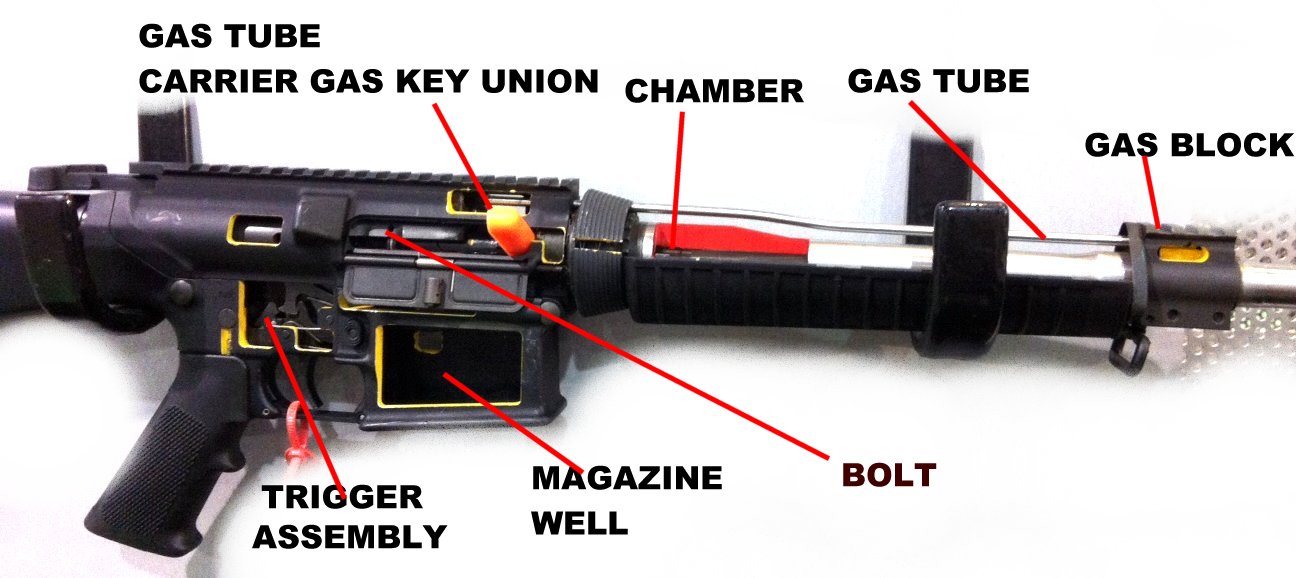
(Key terms are highlighted. I'm a nerd.)

So in basic terms, the AR platform is generally a 'Direct Gas Impingement' Rifle. What this means is that the rifle has a Gas Block which sits on the barrel of the gun. The position of this gas block is vital to the guns function as it sits on top of a hole in the barrel (where the hole is is important in real life, but not in game so we won't discuss it. You're welcome), which funnels gas into said block. This gas travels through a Gas Tube, or a hollow tube that is positioned in the gas block and travels into the bolt of the gun. On the bolt there is a Gas Key, this key is where the gas tube sits on the bolt, and this key funnels the gas into the bolt (Not the BCG, the bolt proper) and is impacted by a couple Gas Rings (AKA the part of your rifle that is most likely to fail). This whole process unlocks the bolt and drives it backwards, ejecting the last round and cycling the new one. If this sounds like a Goldberg Machine that's because it is.


A diagram of an AR15's gas system.


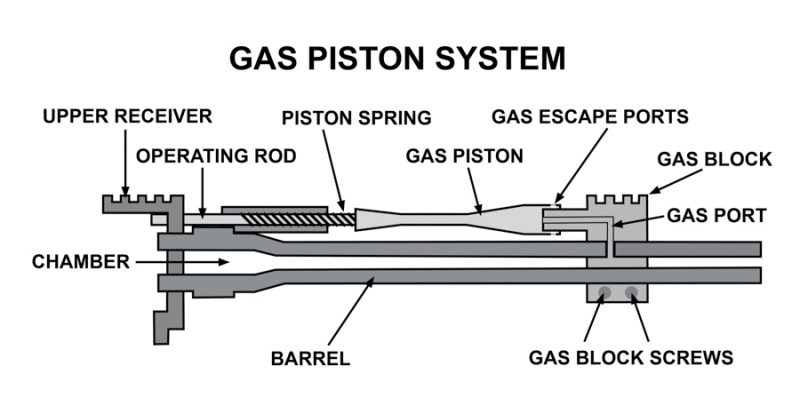
So where does our star of the hour come into play? Well the piston driven rifles are effectively the same until you get past the Gas Block. Once gas reaches the Gas Port, or the hole in the barrel, it is pushed onto a Piston not too unlike that in your car. These pistons come in two flavors, Long Stroke and Short Stroke but for brevity I'll be talking only about the Short Stroke.
Short Stroke pistons essentially funnel the gas into a chamber for pressure, which forces a piston or Operating Rod back to physically move the bolt. A spring on the piston will force the gun back into battery on some, removing the need for a buffer tube. This is not the case on all piston rifles however.


An example of a short stroke gas piston system. Anyone familiar with the SKS knows how this works.


So, why do people pick these things over a traditional AR? If it isn't broke don't fix it right? Well for one, breaking is the exact reason. Those gas rings I mentioned earlier generally can fail after 1000 rounds, sometimes more. There's a reason your Magpul stocks and grips have compartments to hold stuff in them. Most people may put skittles in there but the reality is those are for spare gas rings and maybe a totally different bolt face (Gas rings are a pain the ass to replace, so many opt to just change the whole bolt face for brevity. I don't recommend you do it though). With piston rifles you have far less that can break, and that's not all. Piston rifles are able to be adjusted much more simply then a standard DI Adjustable gas block, many can be adjusted without tools too! This is very important for if you are running a suppressor or if you are switching between ammunition types, but it also further increases reliability by making sure your rifle doesn't beat itself to death by being over-gassed like most AR15s are. Other important reasons people chose it also has to do with maintenance. Direct impingement guns are dirtier then pigs when they are shot. This is because you are forcing tons of carbon fouling from the fired round into the gun again with the gas. With piston rifles that fouling is sent onto the piston, which can just be wiped off with a cloth as they're often NiB coated (this is nerd ♥♥♥♥ that you seriously do not need to know).

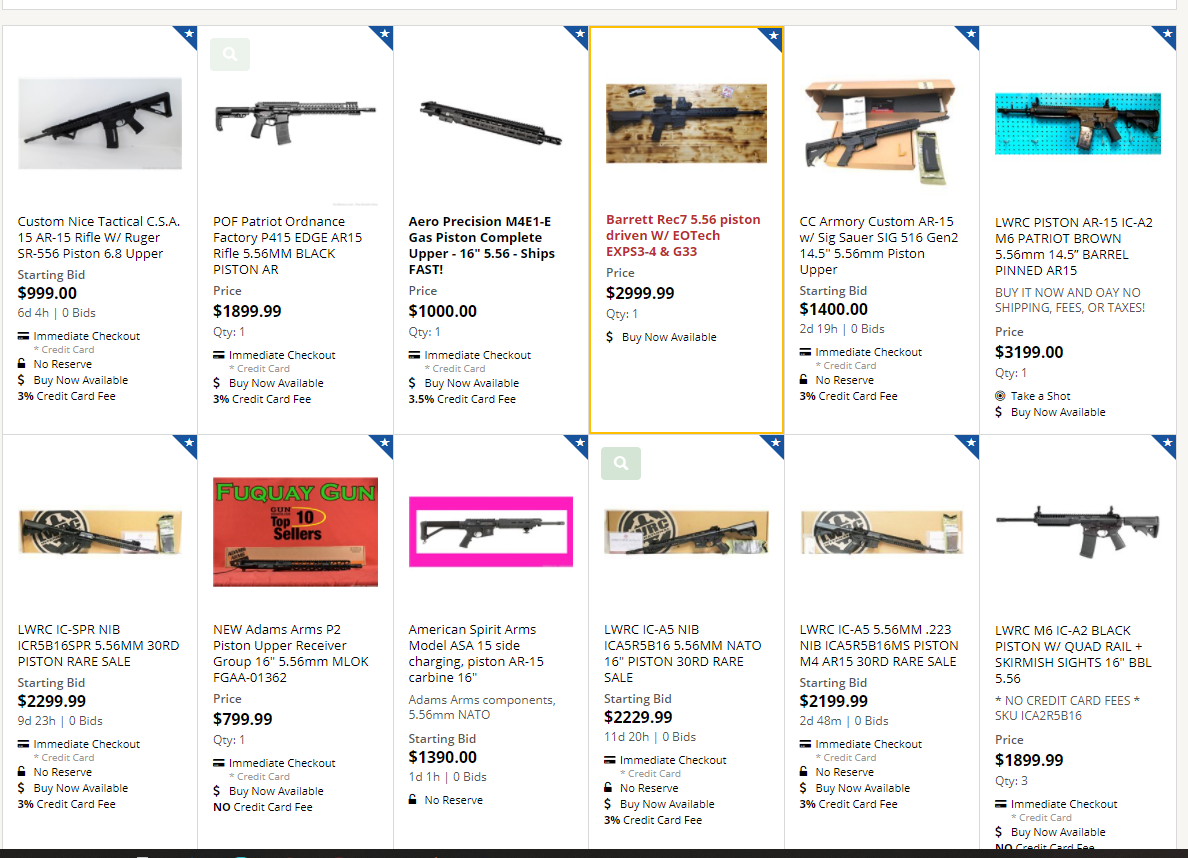
So with that said why isn't every single gun a piston gun? Well that's where things get a bit complicated. These things are expensive as hell. See the exhibits below.


Seriously these things cost a fortune.


The prices for these things are horrific, and other then HK the other piston rifles you can get (easily) are Adams Arms for 1000 dollars (don't buy it it's not that good) and LWRC (AKA the single best rifle you can possibly buy) for 2000 dollars. This doesn't include some oddball guns like the imported Taiwanese T91 Uppers which run 500-700 dollars when you can find one, but those are strange things in general and if you get one you're stuck with the furniture on it because there aren't any good replacement options for the Taiwanese furniture.

The point is, these things are expensive. But to make matters worse they tend to be incredibly heavy. Pistons are far heavier then a tiny hollow metal rod. That's just a fact. Some of these guns can add entire extra pounds to the rifles weight (see the HK416). Frankly the benefits of the gun start falling real quick when you add your optics and your grips and your light units and your Night Vision modules. These things will easily get to the double digits in weight. That's where you have to ask yourself: Are these things seriously that much better then a regular AR15? The answer to that is it depends. Are you a military who is firing tens of thousands of rounds out of the same gun, and you don't care about how much heavier it really is because you're a bureaucrat who will never touch one? Then it's great! Are you a roided out 6'5 300 pound hulk of a dude who carries entire cows on his back for fun? What's a few extra pounds then you already wear level 5 body armor you absolute unit! But are you a normal guy, average in every way except maybe you work out a bit more (or not lets be honest) and are looking for a good gun? Then this probably isn't for you because your benefits are outweighed by your cons. If you take good care of your rifle and maintain it well you'll be able to replace those gas rings before the burst, and a few burst gas rings to me isn't enough to lug these things around.


PCC ARs
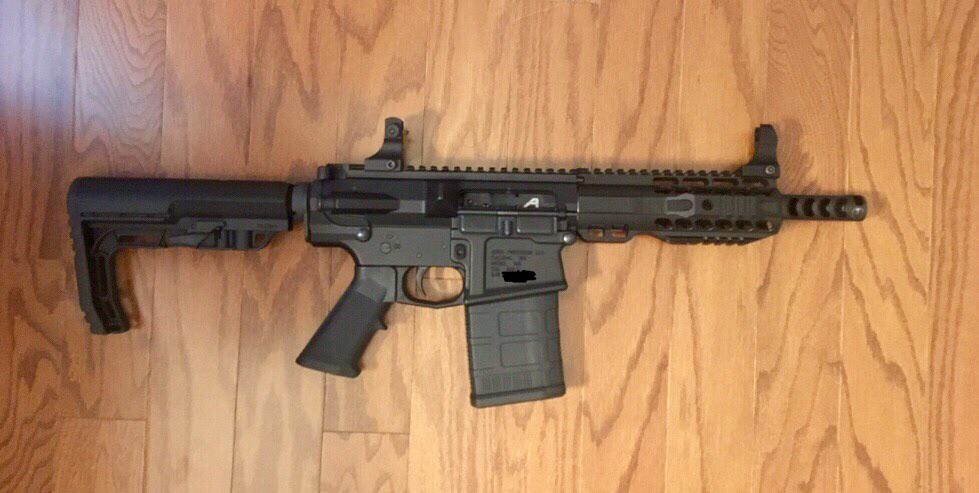
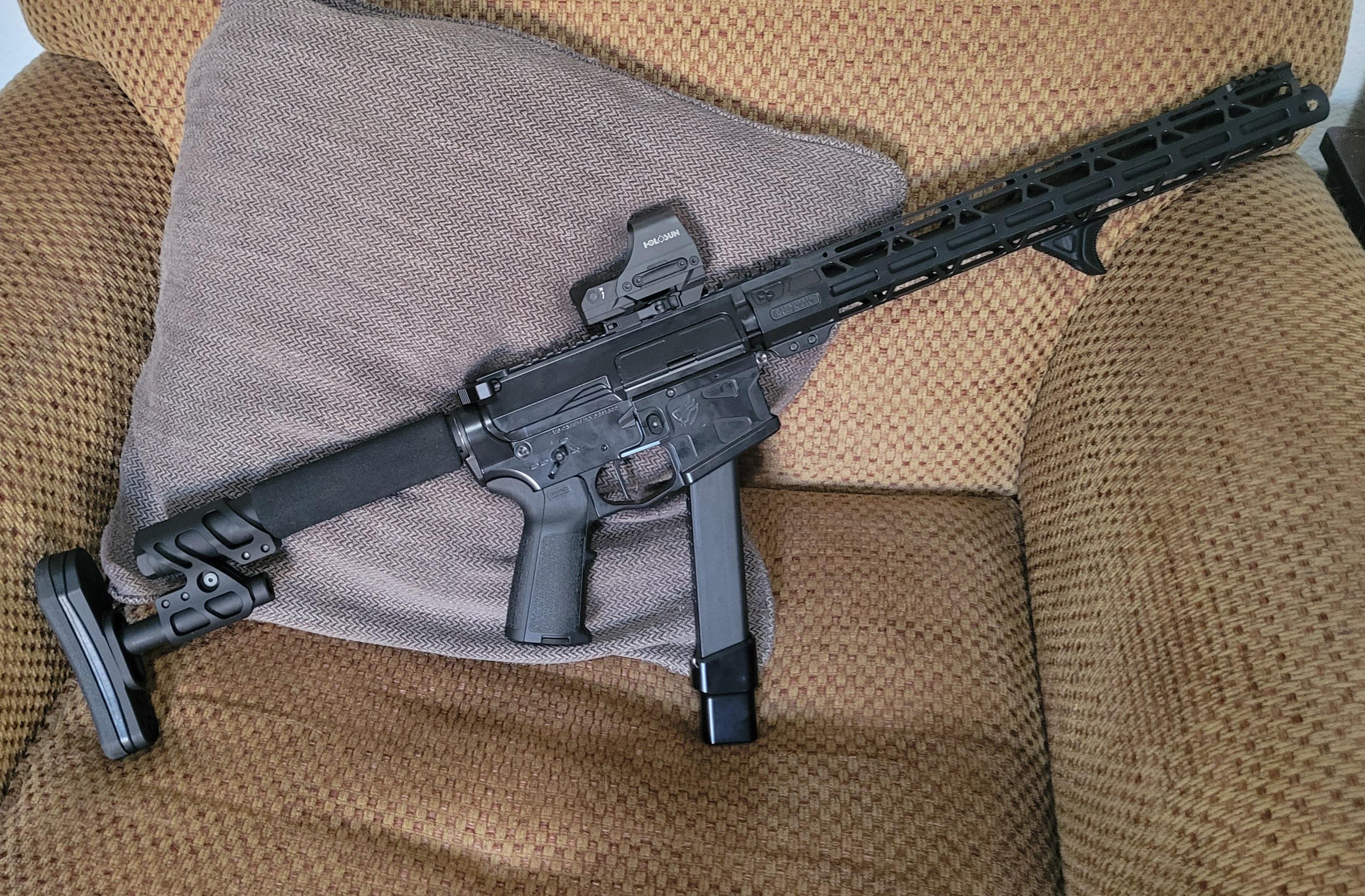
Pistol Caliber AR rifles are exactly what they sound like. AR rifles made to fire pistol calibers. Why would you want this? Well honestly this will be the shortest part of the guide since the answer is pretty straightforward. Some people want lighter recoil, which is stupid because the .223 has no recoil, and others are looking for something suitable to indoor use or perhaps are running PCC competitions. Basically these things are kindof niche items.

The reason these things kick around is because people like ARs, they know how to shoot them and how to use and maintain them, so why not buy an AR in a small caliber instead of another PCC in the same caliber? When put that way it's pretty straightforward on why these exist. However, I would say that the PCC AR is not the best choice in the PCC Market. For one PCC AR rifles tend to be finnicky, picky on magazines, and prone to frequent malfunctions. They also suffer the same issue that AR10s do, in that there is no military spec so parts tend to not want to work together. Frankly the Scorpion EVO is a better option. Hell even the Ruger PC9 (not in game) is a better choice.


But hey holesum 100 reddit gold man says they're good
Okay so how do I not be dumb?
This is a question I ask myself every day, my brain no worky good is very smooth. So I suppose it is worth explaining what you can avoid doing with an AR so you don't look dumb. The thing is that some stuff that are bad ideas aren't very well known. Perhaps this may be best explained with a examples, so this will be a very visual section of this guide.

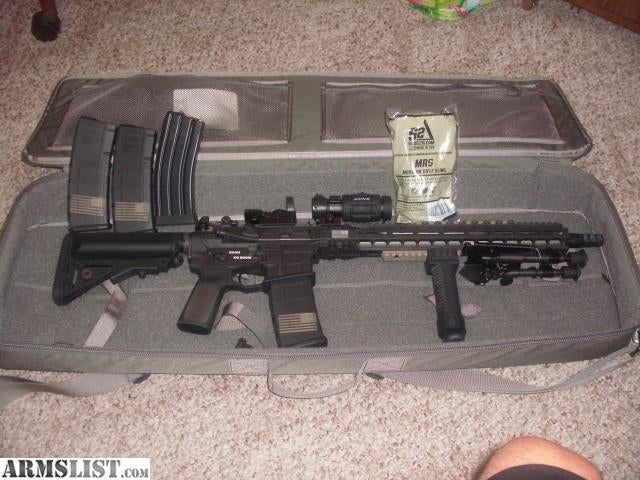
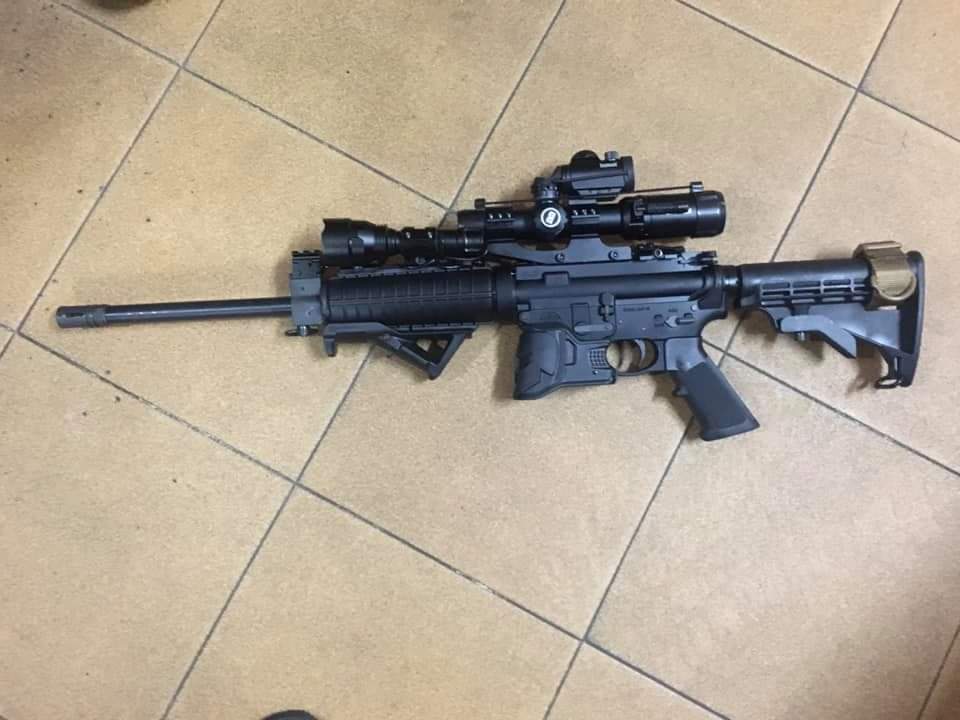
We start with Exhibit A: I recommend we play a game with this, you look at the image, list things that are certainly not halal, and then read my list.


So, lets think about what is wrong with this rifle.

1: This individual has placed his optics backwards, they've put their red dot behind their magnifier.

2: The Red Dot they have chosen is a Ebay special airsoft sight. It will not survive.

3: They have decided not only to do the taboo of using a bipod and a foregrip, but they used the infamous GripPod. GripPods are not good substitutes for a bipod, as they do not pivot.

4: Potmetal Airsoft rail system. That'll warp in no time.

5: Backwards iron sights. Put them on right. They have also put on a rear iron but no front iron.

6: They spent 100 dollars on a charging handle, only to spend 50 on the optics. It's a good charging handle at least.

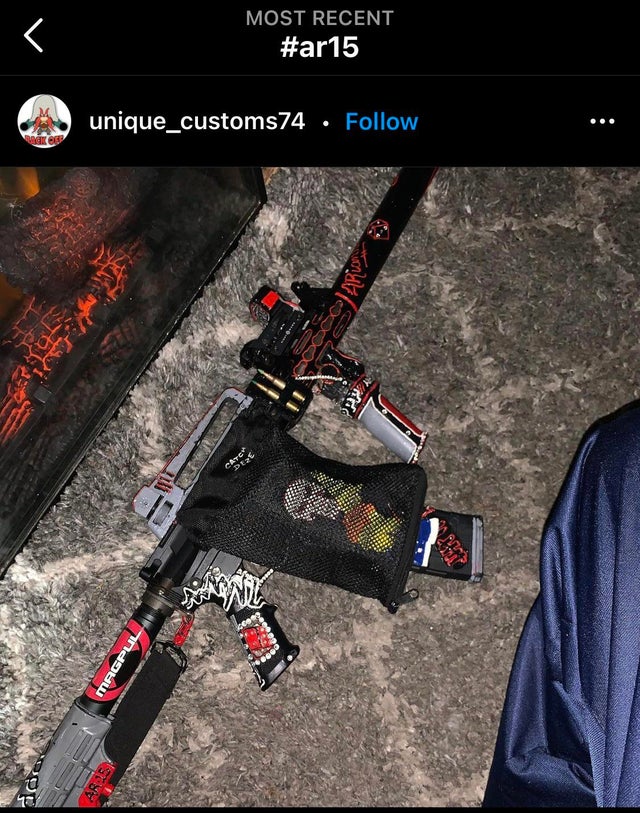
That was fun right? Well lets look over at Exhibit B. Again, look at it and list what you think is wrong, then see the list.


This rifle is on meth.

So lets... digest what we are looking at. We're going to do this masterpiece top to bottom, or muzzle to butt.

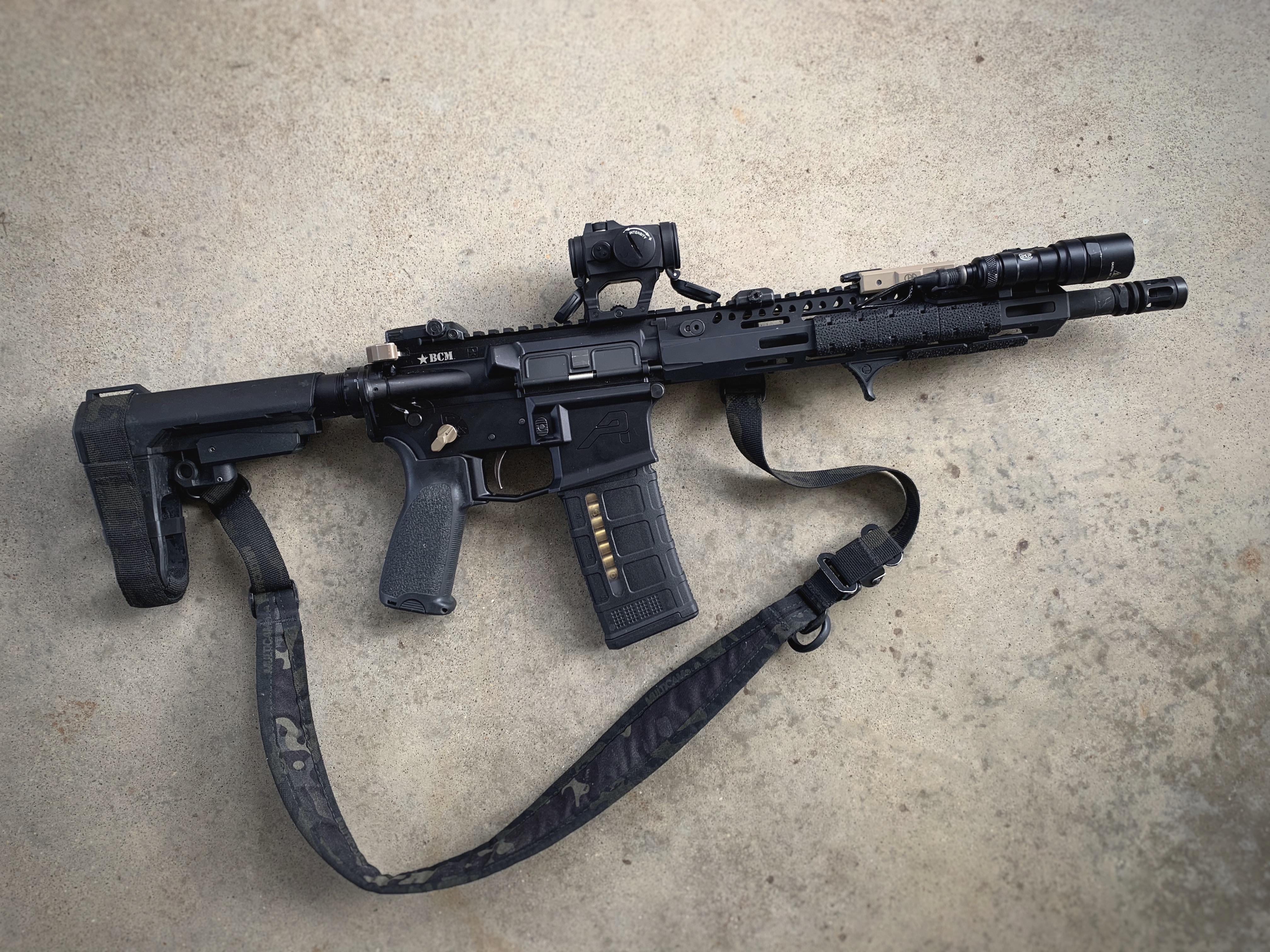
1: Individual has a 7 inch barrel and a permanently pinned muzzle device to keep the gun over 16 inches, just get a pistol and not one with a 7 inch barrel.

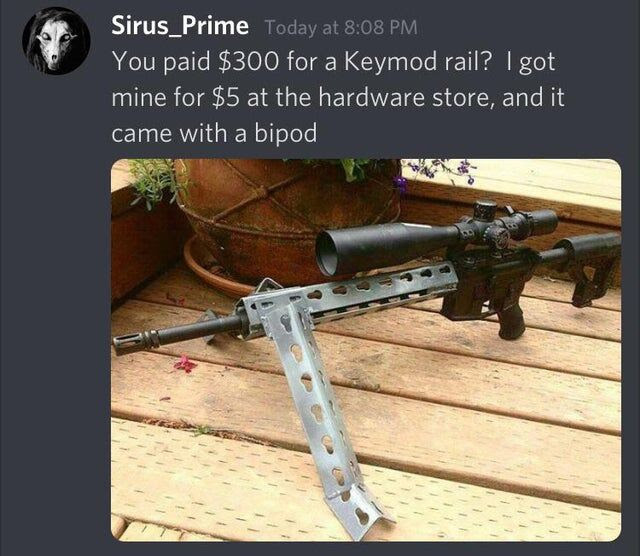
2: Working our way back we have their airsoft keymod handguard. Keymod sucks in general.

3: They have a offset iron sight without a offset rear.

4: Their choice in optic is a sightmark, it's a airsoft optic that costs about 100 dollars, for 100 bucks you can save a few more dollars and get a decent sight.

5: If there is one thing to take away it is this. His optic is mounted on his handguard. Handguards were never meant to hold zero. Keep your optic on the receiver.

6: His foregrip is... what is that?

7: He has a shell catcher. These are useful if you are reloading... or if you're some super sekrit CIA Spook (you aren't). Look closely and you'll get deez'd.

8: He has a suicide bullet holder. Pretty neat if you're a kurd fighting ISIS in Syria. You aren't. Also note his suicide holder has 2 cartridges in it. You going to kill yourself twice?

9: Stickers. Normally I'd say you should never put any sticker on your gun unless it's a rack code for your service rifle, but only because you legally have to. This individual takes it to the next level with what to me looks like a Bart Simpson big chungus ♥♥♥♥♥♥♥♥. Do not put that anywhere near your gun.

10: This only matters IRL, but single point slings in general. Anyone who's used one can tell you the pain they felt when they dropped it to grab their sidearm and got nailed directly in the balls by a falling rifle.

Having a brain aneurism yet? How about one more


So this only has one problem. It's actually a very nice rifle, a CMMG AR-47. These are 7.62x39 AR15s made to accept AKM Magazines. Pretty cool gun. However, his optic is mounted comically far forward. I would also like to mention this individual is not joking.
Building basics.
When building an AR Platform rifle there is a lot you have to think about. Each individual part has to be pretty carefully chosen to mate with the rifle and make a suitable and usable weapon that is worth the effort you put in. This is a video game though so that doesn't really matter. The things you need to think about is application application application. Drill it into your head, when building a rifle the most important thing to think about is application. If you are building a gun without a specific application in mind, whether that means you're trying to just build a gun and not thinking or you're trying to make it do literally everything and more, you will wind up with something that does nothing.


Seriously, set your rifle up to do one thing and to do that one thing very well.


There are a few things that you should absolutely have on a modern rifle, those are a proper flashlight, a rail system, and an optic. Those are the three things you absolutely need. All builds that I list in this are builds intended for use in game. In real life there is far far more that go into building an AR.

So, now that premise is out of the way, it's important to understand what applications different guns are suited for, so I'll list them out by gun:

AR15 or intermediate rifles are best for:

1: General fighting rifles.
2: Medium distance (within 400 meters) Precision shooting.
3: Fast paced shooting.
4: Close quarters

AR10 rifles are best for:

1: Long range precision shooting.
2: 'Checkpoint' guns (set up at a single location and wait).
3: Taking large game, or armored targets.

AR9/PCC rifles are best for:

1: Indoor use.
2: Close quarters.
3: Competition.

With this out of the way, we can now look at how to build different individual rifles. This next part will be exceptionally long so brace yourself and grab a few beers or a coffee or something. I also have another great PSA Q&A to cheer you up before you embark.


I told you PSA Q&A is a goldmine.
Building an AR15 for general use.
The AR15 is the rifle that will have the most varied applications, so in this part of the guide I will describe a few different builds for this rifle, however first we need to think about applications of an AR15.

General fighting rifle AR15 builds.

A general fighting rifle is going to be a type of rifle that is designed with the idea of achieving a variety of fighting roles without trying to do everything. It is vital however that you still consider specific application and environment that your rifle will be used in, as the mission changes so should your tools. A sledgehammer may have been nice for taking down a wall in your house, but you wouldn't want to use one to redo your flooring. Once you remove the idea that your fighting rifle should do everything, you'll start to build better fighting rifles for your specific application.

So to start with a AR in this game you don't need to really consider much in terms of what upper receiver and lower receiver as those parts pretty much are all the same in game. The only real difference in the in game receivers is that some have fixed carry handles, which unless you're doing a retro build you should generally avoid. Because of this the first real thing to consider is your caliber. Realistically this puts you between .300 blackout and .223. Both rounds have their applications, but .223 is a superior cartridge for a general fighting rifle as it has superior ballistic performance. We will touch on .300 blackout in the next build.


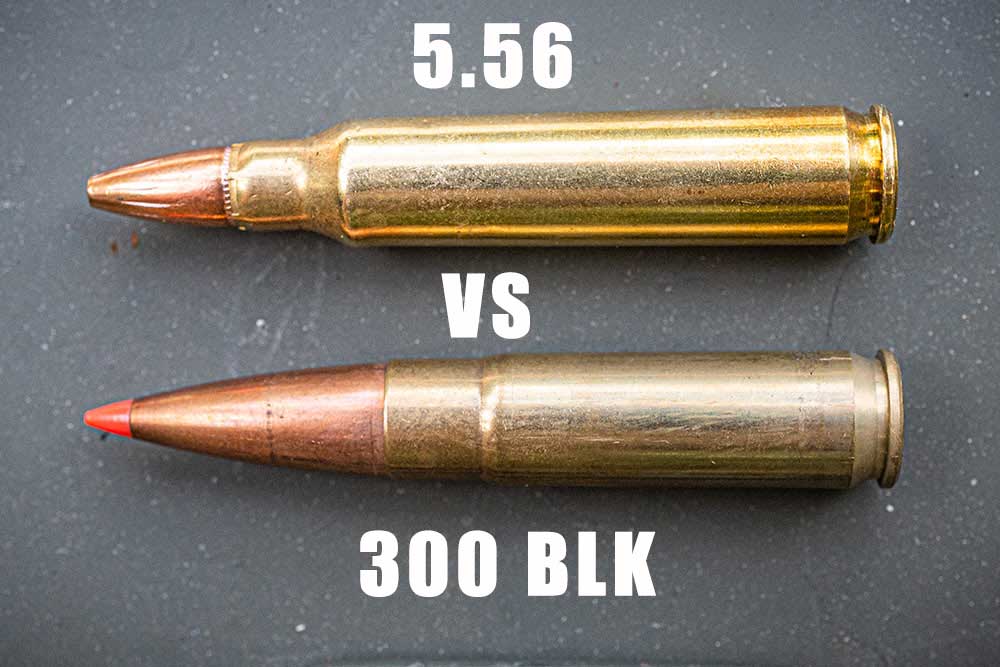
The .300 blackout is literally a 5.56 but necked up to a .30 caliber bullet, meaning far lower velocity. In turn making it great for suppressors.


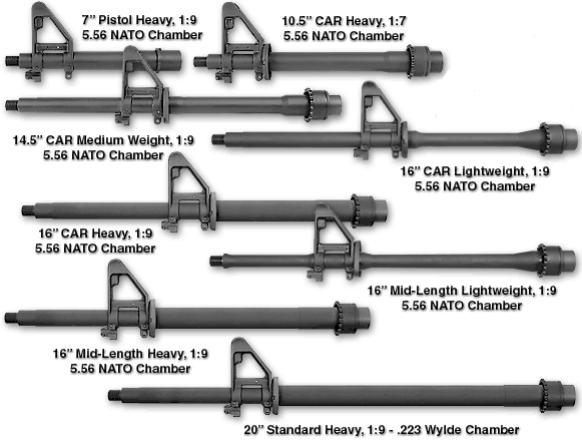
After this you have to consider your barrel. Barrels come in different shapes (profiles) and sizes (length), but as barrel profile doesn't really matter in game we're going to focus on length. A general fighting rifle should be usable within buildings or in reasonably confined spaces but still retain great ballistic qualities for if it is used outdoors. It should be able to go in and out of vehicles with reasonable ease. Lastly it should remain accurate and effective in these applications. This leaves us with a few barrel lengths. Generally you're going to be going below 20 inches (Sorry M16 fans), but above 12.5. Why 12.5 and not 10.5 has to do with the fact that 10.5 is just too damn short period. Many people pick the 14.5 and 16 inch barrel lengths for service weapons, and they are not wrong to do so. However there is a new big boy on the block for barrel lengths, and that is the 13.7 inch AR barrel.

Now why the 13.7? Well for starters the 13.7 has got a solid .8 inches (nice) off of the 14.5, but retains a very similar ballistic profile. This basically means you've got a shorter and more maneuverable gun with nearly the same performance. That extra length is good, and makes the 13.7 a great host for a suppressor, as those cans are vital to modern fighting, but are pretty long in of themselves.


Barrel lengths


So after this you need to consider what gas block you're going to use. This and the equally important topic of gas length (where you want the gas being directed from on the barrel) don't really effect too much in game but in real life it's a big choice, I'm not going to go into it too deep. Basically you've got a few options for a gas block, that being the triangle front post, the Low profile gas block, and the optics ready gas block. Frankly you should never touch the Optics Ready gas blocks, if you're going to get rid of your triangle front post block you may as well go low profile and free float the gun. That's a topic for the last build in the AR15 section though. The triangle post has its perks, mainly that it is deadly reliable. The downside to it however is that you get this front sight and cannot take it off, and that can get in the way of some optics or be distracting to the shooter (I've run triangle FSBs for years and never had this issue but I've heard people complain). Low profile gas blocks have extra fancy features like adjustment at the sake of your reliability. Many Low Pro gas blocks cannot be adjusted on the fly however and require special tools, some even require you to take the entire hand guard off which is a total pain in the ass. They are far better for suppressors however, and when tuned properly your AR will shoot flatter then a .22.

Then you get into your handguard, if you picked a triangle FSB you'll need to account for that and pick a rail that is either 7 inches if you picked carbine gas length (gas lengths are shown in the picture above), 9 inches for mid length, or 12.6 inches for Rifle length (M16). If you have a low profile however you can toss all that out the window and just shove whatever rail you want, many people maximize on this benefit and get rails that go all the way to the muzzle of the gun.

Next you have to chose pistol grips, frankly you should under no condition use the standard government pistol grip, it has a hump at the middle finger that causes blisters and cuts at even medium round counts and there is a gap near the trigger guard that will take off the skin in the web between your middle and pointer finger. Instead you should pick something like a magpul pistol grip or some other aftermarket. They're generally all good so it's up to you.

Continuing on the furniture trend you're going to need a stock. A good stock on an AR will provide a place for a cheek weld (unless you were trained by military or government and put your nose all the way to the charging handle), easy adjustment, and preferably access to storage for a boresnake and spare parts. Stocks like the VLTOR stock or the SOPMOD stock are incredible, but there are plenty of other offerings. Personally I prefer the VLTOR offering, but its worth mentioning that your stock does not need to be what I've described. Frankly if you shoot nose to charging handle like me you can pick something like a MOE stock or magpul slimline.

Now with that out of the way we can focus on the lifeblood of your gun, the optic. This comes down to preference, so I'll lay out a general idea. What you need is for your gun to be usable in close quarters and out to say 300 meters with decent accuracy. Because of that you will probably need a optic that can both do true 1x magnification and around 4-6 magnification. This means you're going to be picking a LPVO, a Red Dot and possibly a magnifier, or a Prism optic. This is all to personal preference.

My recommended build specs, change whatever you want I don't care


So with all of that out of the way, lets describe our General rifle build in a parts list. You can change whatever you like:

Receiver: Any, as long as it's .223 and has a rail on top.

Barrel: 14.5 inch government profile.

Muzzle Device: Standard Birdcage, KAC Suppressor adapter

Rail System: Geissele Automatics 14 Inch rail OR Daniel Defense 14 Inch Mlok or 1913.

Gas Block: Low Profile.

Pistol Grip: Daniel Defense pistol grip (They have nice squishy cushioning on them. Very Comfy).

Stock VLTOR collapsible SOPMOD stock OR Daniel Defense Stock OR Magpul MOE SL Stock.

Optics: Aimpoint CompM4 with Aimpoint Flip Magnifier OR Elcan Specter OR reputable LPVO.


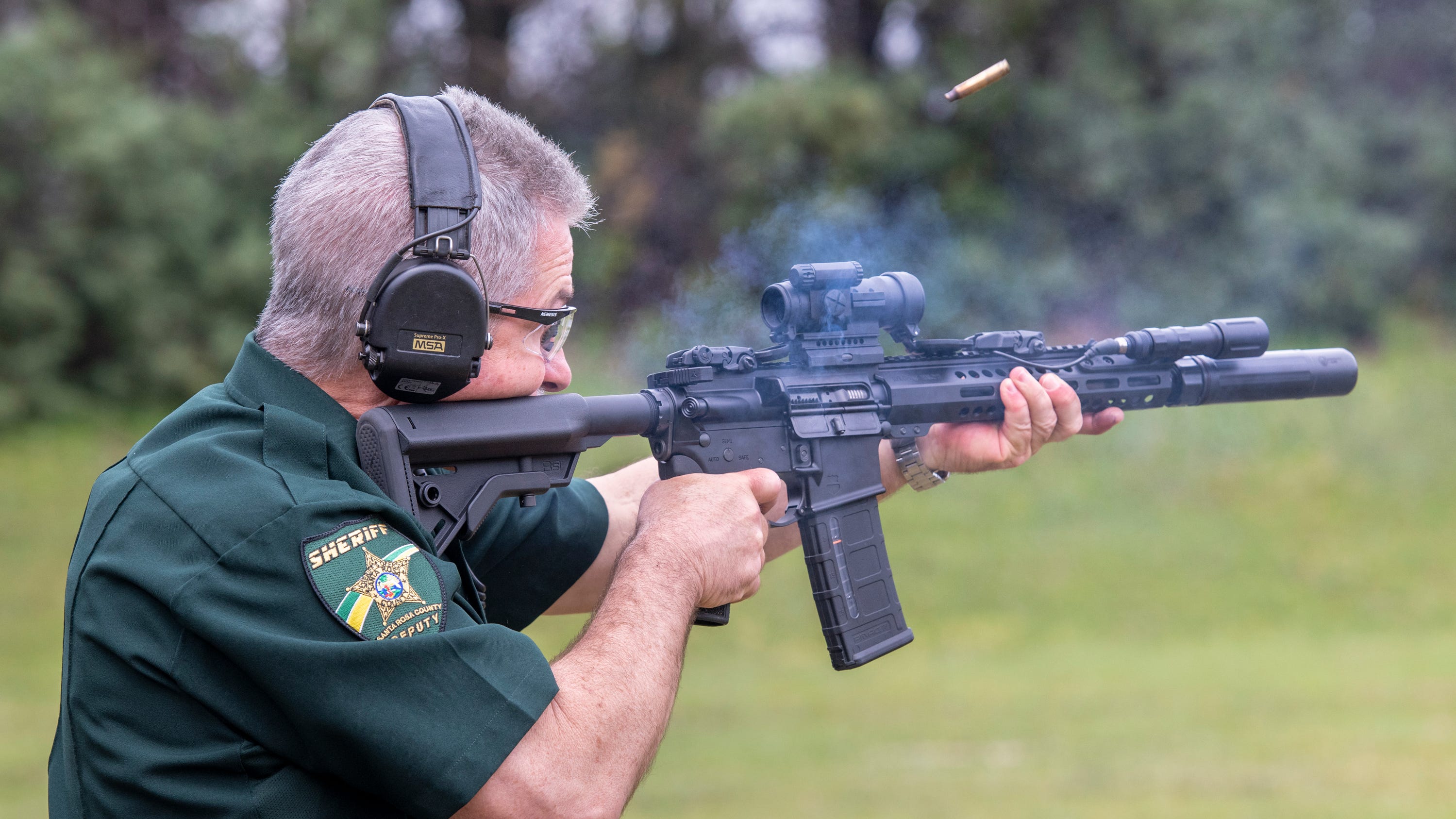
This is what a good general use rifle should look like. In this case the officer has chosen to forget the Magnifier and just use a dot. This is a smart move, they're police they don't need to shoot more then 100 yards.
Building a close quarters AR15
The first build got a lot of basic information out of the way, so this part will be much shorter. The application of this rifle is to be able to be very quickly maneuvered through buildings or in and out of vehicles. In game this means buildings as there are no vehicles. With this in mind the name of the game for this gun is 'light, fast, hard'. Essentially we are looking to make the rifle light and fast, while still hitting hard.

The first thing to consider again is our barrel length, as much of the general purpose build still applies. In this case 14.5 is a tad long, so 13.7 or 12.5 will be your friend in this case. Avoid anything below 10 inches as they generally have severely hampered ballistic performance. You will also want a can on this gun, indoors shooting is remarkably loud and so are shorter barrels. I'd like to also make a mention to absolutely not use a muzzle break on one of these. I dare you if you own a AR15 with a muzzle break and a barrel under 14 inches to go to your local indoor range when nobody else is shooting, take your ear protection off, and shoot 10 rounds without ear protection. You'll start to understand really quickly why you wouldn't want to do that. What is most important here for the game is to have the shorter barrel so that you can take it around corners easier.

Next up is your gas block. You're going to want the low profile again, in the general purpose build it was fine to use a fixed post but when you use a can with a short barrel you really need that gas control. This doesn't really matter at all in game however so do what you want, not like you'll damage the can from overpressure. Some early 2000s and late 90s special forces used the Fixed FSB gas block but that wasn't exactly by choice, and they had to fidget with a ton of crap to get that working.

Next is your furniture, second verse same as the first. Pick out a good quality rail with enough real estate to mount what you need. Your pistol grip can be pretty much anything other then the standard one since it's garbage. Your stock however should be something slim to avoid catching on crap. The Magpul MOE SL comes to mind, but there are other options like the Daniel Defense Stock. The standard stock even works kindof okay in this role.

The caliber is where this gets interesting. You can pick either .223 or .300 for this, but I would pick .300. The .300 blackout has the best performance generally within 100 yards, and in Close Quarters you are measuring your distance in feet or inches. Because of this the .300 has no real downsides, and it is incredibly quiet with a suppressor. Frankly this is one of the best close quarter cartridges for a fighting rifle.


So now we can move on to the parts list:

Receiver: Any, as long as it's chambered in 300 blackout.

Barrel: Anything over 10 inches and under 14.5.

Muzzle device: You'll want a can on it, pick a muzzle device that can utilize one.

Rail System: Lightweight MLOK rail OR lightweight 1913 rail.

Gas Block: Low Profile.

Pistol Grip: Daniel Defense pistol grip (still Squishy).

Stock Magpul MOE SL OR Other slim stock.

Optics: Aimpoint CompM4, EOTech EXPS, Aimpoint T2.


Now that's peak performance.

Building an SPR.
SPR Ar15s are a very unique type of rifle. You could say they are a Special Purpose Rifle. So what exactly is an SPR? A SPR is a AR15 designed to accurately engage targets beyond 300 meters but within 600. Think of them like the step down from the AR10. They're not long range rifles, they're what we call Designated Marksman Rifles. These rifles were intended to be handed to someone in the unit to shoot farther then the average rifleman. They are not sniper rifles, but they are remarkably accurate.

So the SPR is going to be the biggest of the AR15 builds you'll reasonably use. These are great for all sorts of things. Think of them like a baby AR10. What you're going to need to consider with these rifles is primarily how you get a AR to be as accurate as possible.

The first part of this is to think about the barrel, and this is go big or go home. Barrels between 18 and 24 inches are preferred for this role and renowned by competition marksmen who use SPR Rifles. These give the .223 it will fire a whopping 3300+ velocity, which for the uninitiated is very damn fast. They're also very damn heavy, but that's good. A heavy rifle is harder to shake around and has less of a change of its accuracy due to heat. This is the most important part of an SPR, a good barrel.

As I was writing this I discovered that the ModulAR mod, or at least a mod for the mod, adds the 6.5 Grendel option. With that in mind it is worth mentioning that the 6.5 Grendel is a fantastic caliber alternative to the .223 for SPR purposes as it is ballistically superior to the .223 in every way (with a little more drop), delivering fatal potential out to something to the tune of 700 meters. Definitely worth it if you are making an SPR in game.

Now we have to move to the rail, this rifle will need a bipod as well as its obligatory flashlight (this rifle may be heavy as ♥♥♥♥ but is still versatile). Pick something that goes all the way to the muzzle of the gun, so a 17-22 inch rail system. There aren't too many options in this length but they do exist. You will want to utilize a full stock of some kind with this rifle, however you can use a collapsing stock. I prefer the Magpul UBR for this setup, as it is adjustable while retaining nice cheek risers.

The most important accessory to be on this rife, even more then the bipod, is a good optic. Optics on a SPR should be something akin to what you would throw onto an AR10, maybe a bit less powerful but still they should achieve a similar role. These optics should be something like a 3-12, or a 3-15 optic. SPRs should use a low profile gas block as they will need to utilize high power optics. It is also advisable that you use a offset red dot or irons on this rifle, as the optics you are required to place on this type of rifle are not all that versatile.

And for the build list:

Receiver: Any, as long as it's .223 or 6.5 Grendel and has a rail on top.

Barrel: 18-24 inch barrel.

Muzzle Device: Only run a can on these. Flash gives away positions.

Rail System: Adequate length MLOK or 1913 Pic Rail.

Gas Block: Low Profile.

Pistol Grip: Daniel Defense pistol grip (Very. Very. Very. Squishy.)

Stock Full OR Collapsible. You will want a cheek riser.

Optics: Precision optics such as a 3-12 or higher AND an offset irons or Red Dot.


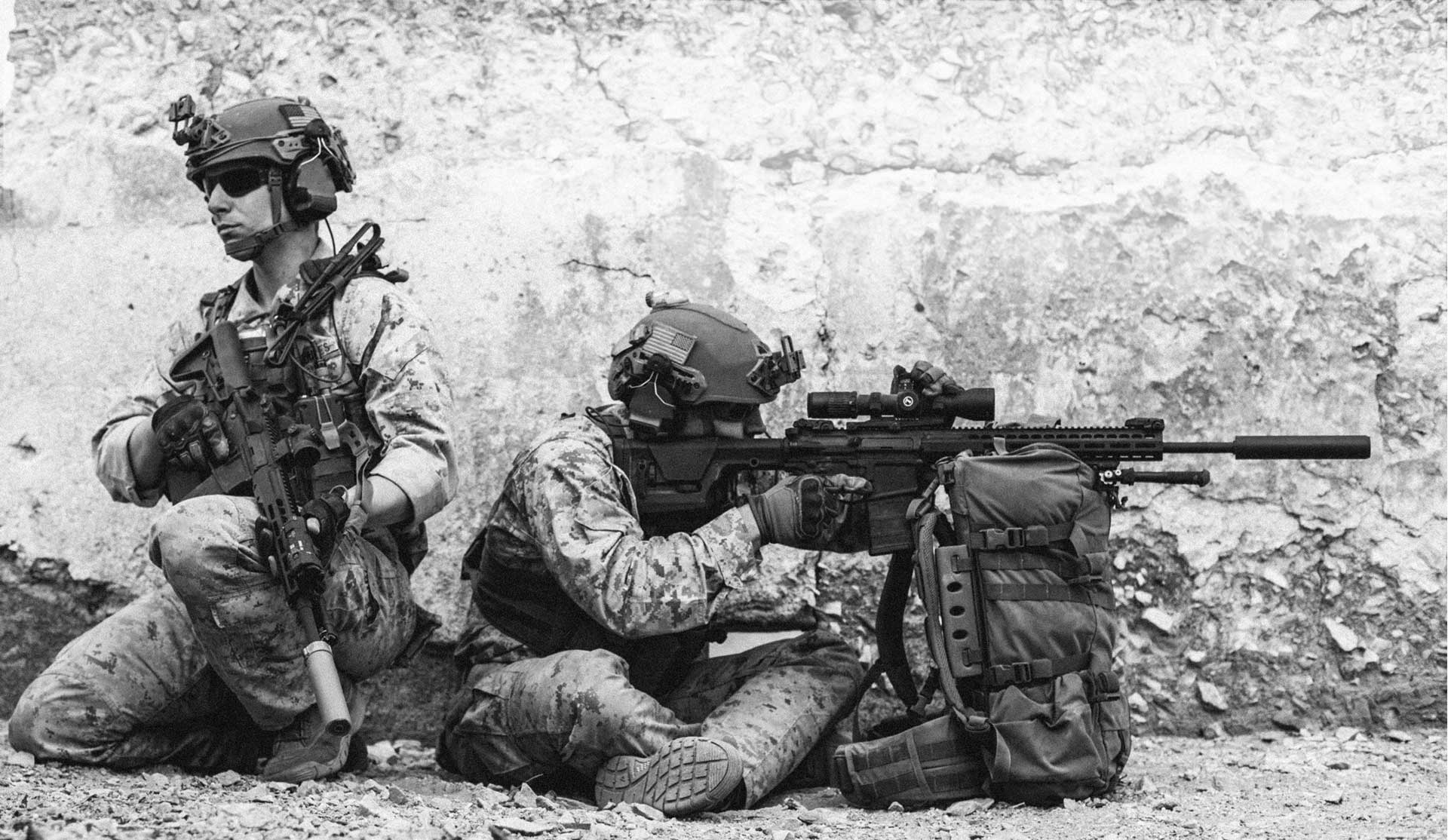
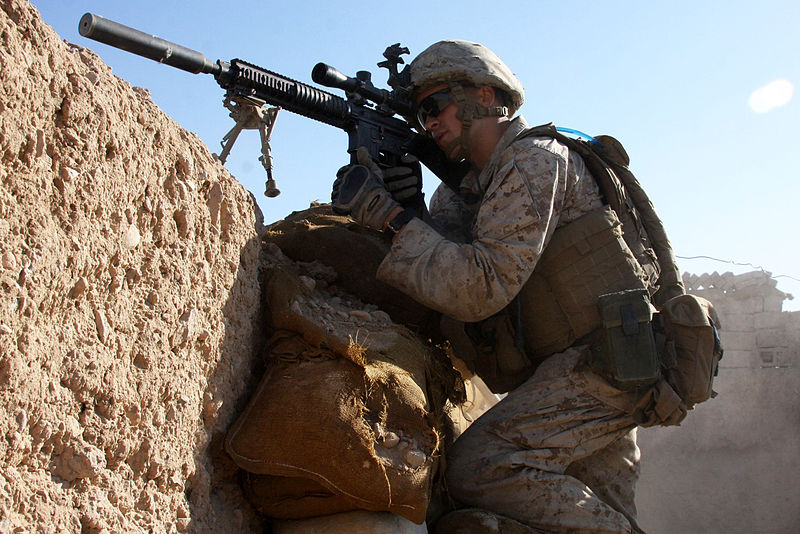
The USMC is known for its use of SPRs. This image of USMC LT.CPL Steven J. Zandstra was taken in 2010 in Sangin Province, Afghanistan.
Building an AR10
The AR10 rifle has bit more limited number of uses. These things are precise, and I mean extremely precise. Because of that when thinking about what you want to do with one you're going to have to play into its strengths and not try to make it something it isn't. For those who want the AR10 to be a light and fast fighting rifle I'm sorry but this thing just isn't it. So when looking at an AR10 you've got to keep in mind that this thing will be big, and it will be heavy. Just because you can make it short and light doesn't mean you should, given it's drastic decrease in effectiveness.

It is also worth mentioning that AR10 rifles are best in their most practical form, that is in a semi automatic rifle. There is no need to try to make the AR10 into something it isn't. I've had people try to push the idea of a AR10 support weapon or other stupid ideas that I have gone over relentlessly and the point is that one is just as stupid as the other. So to start we're going to focus on what I consider the optimal AR10 build.

For your barrel on an AR10 you're generally going to be stuck with a heavy profile barrel, however you could go with a lighter profile. This doesn't matter in VR, but if it did I'd stick with heavier profile as you don't want your zero to shift as much. What does matter is length. An AR10's effective distance depends heavily on its bullet. The two we will focus on is .308 and 6.5 creedmoor. A .308 is effective out to about 900 meters, after which point it goes subsonic. The 6.5 however remains effective out to about 1200 meters. You will want the rifle to have a barrel length between 20 and 24 for .308, and with 6.5 creedmoor you can do 18-22. I said these guns were big and I meant it. You're also going to want a can so you can add that to the insanity.

For your furniture you're going to want a solid rail that can accept a bipod. On this rifle there generally isn't a need for a light but if you think you'll need to use it up close you can put one on. For your pistol grip you should use something with a grip angle that you can hold for a while, so I find that I enjoy Hogue grips on my AR10s, however there's plenty of options out there. As for your stock you'll want a full stock with cheek adjustments. You may not want a collapsible stock on these guns as frankly you're going to want a long length of pull and a good cheek rest.

And for the build list:

Caliber: 6.5 creedmoor or .308.

Barrel: 18-22 inches for 6.5, 20-24 for .308. Some people bring it down to 18 for .308, you do you.

Muzzle Device: You will want a muzzle break on this, these things can kick. Cans are good too.

Rail System: You'll want a long rail to get the bipod as far forwards as possible, MLOK preferred but 1913 works too.

Gas Block: Low Profile.

Pistol Grip: Whatever is comfy.

Stock Full stock with cheek riser.

Optics: High power precision optics, up to 24 or higher power. Maybe a offset dot if you really need it.


That's what an AR10 should look like.
Building PCC AR rifles
The PCC rifle is a weird one, at least in real life it can be pretty intimidating to build since you have to fidget with so many parts that may not all work together. I can't tell you how many buffer weights I have laying around from my 9mm AR Builds. These things are also very specific in their purpose, so we're going to have some fun with this one and build a competition gun, since the only real use for these other then that is indoor home defense and plinking.

So for competition the name of the game is speed. It's all about being able to hit targets quickly and accurately. You are graded on how well you shoot and those scores determine the winner. Because of this it is important to think about what makes speed, in this case it's how easy it is to swing and manage the gun. Because of this we are going to make a PCC that can be brought on target quickly.

Following this logic we are going to focus on competition parts and, interestingly, a 16 inch barrel. The 16 in barrel in this case is meant to give us a longer dwell time (this has to do with the gas system, it can make the gun very controllable. I'm not going to go into it), but also allows us to put a long rail that you can hold at the very front making the gun incredibly easy to swing around. To lighten the gun it's recommended to use a pencil profile barrel so you can swing it around much faster. A suppressor would not be optimal on this gun, so instead you'll want a very aggressive muzzle break or compensator that can mitigate most of whats left of the recoil.

For your furniture you'll want to use MLOK since it's light, utilise a 14 or 15 inch MLOK hand guard and this thing will be a feather. For your pistol grip it is important that you get something you can grab tight and hold onto, Hogue is good for that type of thing. For your stock a skeletal minimalist stock will keep the gun balanced in the center for rapid movement. You want it to feel like you're pointing a stick.

For your optic you'll want an LPVO or just a straight red dot as you'll need to engage targets quickly. LPVOs with a throw lever are nice, but in game you have to click the magnification one at a time rather then throw it to max. Because of this I recommend the Elcan Specter in game because it is a direct power combat optic that goes straight from 1 to 4. That'll shave you a few seconds when the timer counts.

I won't put a parts list because this sort of thing is meant to be highly customizable to user preference.


Light is fast and fast is good.


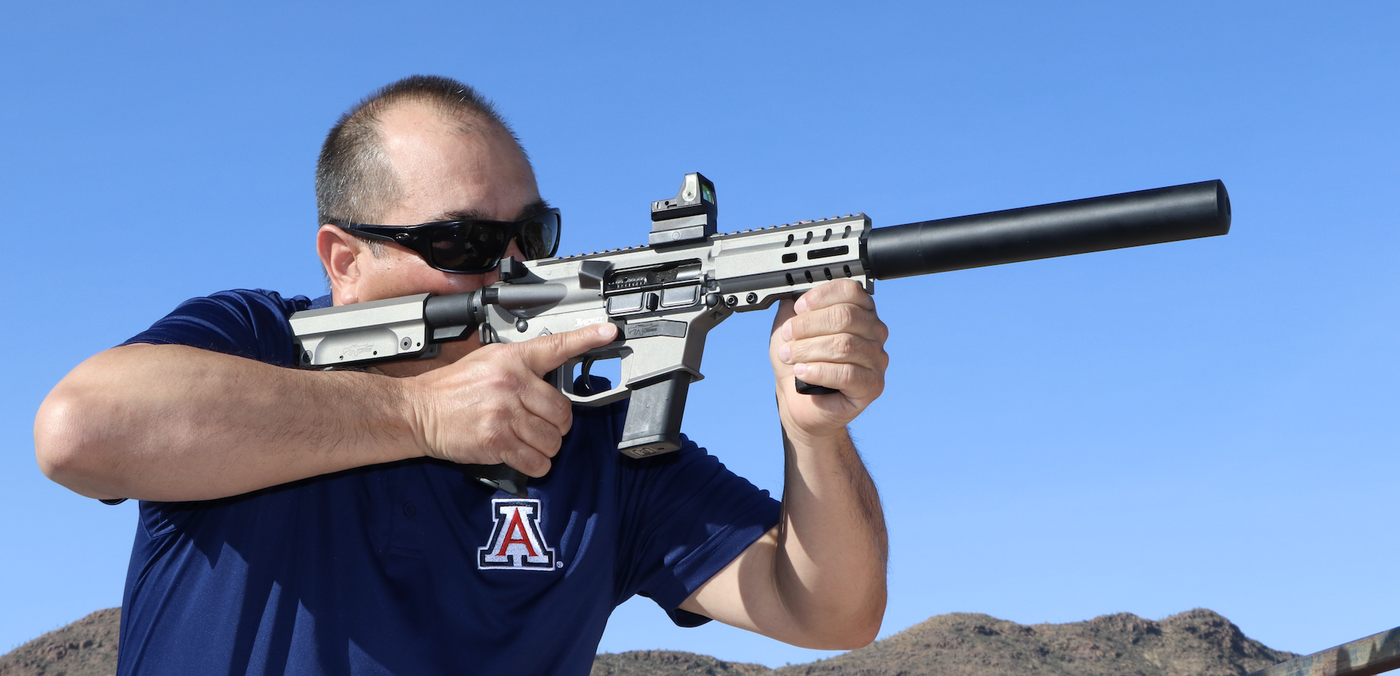
As per another use for PCC ARs is as a suppressor host. The .45 caliber AR is probably the best AR for housing a suppressor in general in terms of noise reduction as the .45 is naturally subsonic, however it isn't nearly as effective as 300 blackout. For what a .45 caliber AR would be used for though that's acceptable as that is going to be an exclusively indoors home defense weapon. With those you'll want to use a shorter barrel (8-10.5 inches) and a very effective and long suppressor to get the thing to be absolutely silent. Give it a flashlight and a red dot and you've got a serious PCC.


The CMMG Banshee is exactly the type of 45 AR I was referring to.
Okay I've built the thing, how should I use it?
If you're tired of building well now it's time for tips and tricks, I'm going to divide this section into parts on what we're focusing on, these parts will be Accuracy and optics for part and handling for part 2. I'm going to just jump into this as there isn't much to preface this.

Accuracy and Optics

The AR is a decently accurate rifle if a good bit better then other fighting rifles. I'm going to describe in this section a few lifehacks to get the most out of that.

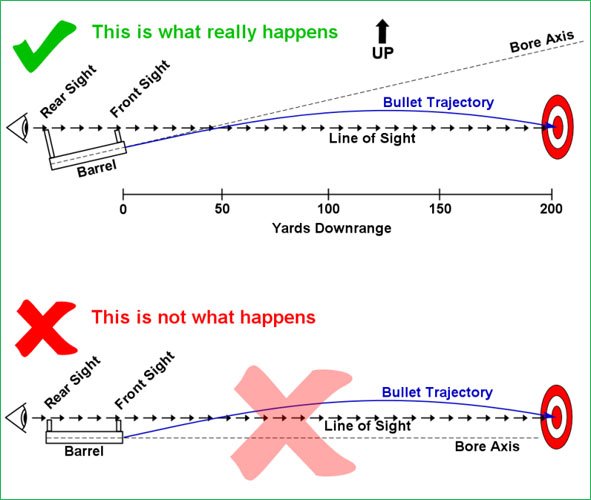
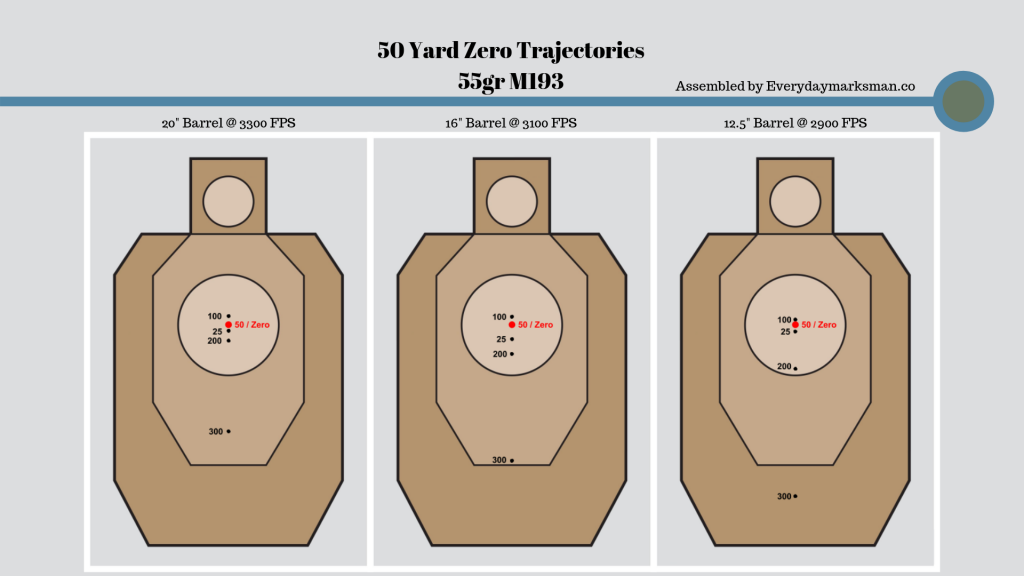
First and foremost, zeros. This takes directly from my sniping guide so if you read that then you most likely already know this, however there is a fantastic life hack when using a .223 AR15. This is that your red dot can actually be used to the maximum effective distance of .223 out of a 16 inch or less barrel without any magnification! How does this work? Well lets look at how zeroes work. Your bullet that you fire will travel into an arch, a arch where your optic forces you to aim your gun upwards slightly to hit the target at the desired point and distance. It's trigonometry. Well that bullet doesn't just magically stop at the intended target, it keeps going upwards higher then where you aimed, and eventually drops back down. This means that, just as a broken clock is right twice, the bullet will be where you're aiming at 2 different distances if you zero your gun properly.


I feel like a crazy person with a cork board.


Neat right? Well here's the secret: 50 meters. If you zero your red dot at 50 meters with a .223 your bullet will actually drop back down onto target at 200 meters, which means that you just need to aim your rifle slightly high to hit the target directly at 300 meters. This allows you to use your AR to the maximum distance it is effective to with just your raw dot. With a magnifier it can be seriously effective.


Bullet impact by distance.


Does this work only for Red dots? Of course not! It works for prism optics as well, and frankly because the prism scope's ballistic drop indicators in game do not work as they rely on optical illusions that cannot be simulated in vr you should do this zero with them too. If you know the distance of your target however you might as well adjust your zero to the distance that you're shooting, but keep in mind your effective distance is 300 to 400 meters with a .223 AR. If you are using an SPR you should try to zero at 100 and adjust for distance.

Now that is neat but what about AR10 rifles? Well personally I would zero at 100 but the 50 meter zero may actually work here too as the .308 can have similar trajectories as your .223, however it is important to note that the AR10 is a precision rifle, and therefore you may want to always be zeroing for estimated distances to targets rather then using a 'battle zero'.

It's not worth talking about AR9 and AR45 guns here. Just sight them in for 25 and be done with it.

Another important thing you need to know about AR optics are their cowitnesses. There are a few general 'cowitnesses' that are used, these are Absolute Cowitness, Lower 1/3 Cowitness, and 1.93 (1.93 inches upwards). Absolute cowitness means that when you have the optic on your gun with irons, looking through the optic will result in you having a lined up set of irons. This is what you generally see with EOTechs and are the main reason I do not use them. Lower 1/3 (AKA the superior one) is lined up so if you look through it your iron sights sit in the lower 1/3 of the optic. This means your sights are still usable in emergencies and that you have a clear sight picture. The 1.93 riser is meant more or less for night vision or people who are giraffes. Those are the silly looking and incredibly tall optics risers you see on the market nowadays. Frankly I stick to lower 1/3 as don't like getting my head low enough to use absolute cowitness. This is entirely preference. EXPS EOTechs use lower 1/3rd nowadays so if you want a EOTech that's still lower 1/3 you can use that.
Handling the AR15
The handling of an AR rifle is pretty straightforward since it is such a comfortable gun. However there are some tricks. Have you ever seen someone tilt there AR when shooting up close for instance? Well we're going to be talking about stuff like that here.

The first thing I want to talk about is proper loading technique. Many people I see in H3 and even in real life are not exactly trained on ARs and don't run super tacticool awpur8tor courses that cost 8000 dollars with no hotel (ask me how I know). So the first thing that has to be mentioned is that many do not actually load the rifle in an optimal way. Now there is obviously no objectively wrong way to load an AR15 as long as the magazine actually gets out of the gun and you get a new one in, but 'improper technique' will cost you time and time is life. The first thing I want to talk about with this is that you don't need to load an AR one step at a time.

All the time I see people doing take and hold or trying to look 'tacticool' in real life and they try load the gun one step at a time. 'Take mag out, put it away, reach in belt, grab new mag, put mag in, ready (or charge rifle if they didn't do that)'. You don't need to do it like this and if you're playing take and hold with spawn lock frankly it's a bad idea, you should drill yourself to do it quicker by doing multiple steps at once. Your steps should look like 'Eject magazine while grabbing new magazine, load magazine, fire'. Like I said, no need to be sluggish about it, unless you need to keep the mag in limited ammo there's no real reason to not let it drop. If you are keeping the magazine then in game there's no real good way to do this. You could try the better hands mod and grab both mags at once, which is something I'd recommend you do in real life if you're drilling. If you don't have that however what you can do is grab the magazine out of the gun (because in game you can do that instead of hitting the mag release) and put it in a pocket. I recommend you have a 'dump pocket' that you just keep open to put that magazine in temporarily.

If you are going to let it drop however you want to keep your eyes forward, those seconds when you aren't looking forward is enough for the situation to change so you should try to memorize where the magazines are. Enough practice and you will have it down, it's not as intimidating as it sounds.

Another thing I see people do all the time that they should not do is that they try to use the charging handle whenever the gun is empty and the bolt is locked back. Don't do that. Start using the bolt catch. It's on the left side of the rifle right where your thumb is when you insert the next magazine. Just tap that and the rifle is ready, your hand is already on it. Grabbing the charging handle is charging the rifle adds time to your reload and honestly doesn't make much sense form a practical standpoint.


If you don't need to hold onto the magazine or you can pick it up later, just let it drop.


Now away from reloading lets focus on a real tip, point shooting. When a AR rifle is shouldered you'll notice that it practically is pointing directly forwards from your chest. This is because the ergonomics of the AR naturally lends itself to point shooting, or shooting without aiming. To do this you want to point your body (you can use the pec your rifle is shouldered on to help aim) at the target, lift your rifle and fire. To make point shooting even easier however you can tilt your rifle at an angle, allowing you to see over the gun slightly. This allows you to witness where the gun is pointing better and 'feel' where the shots going to land. This trick I really only recommend if you're really close to your target and/or you are using visible or invisible lasers though.

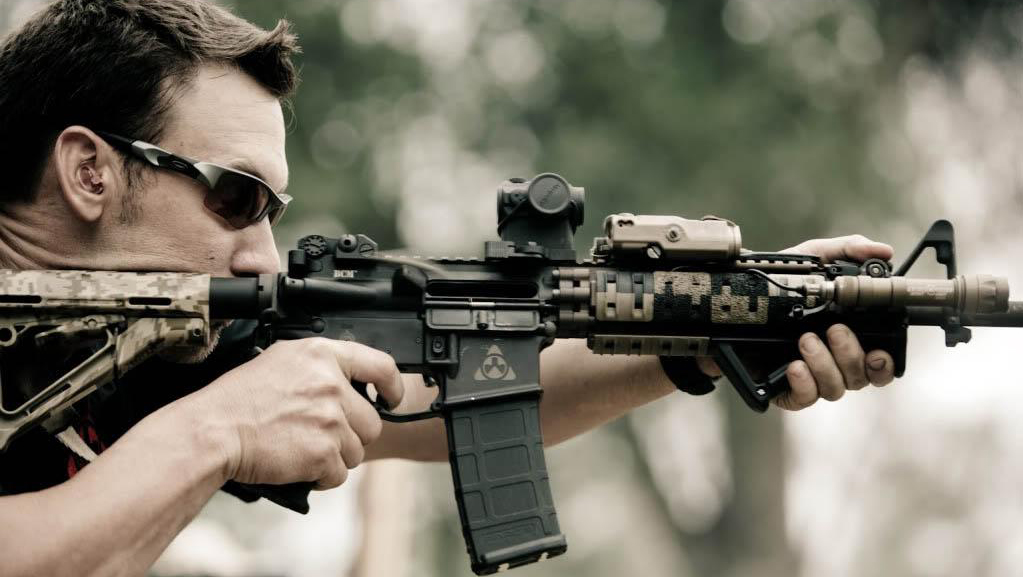
Now point shooting is nice but it's also important to remember that where your hands are on the gun effects your ability to do that. In general the best way to handle an AR plastform rifle is as far forward as you feel comfortable, meaning that you generally probably shouldn't be holding the magazine well unless you need to or are bracing your elbow into your hip (see the sniping guide). By doing this you're able to brace the gun more firmly into your shoulder and attain far more control of the weapon then before. It's also important to have the stock adjusted to your height, this is exactly why they're collapsible. Not everyone needs to throw their AR onto the farthest position. I take people shooting all the time who do that and whenever thy try the AR they put the stock all the way back and now they can't fit both hands properly on the gun. Just adjust it to make it comfortable.

Another important mention is that when handling an AR rifle with a fore grip you want to get a nice 45 degree clamp on the gun using the grip to force it even more firmly into the shoulder. You can grab the grip proper when the gun gets hot, but before then you want to maximize your accuracy and control as much as possible. The better you get at handling the rifle the more you can squeeze out of it, so fidget around with how you hold it and find what give you the most control. I've attached some examples below to help you get an idea of how this works.

Example A: With a Angled fore grip.


As you can see, AFGs naturally help with the neutral position you want your hands to sit in.


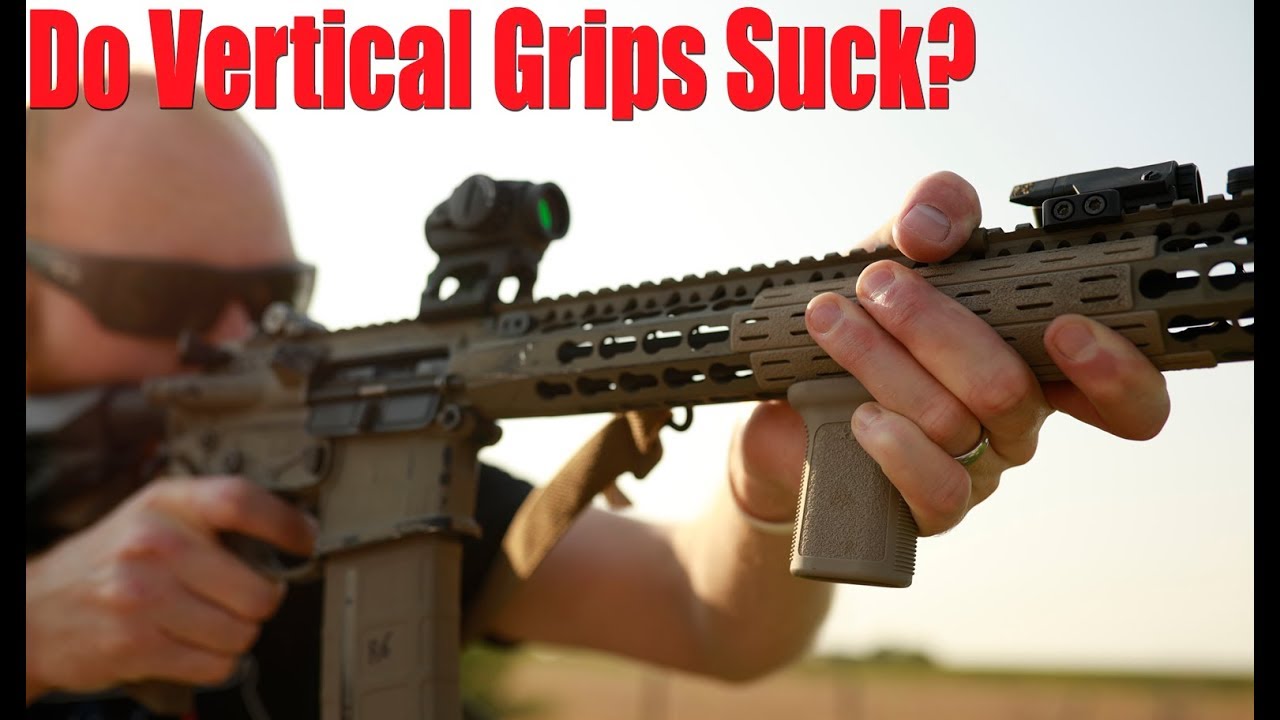
Exhibit B: With a vertical grip.


Spoilers, they don't.
Conclusion. What's so special about the AR?
So, now that most of the information I intended to present has been presented, it's a good place to wrap things up.

The AR rifle is a fantastic combat weapon, and it remains very relevant today more then a half century after its design. Other combat rifles that have been adopted have risen and fallen, whether that's the age of the Cold War battle rifles like the FAL and G3 or other intermediate caliber options intended to replace this system such as the G36 and FN FNC. This old work horse isn't going anywhere. One of the reasons this thing is so damn prevalent even with modern wonder rifles on the market is simply because this weapon is so incredibly adaptable that it is a perfect platform for modernization.

It is that future proofing that proves a great weapon, it makes the rifle a weapon that doesn't need replacement. When the nature of warfare shifted, the AR platform was able to shift with it. Whether this was when the meat grinder of the 3rd generation of warfare where a rifle simply had to be simple to the 4th generation 'future solder' battlefields where all rifles had to have advanced optics and solders were running NODs the AR platform was able to fully adapt. Of anything the rifle has not aged at all, it simply has gotten better with time. The same can absolutely not be said about the competitors which existed when the AR was first fielded. Even the famed AK platform has had such significant trouble modernizing that the weapon is only procured by new military forces (we are not counting terrorist groups or non state actors who generally purchase second hand) who chose them out of reasons like pride, politics, or finances.

Yet we will still see pundits rushing to replace the AR. They argue over things like 'superior calibers' and 'better polymers', and will clamor towards trendy 'future rifle' programs which produce nothing but jumbled messes of unserviceable and unworthy weapons to replace this platform. The reality is that there is a reason they struggle to replace this weapon, it's because the AR isn't even at its peak of effectiveness yet. As metallurgy advances and the the calibers advanced, the AR generally can simply adapt to the times. So understanding this platform is essential to understanding what makes a modern fighting rifle, and that is it's ability to adapt and conform to whatever it needs to do.

Because of this, it is a rifle that conforms not just to the mission, but to the user. Every individual has a idea of what they want their rifle to do, they have a idea of what they consider optimal. This 'peak performance' is something which can only be realized by rifles with extreme adaptability. The sign of a truly versatile rifle is to see that it can be considered optimal by completely different users with remarkably different tastes, uses, environments, and experiences. The ability for a rifle to be created to do exactly what it needs to do for each user is a remarkable thing.

That said, I am not saying that there are not objectively superior ideas or concepts on how a rifle should be used or set up per say, nor would I dare insult the AK platform or other good rifle platforms to say that the AR is the only good fighting rifle. This would completely ignore the facts that AKs, CZ Bren rifles, G36s, and other versatile fighting rifles are fantastic choices for their users. What I am saying however is that their level of adaptability as a platform, not as individual guns, is nowhere near the level of adaptability as the AR.

Its with that in mind that I'll pass it on, go ahead and enjoy the AR. It's a great rifle.

Edit: Uhhh so the M4 got replaced. It got replaced by, of anything, a battle rifle manufactured by Sig. Welp. Pack it in guys. Officially new service rifle. Do I think that this conclusion is still accurate? Yes. To be blunt the new rifle would've been great if we were still in Afghanistan. Long range flat shooting trajectories are great! The problem is they not only adopted this after the withdraw but their rationale was 'body armor penetration'. I don't need to explain this in too much depth but all you need to know is that's a total meme. Russia, even prior to the war, didn't even have enough body armor to issue everyone and it was common for soldiers to have to share body armor on different days of the week or to have to rotate it off for whoever was on the guard shift that moment. Imagine having to do that as a US Soldier. American soldiers are allowed to literally chose the size of their IOTV. Imagine that, you get to chose what freaking size you want. In Russia that's not a option. Oh and China? At least Russia's plates aren't literally dangerous to the user. Frankly if they wanted armor penetration they should've just developed a better AP 5.56 cartridge or switched the AR's caliber to something like 6mm ARC or 6.8 REM with specially developed ammunition. Either way doesn't change the fact that the number one killer on the battlefield for the past 150 years has been rifled artillery and other explosive devices.
7 条留言
BrewSki 42 2024 年 2 月 4 日 下午 1:44 
Good Job, Thats A lot To type. Thanks
Rockethead293 2023 年 3 月 17 日 上午 10:13 
this is a certified ModulAR
Sir Macaroni 2023 年 1 月 30 日 下午 3:05 
they're right, it is indeed not very brief.
G O R B A C H A V  [作者] 2022 年 9 月 28 日 下午 4:17 
@Jonahdean7 interesting question: Depends on 2 things, one which 203 you have and two which barrel you have. If you have a 203 that mounts to a quadrail you can just use a quadrail and attach that way, however the USGI 203s that have existed for a while actually attach to the delta ring of the rifle and a groove cut into the barrel on USGI spec weapons. So if you wanted to use one of those you would need a 14.5 inch USGI Barrel with a 203 cut. Those aren't very popular on civilian rifles because nobody is attaching 203s and to use 14.5 (in the US) you would need to have a SBR stamp or a pistol brace which sortof makes it stupid anyway.
Jonahdean7 2022 年 9 月 28 日 下午 4:07 
can I put a m203 on my civilian AR 15?
[ふたなり] EvilPasta 2022 年 3 月 21 日 上午 3:22 
:hmmmx:
pvt. pack 2021 年 10 月 18 日 下午 8:15 
:ujel: