
Dyson Sphere Program

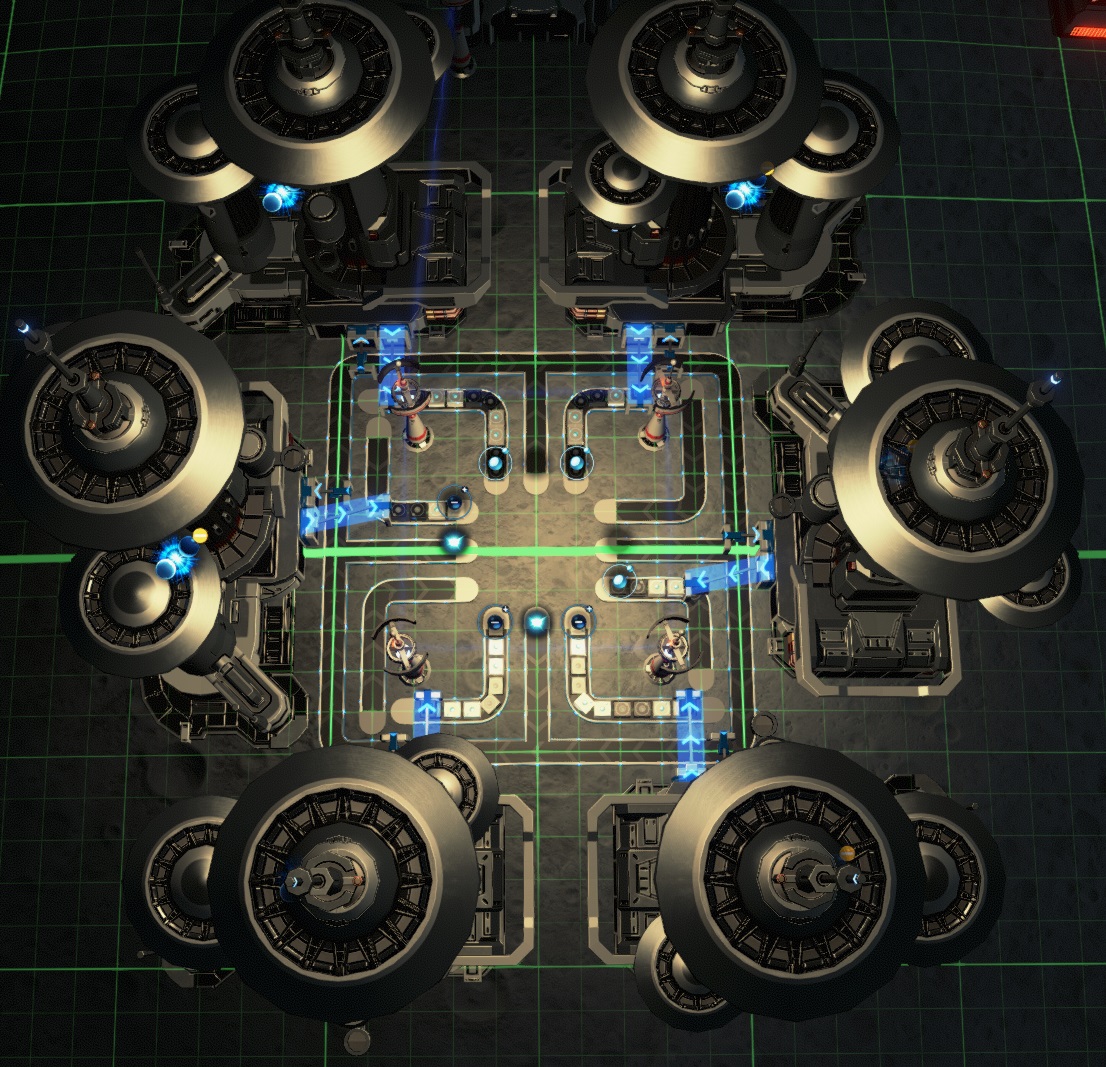
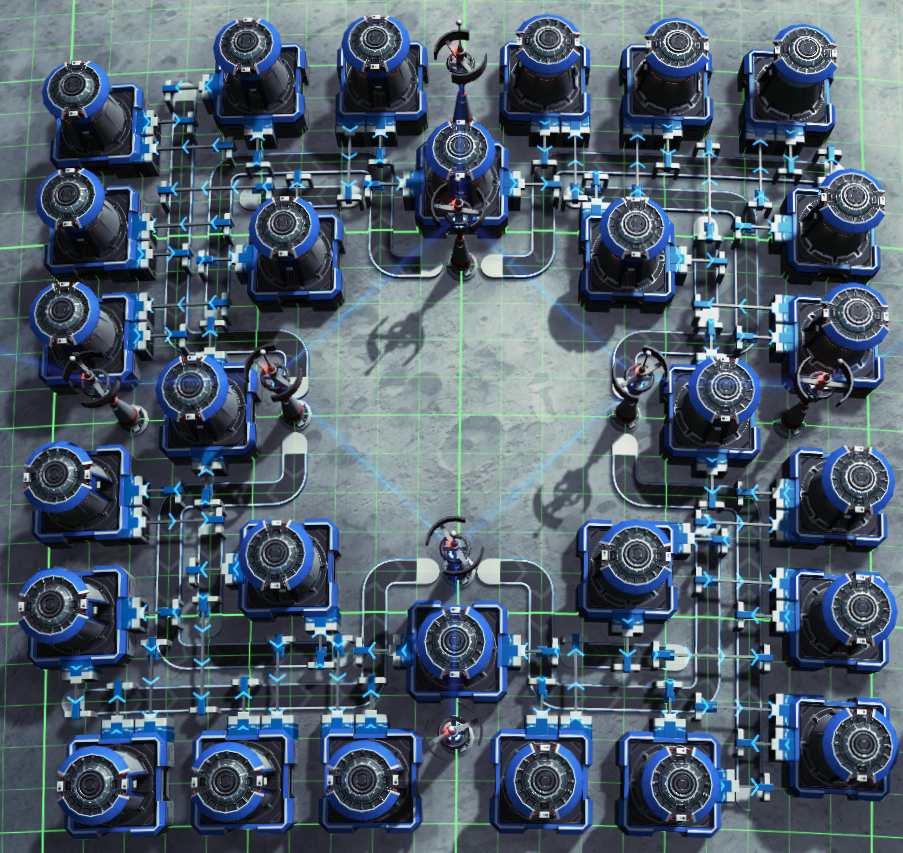
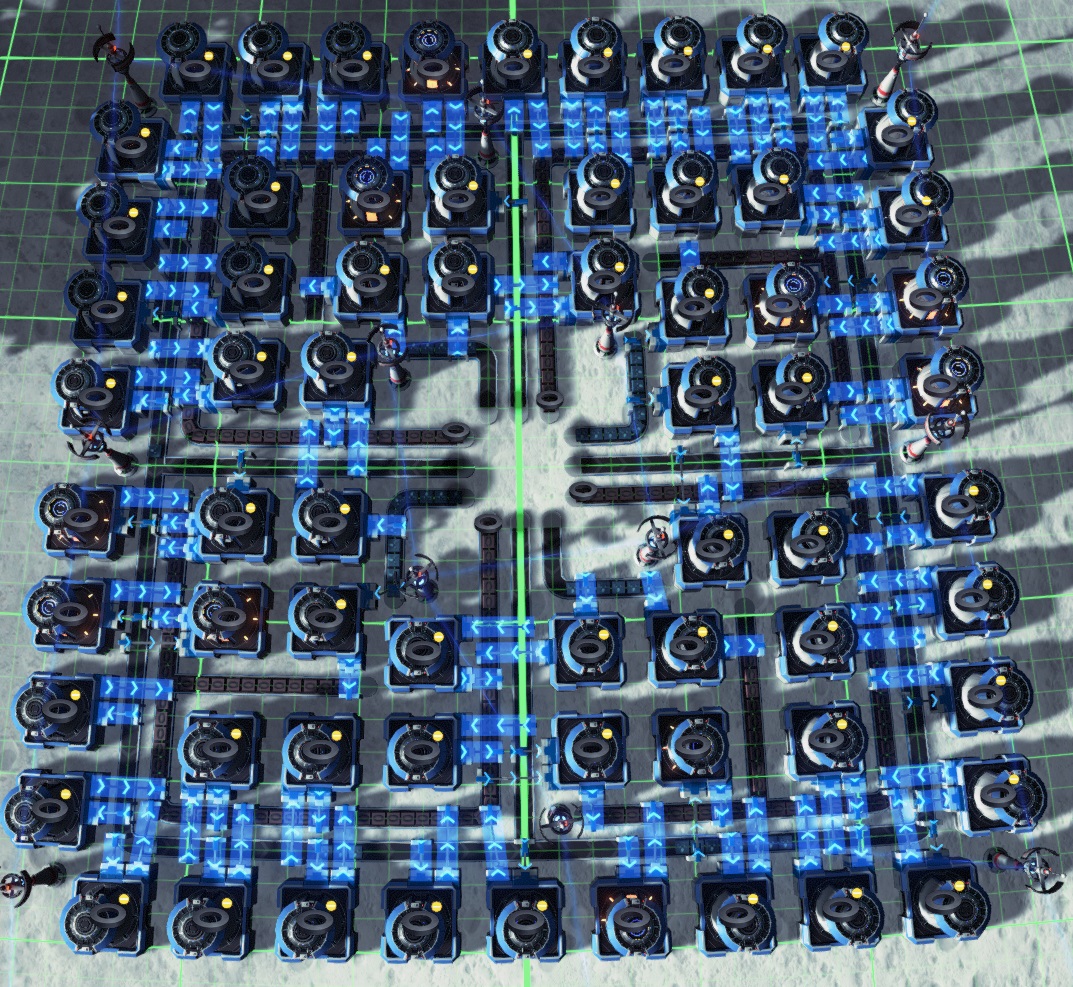
Dyson Sphere Program

326 betyg
Plots - An orderly, flexible, resilient approach to planetary organization
Av Aicanaro
I present a system for organizing the planets in dyson sphere program.
19
11
4
10
5
4
4
   
Utmärkelse
Favorit
Favoritmarkerad
Avfavoritmarkerad
Introduction
State of Guide
1/10/2024
90% complete - If you have questions you would like me to address, please leave a comment.

After about a hundred hours of playing around with the systems added since I last played, I am feeling pretty good about this design. I have confirmed that with some minor tweaks, that a planet full of plots can have full planetary shield coverage, signal tower coverage, and battlefield analysis base coverage. That means any incursion can be met with a hail of missiles, and automatically repaired(sorta). Logistics bots can distribute ammo to the weapon systems, so that doesn't impact the plots at all. They also allow much better use of the 15 meter tropics, which I have been spending an inordinate amount of time on.

They have changed the algorithm that guide logistic drones to evenly distribute supplies along all routes. I had hoped they would, and that change makes this design so much more workable. You can be a lot more aggressive building things out.

I should wrap up endurance tests this month.

Target Audience

This guide is for experienced players who are looking for a high level organizational system. New players should go start a game and make a complete mess of things.

Rationale
As the player builds up their manufacturing base, they are plagued almost immediately by concerns about how to expand. Do you leave space for extra factories? How do you join the output of various production lines? How do you use the space on the planet? Do I start over on an another planet?

Added on to that is the additional risks or the game being in early access. What if the recipe's change? What new buildings are there going to be? What new mechanics are coming? Will everything I have built be useless?

Finally the developers have indicated that there will be combat, which implies that what you build can be knocked down. It is one thing to design a system that will run flawlessly forever, it is quite another task to design a system that will be resilient in the face of failures.

My system attempts to provide techniques to handle the following problem
  • Scalability - Manufacturing capability can be added throughout the game without requiring previous construction to be retrofitted or abandoned
  • Flexibility - You can adapt to supply problems quickly
  • Resilience - Layouts are designed to withstand failure, and it is easy to incorporate redundancy across a planet, a system, and the whole cluster
  • Aesthetics - Manufacturing is neat, orderly, and symmetrical
  • Compact - Make good use of your planetary real-estate

Trade-offs
There is no perfect plan, and I intentionally made choices that discount or outright reject concerns that may be important to you
  • Efficiency - I don't try to minimize power use, warp cores, sorters, belts, logistics stations...
  • Speed - While this architecture can scale to generate however much of something you want, it may introduce delays that an optimal plan will not. In the long run resource buffers will smooth everything out, in the short run things will be slower than a meticulously crafted system.
  • Gameplay - This just may not be why you play games like this. If you derive joy out of making a perfect clockwork factory, this is probably not for you.

Assumptions
We don't really know where the game will go as development continues. I attempt to mitigate some of the risk, but my decisions are based on assumptions that may turn out to be wrong. When I write about combat or destruction, I will use italics as these are really all guesses

  • Everything you can build can be destroyed - The game already allow you to remove these items, I see no reason that they can't be removed against your will
  • Stars and planets will not be destructible - There really isn't anything the game currently provides that I can think of to protect against this, so I am not going to try.
  • Recipes will not change much - I think the impact on the player base will be too great, but it certainly is not impossible
  • There will be new technologies and buildings - Combat demands it. Also they have hinted at other features that would require it.
MK VI Planetary Layout
Dividing the planet
This video shows the previous planetary layout. I haven't been able to make a new one yet. The details are wrong, but the high level concept is the same


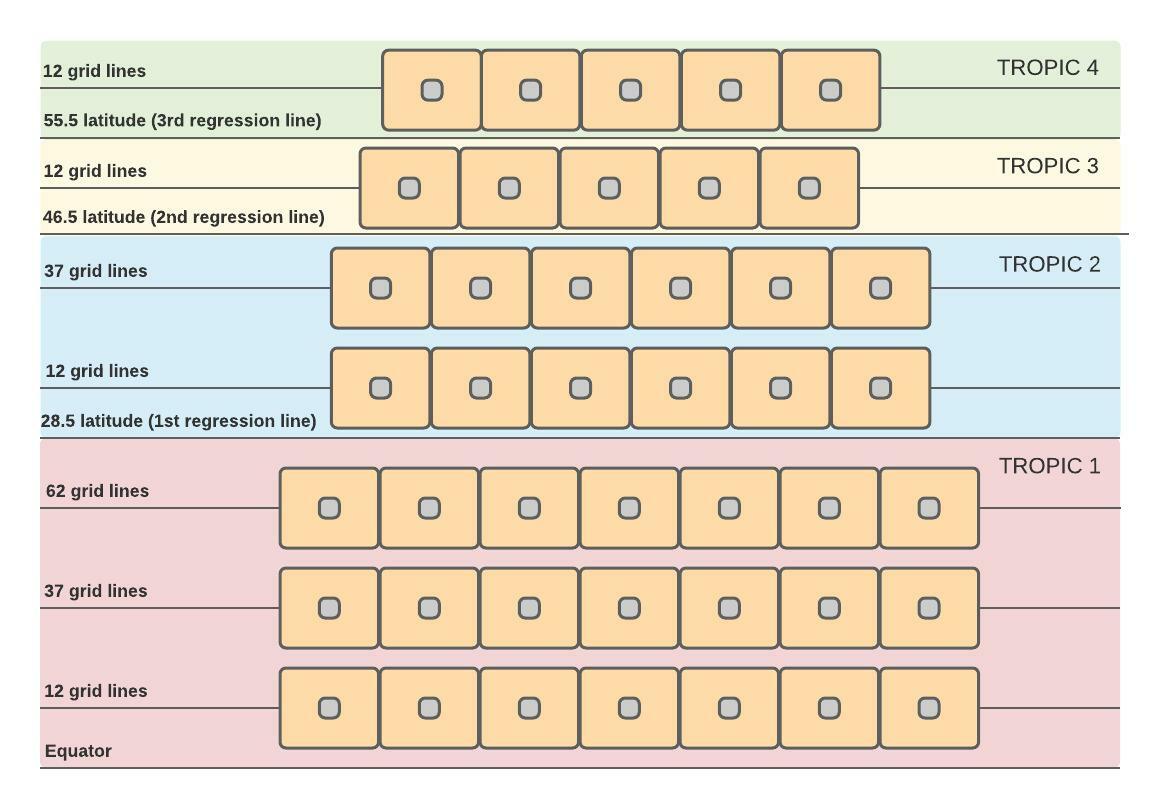
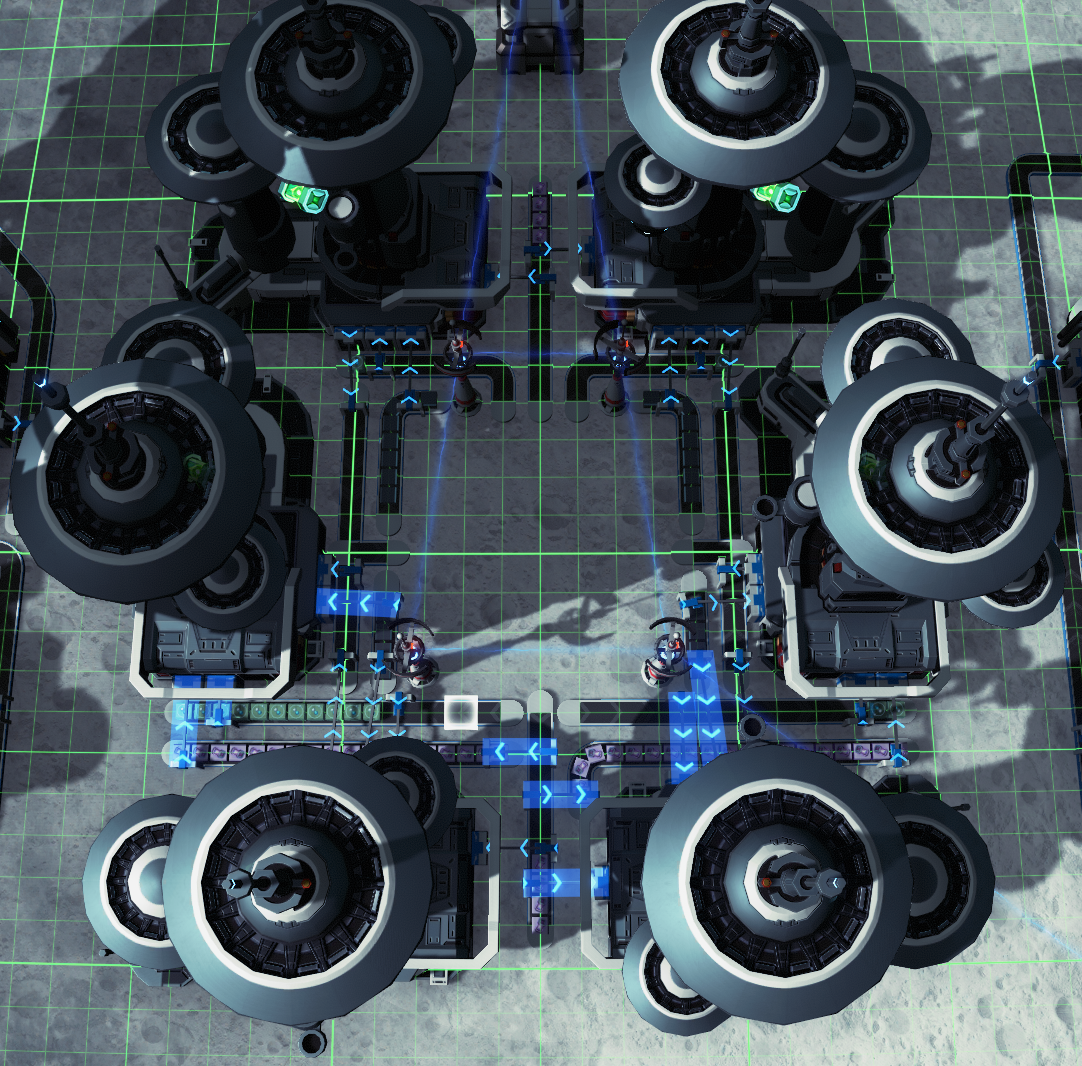
The planet is divided into sections of constant width called tropics. The latitude where the tropic of a planet changes is called a "regression line". Tropics are divided into rows of "plots". Each plot is the same size in any row in any tropic, and a blueprint that will fill a plot will be able to fill any plot on the planet.

Plots are 20 grid spaces high, and 24 grid spaces wide, and the planet has 14 rows of plots, 7 per hemisphere. In total a planet can hold 456 plots.

At this size, plots can provide a significant amount of production, while being small and nimble enough to work around the geometry of the planet. There is no reason to not be able to exploit every resource on the planet, and still be able to use the remaining land area for factories.

Building compartmentalized factories at this scale is a good strategy to minimize losses. If all or part of a plot is destroyed, the system can dynamically rearrange supply chains to make sure down stream resources are provided for. Larger designs present larger risks of failure. Smaller designs would require planetary logistic stations, which would make the supply chain less responsive.

Rows
TODO - Add How to use plots Video
The rows must be placed at very specific latitudes, but it's not hard once you get used to it. The rows are completely independent of each other, you can choose to line the plots in columns, or not. The northern and southern hemisphere each have 7 rows. "above" the regression line means towards the poles.
Tropic
Row
Grid spaces above regression line
Maximum # of plots
1
1
12
40
1
2
37
40
1
3
62
40
2
4
12
32
2
5
27
32
3
6
12
24
4
7
12
20

What goes in a plot?
The most important rules for the contents of a plot are that they must fit in the 24x20 space, they must get all their inputs via logistic stations, they must provide all their outputs via logistic stations, and they must be able to be placed in any of the rows. The last rule is probably the most challenging as some of the rows suffer from "grid crunch". "Grid crunch" is the issue where a grid space is thinner the further it gets above the regression line.

I think each plot should perform exactly one recipe, and should use an interstellar logistic station to interact with rest of the cluster. If you feel the desire to chain recipes together inside a plot, go for it. If you want to use planetary logistic stations to force the local use of the plots production, go for it. If you want to join plots together to enable larger assemblies, go for it. I am not going to present any designs that do those things, because I don't think they are good ideas, but if you think you can make that work, go for it.

A design that strongly couples an input and output is more brittle. If the producer is destroyed, the consumer cannot get resources from anywhere else. If the consumer is destroyed, the producer will back up and be useless. I advocate a design of maximum flexibility of the supply chain

Resource Extraction

While it is possible to fill all 456 plots with factories, I do not recommend it. Resources that fall within the rows should be extracted and distributed using an ILS. The ILS will probably need to be in the center of a plot, to avoid interfering with other nearby ILSs. This often means that a vein site might take up more than one plot.

When all your planets are at the risk of being attacked, I don't think it makes sense to create sparsely populated extraction planets. It seems more sensible to try to use all the resources and space on a planet, and concentrate your defenses.

Gaps
The MK VI layout has no vertical gaps, but there are gaps between each of the rows. It is possible to ring the planet with solar panels at the equator and above each row. The gap between rows 3 and 4 is large enough to hold 3 rings of solar panels, or a ring of ray receivers.

There may be small defensive buildings that can fit in gaps. You can also fill them with accumulators to help insulate your planet from power outages from sieges or the destruction of power generating buildings.

Poles
The tropic sizes are too small to fit plots as you approach the poles. This is a good place for launch pads, rail guns, solar farms, or ray receivers. I also use this area to produce buildings and research as they don't fit into plots very well. I encourage you to create small self-contained design with some level of redundancy.


Plots Blueprints
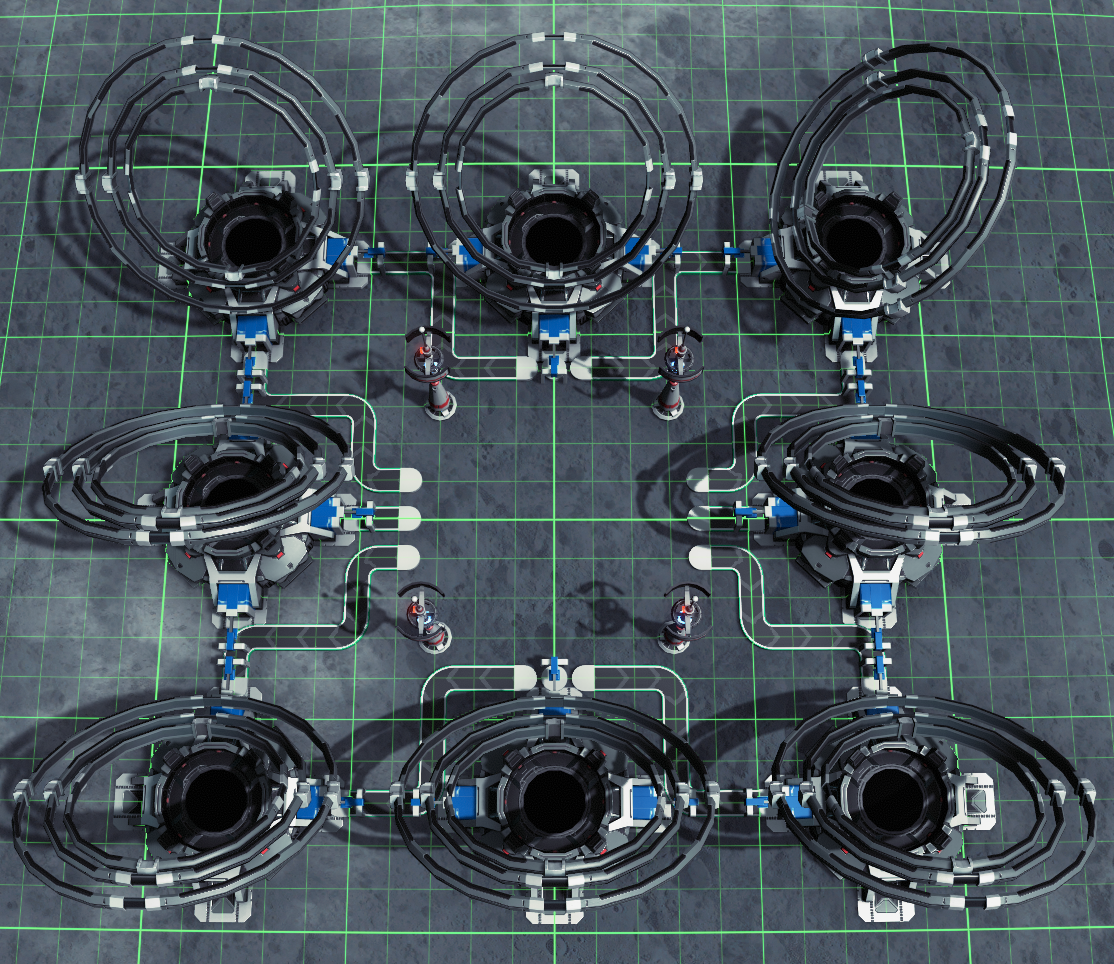
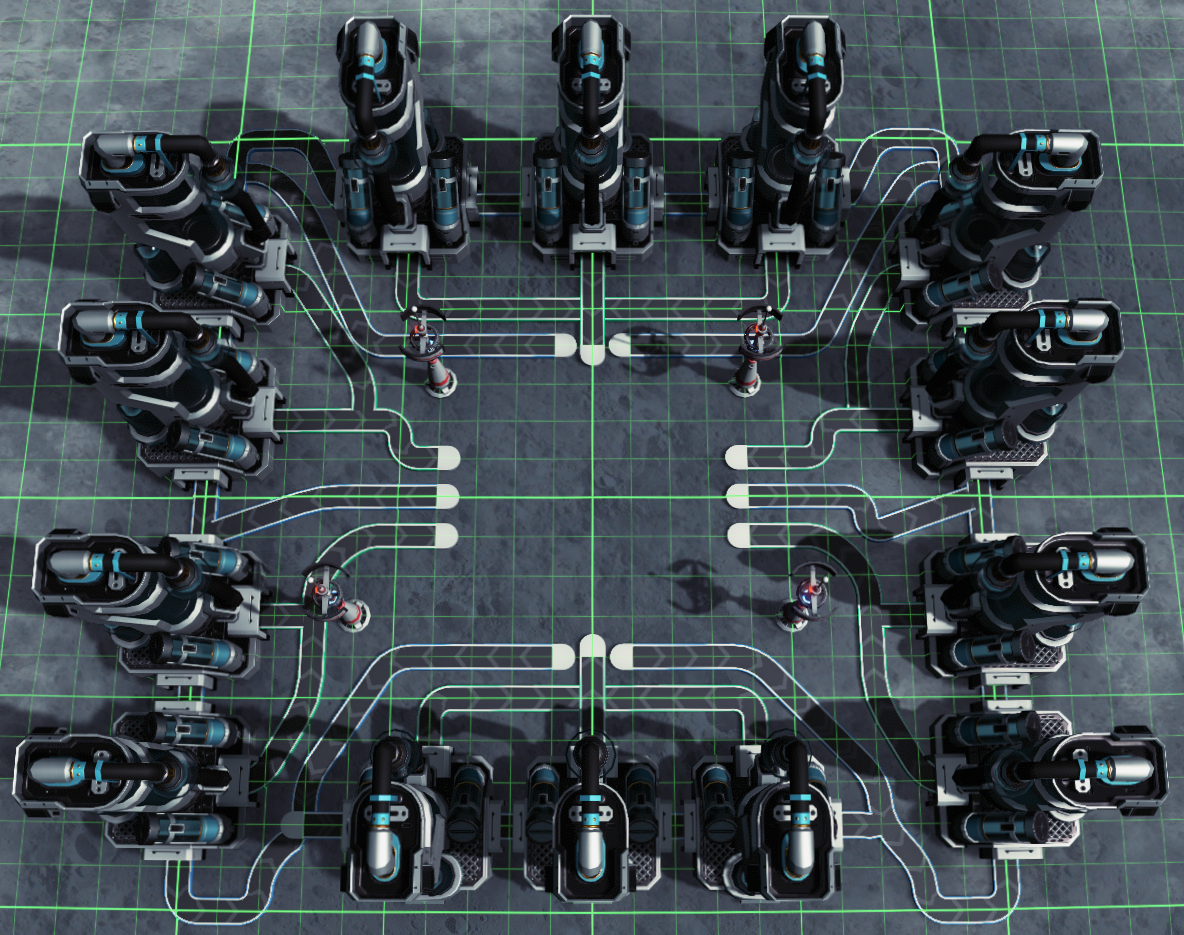
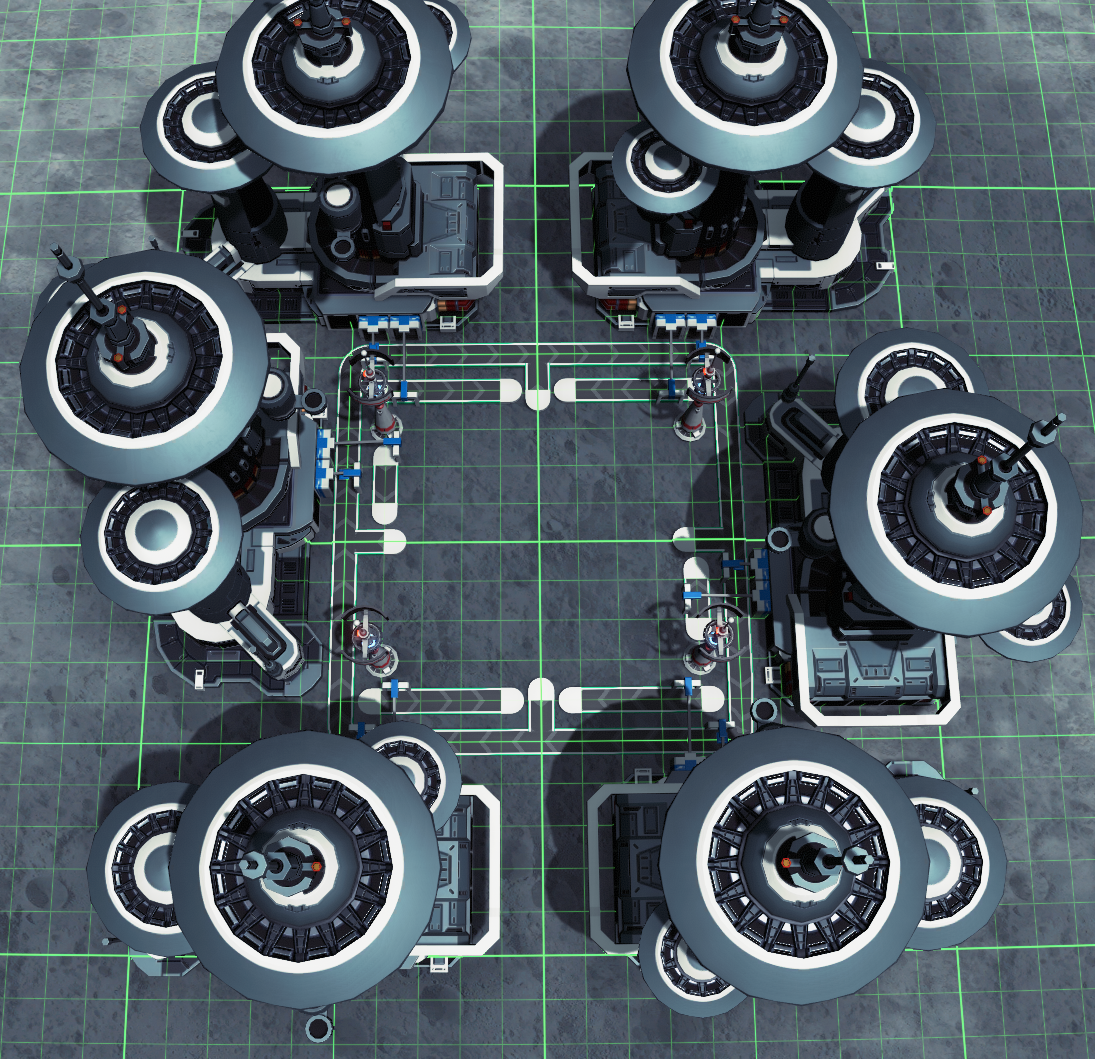
Building that consume materials should be placed in plots. I try to keep the number of buildings per belt at a minimum, and the number of buildings per plot at a maximum. All designs with less than 3 inputs can use either an Interstellar logistic Station, or a Planetary Logistic Station. I think you should use an ILS everywhere once you unlock them. Since all outputs go to a logistic station, which sorts them for you, there is no need to have separate output lines per product.

Unless otherwise noted, I recommend using Mk 3 sorters and Mk 2 belts. For upgradeable factories (assemblers, smelters) I recommend using the most basic version.
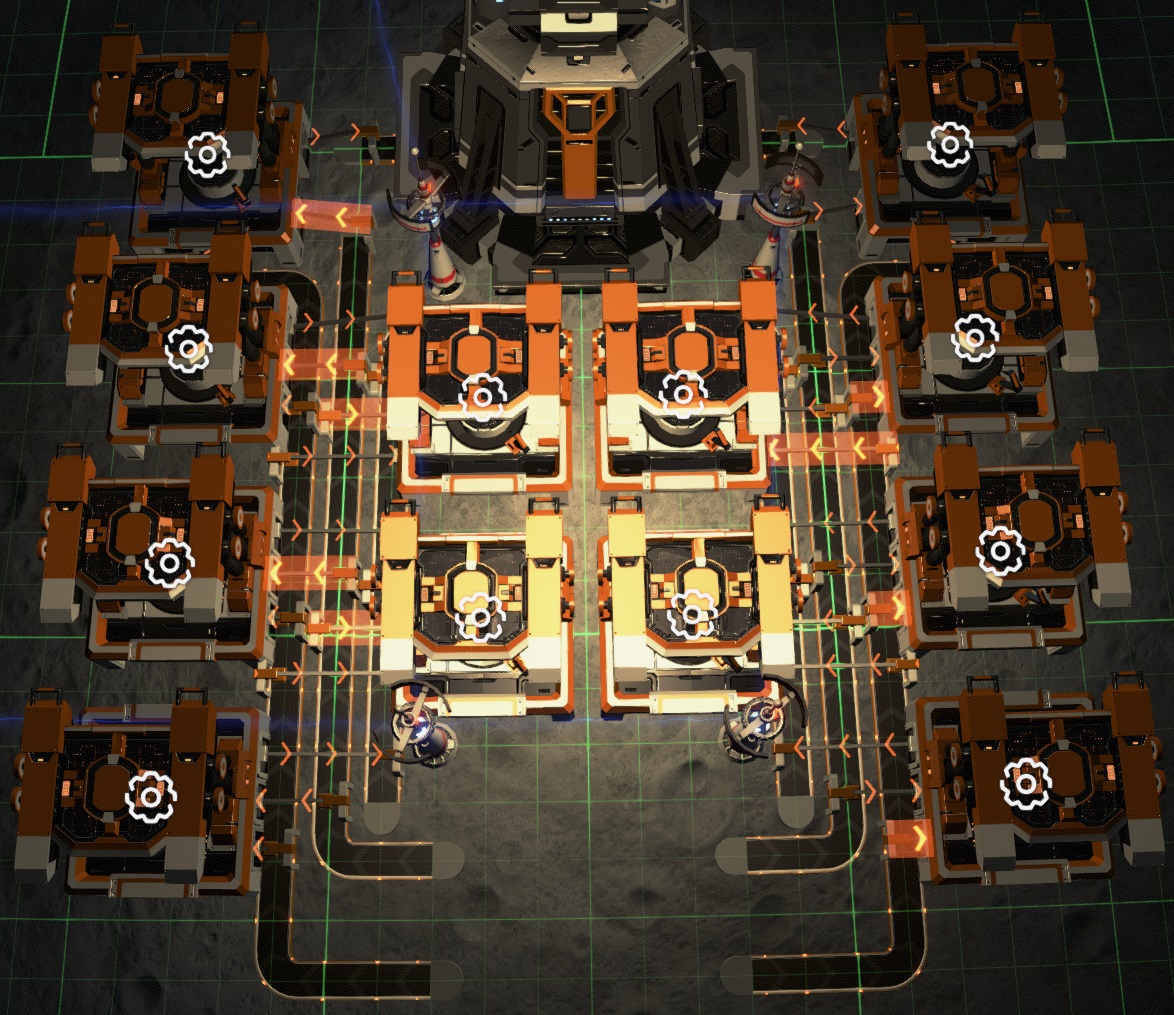
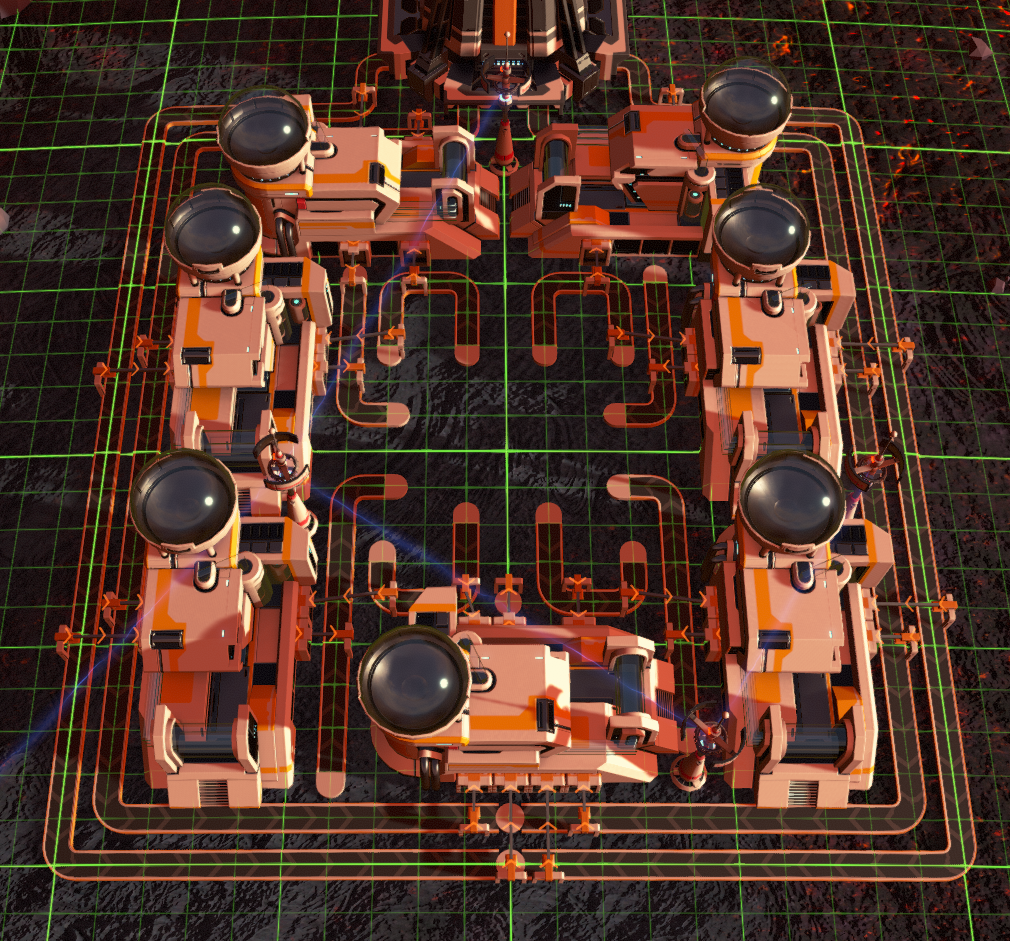
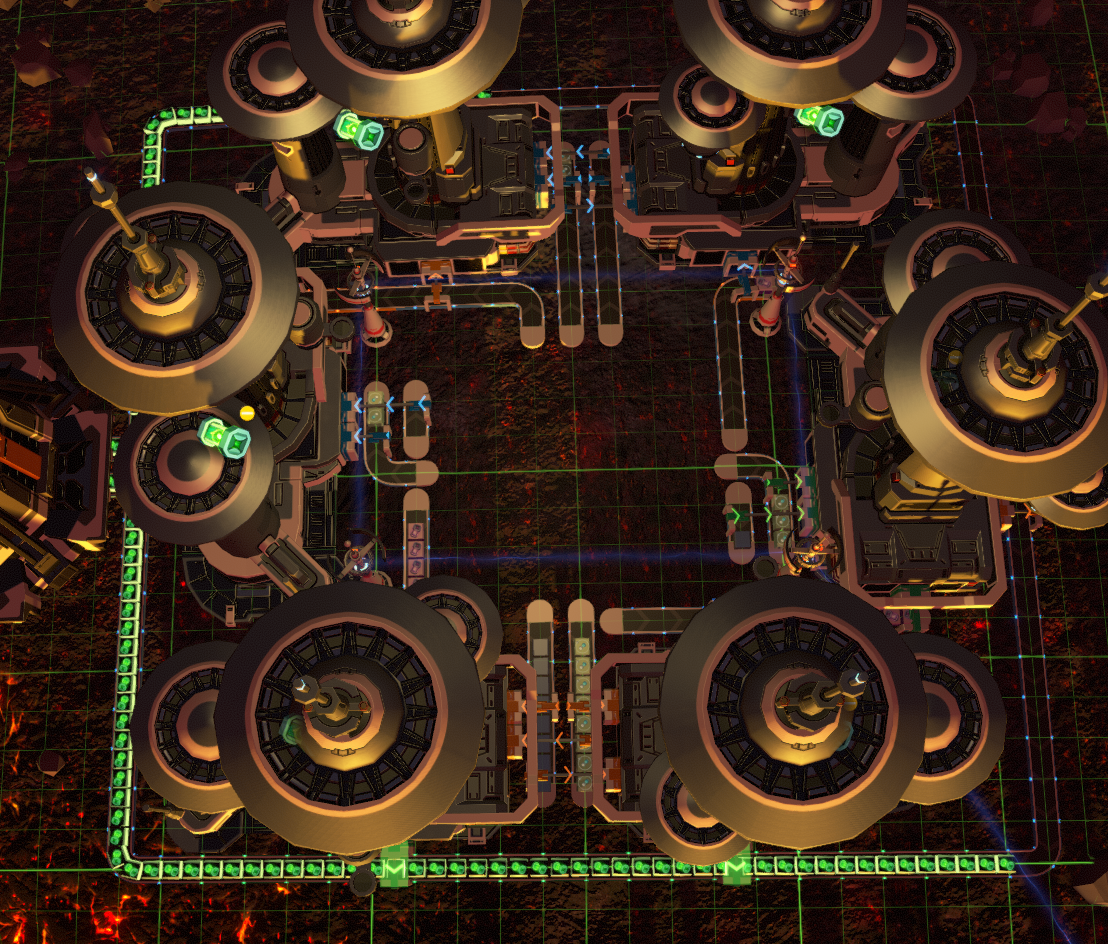
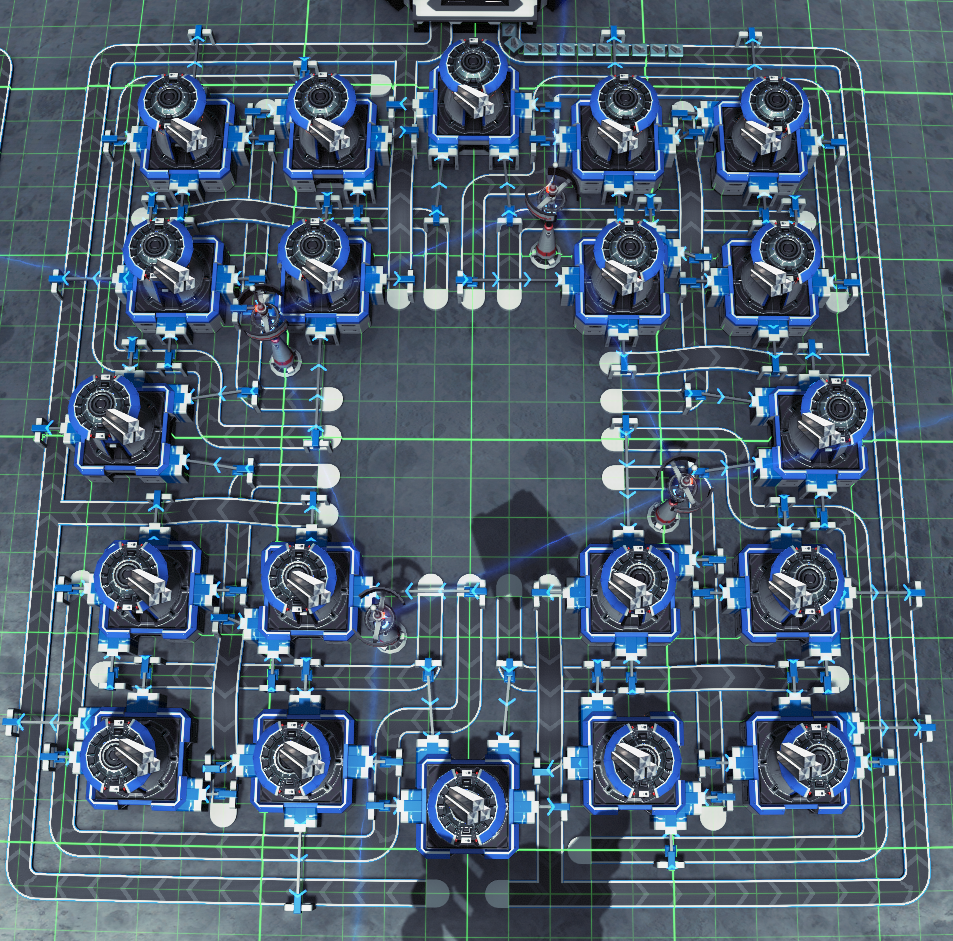
1 Input

Factory
Number of Buildings
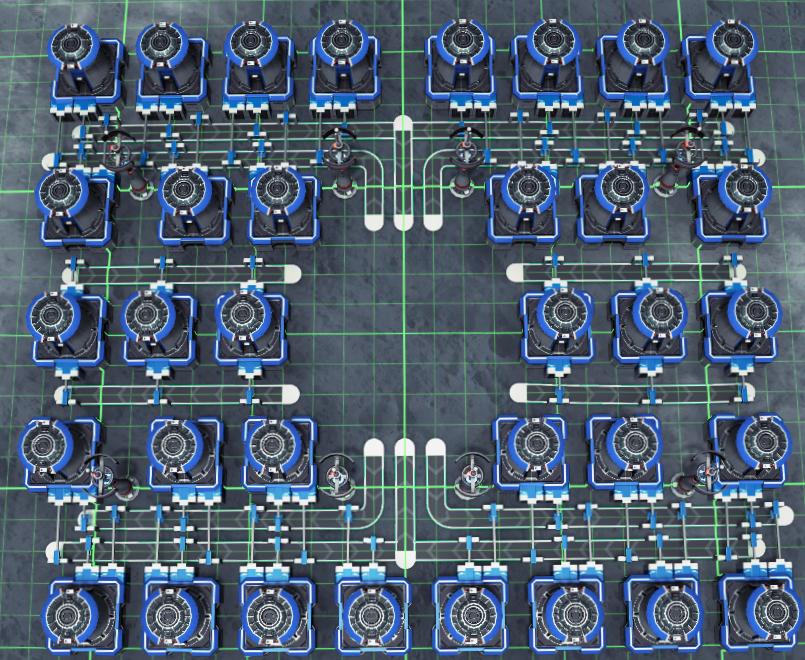
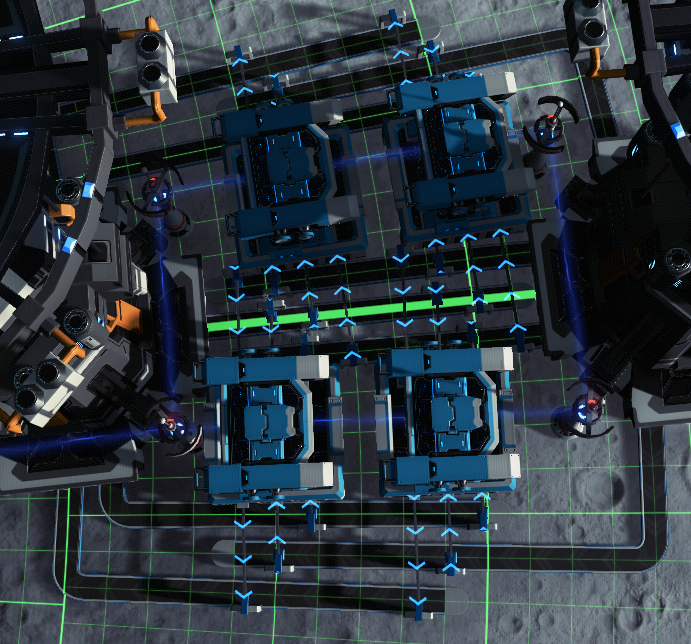
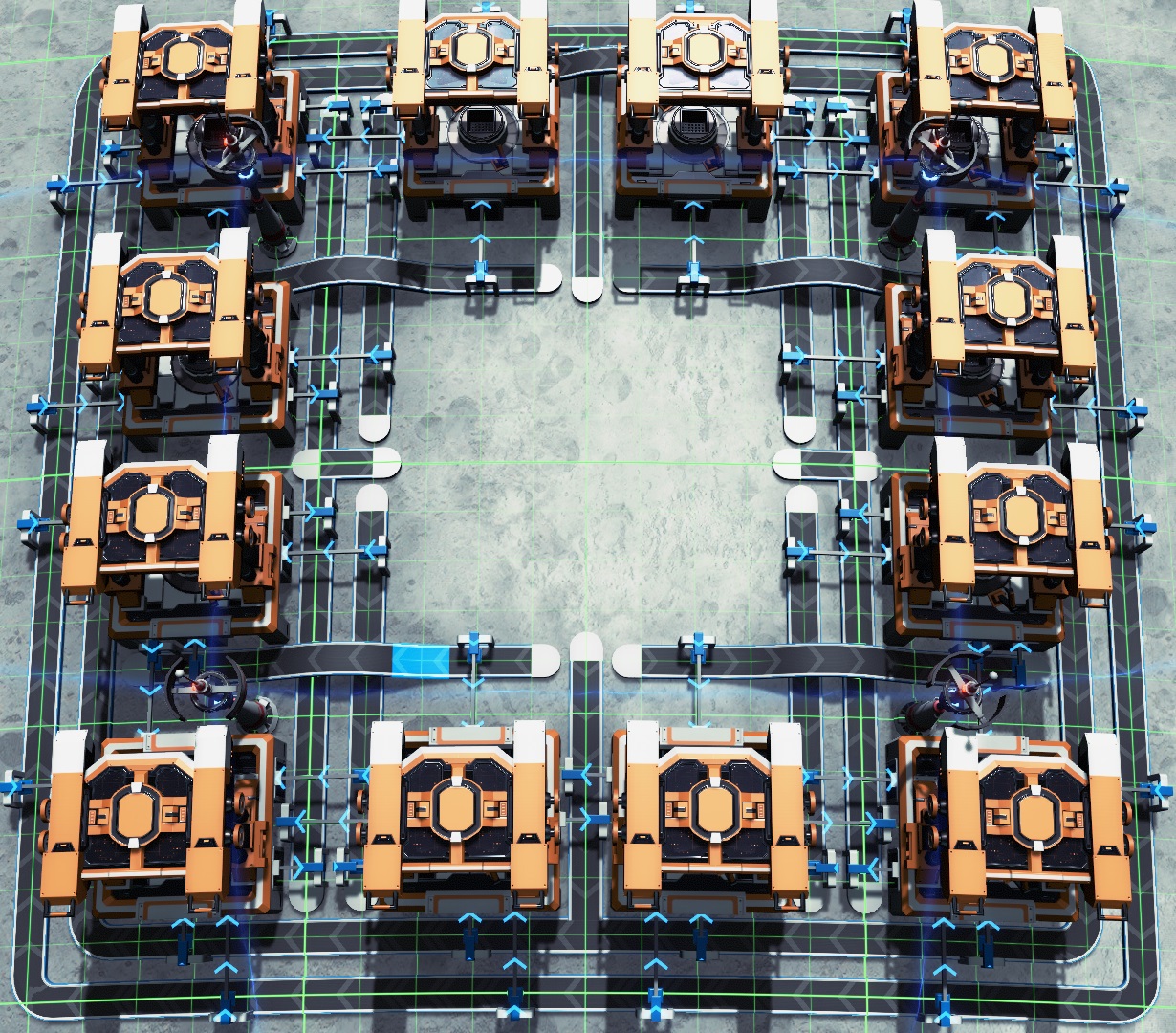
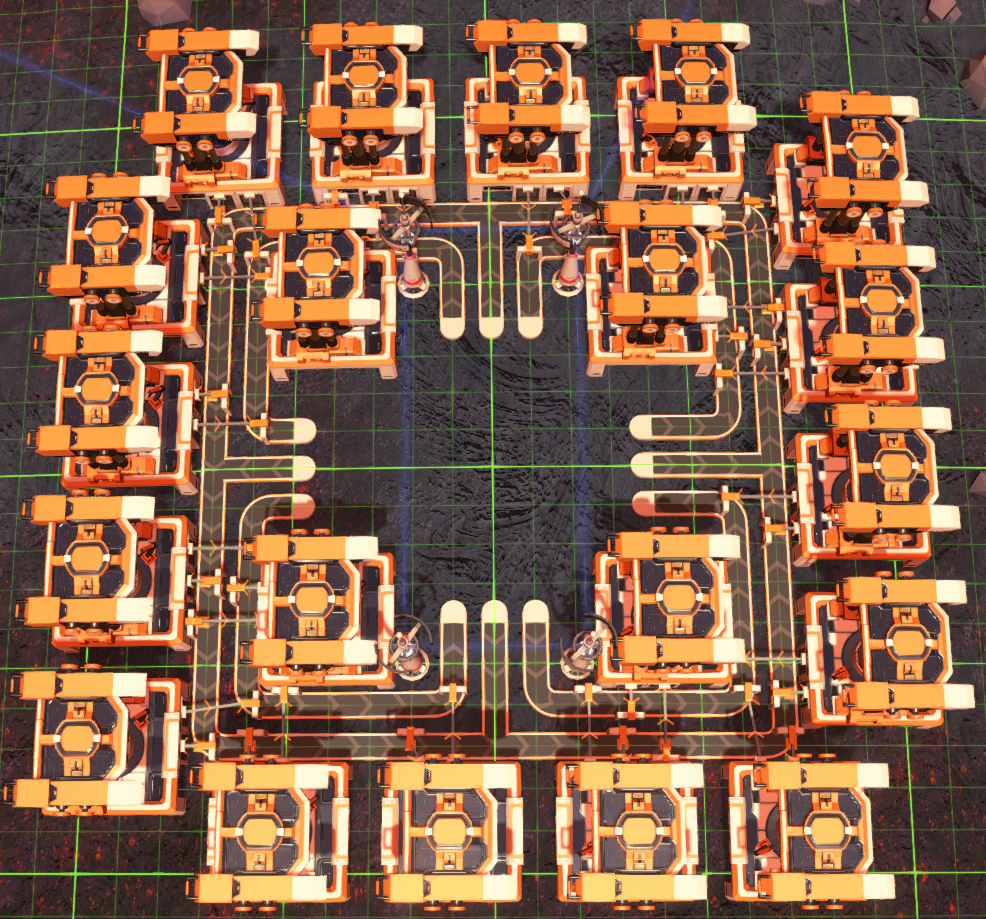
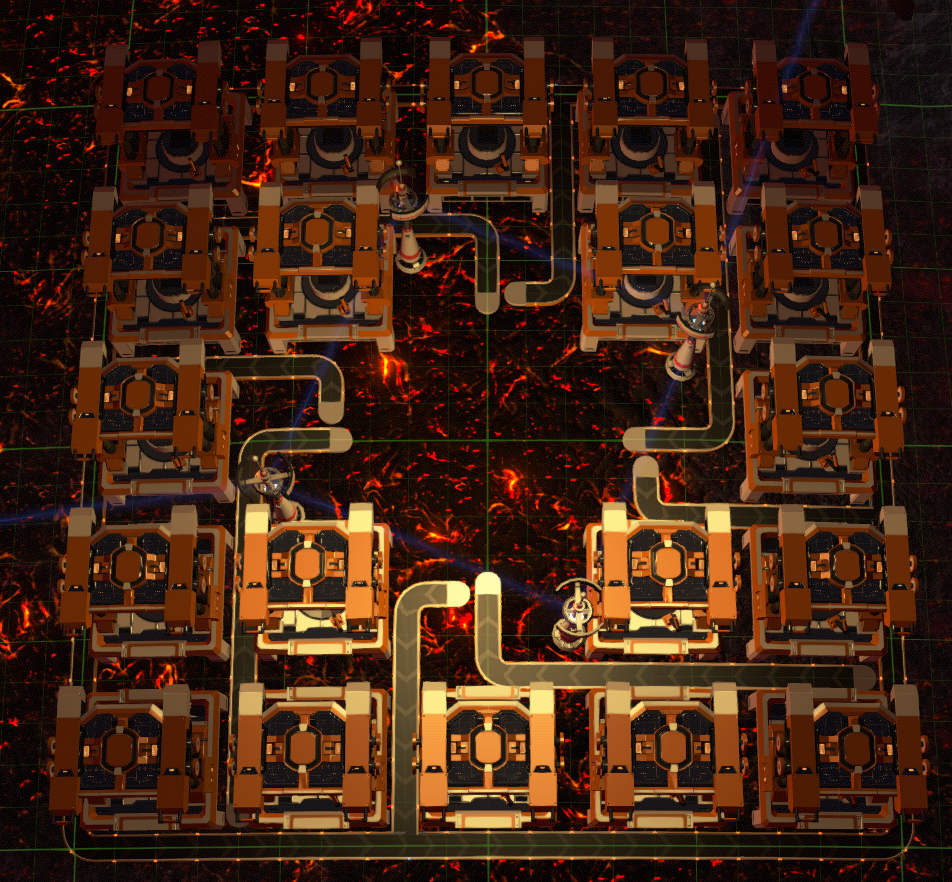
Picture
Blueprint
Artificial Star
8
blueprint[drive.google.com]
Assembler
24
blueprint[drive.google.com]
Chemical Plant
10
blueprint[drive.google.com]
Energy Exchanger
4
blueprint[drive.google.com]
Fractionator
14
blueprint[drive.google.com]
Mini Fusion Power Plant
14
blueprint[drive.google.com]
Miniature Particle Collider
6
blueprint[drive.google.com]
Oil Refinery
17
blueprint[drive.google.com]
Ray Receiver
8
blueprint[drive.google.com]
Smelter
34
blueprint[drive.google.com]
Thermal Power Plant
14
blueprint[drive.google.com]

Notes
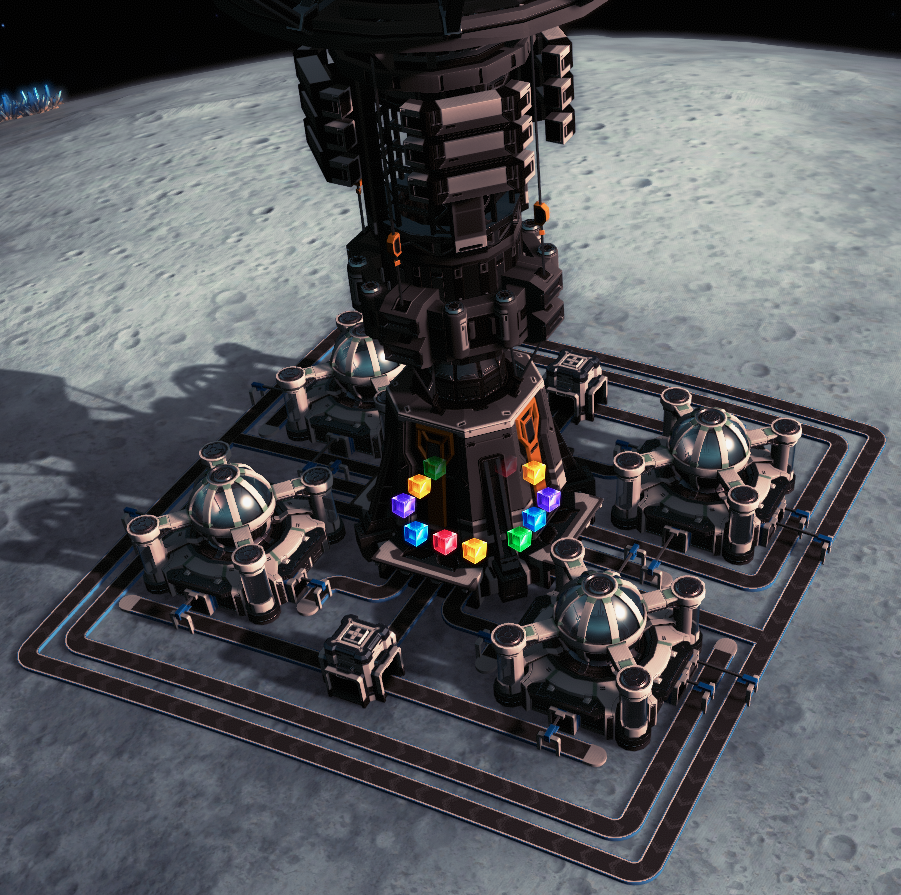
  • Artificial Star - Generates 600 MW. An ILS filled with Antimatter Fuel Rods can run this plot for over 33 hours without additional fuel.
  • Energy Exchanger - I treat energy exchangers as factories that generate full accumulators. The plot will work for the discharge mode, but I have never used it that way.
  • Mini Fusion Plant - Generates 210 MW. An ILS filled with Deuteron Fuel Rods can run this plot for about 8 hours.
  • Ray Receiver - The design is intended for critical photon production. It can be used for power with gravity lenses as well. If you want to use ray receiver without inputs and outputs, I suggest placing them in the 3-4 gap or at the poles.
  • Thermal Power Plant - Generates 30.24 MW. The stockpile duration depends on the fuel used. Hyrdogen Fuel Rods are by the far the best option providing about 4 hours of power.
  • The fractionator and refinery plots have clear tops and bottoms. The blueprints may need to be rotated depending on the hemisphere you are building in. My other designs should work in either hemisphere without rotation.

2 Inputs

Factory
Number of Buildings
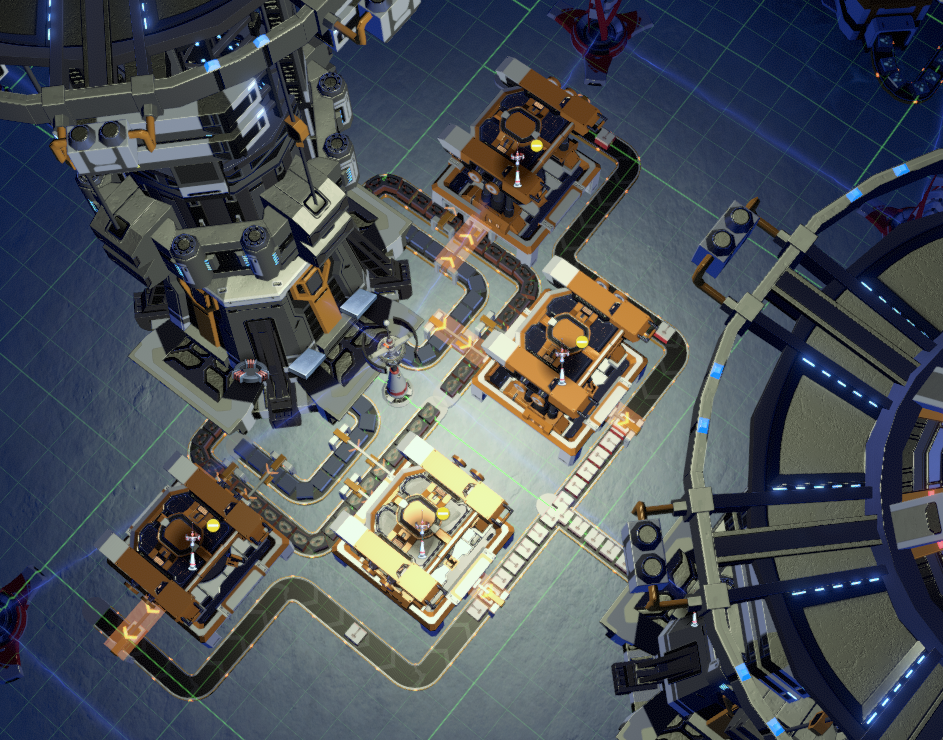
Picture
Blueprint
Assembler
24
blueprint[drive.google.com]
Chemical Plant
10
blueprint[drive.google.com]
Matrix Lab
8
blueprint[drive.google.com]
Oil Refinery
TODO
TODO
TODO

Notes
  • X-Ray cracking requires two logistic stations, one to input oxygen and one to output it. I don't ever use X-Ray cracking, and I don't want to come up with a two plot design to cover the process. If you would like to submit one in the comments, I will add it to the guide.

3 Inputs
These designs require an ILS. I recommend holding off on large scale production of these materials until you unlock the ILS.

Factory
Number of Buildings
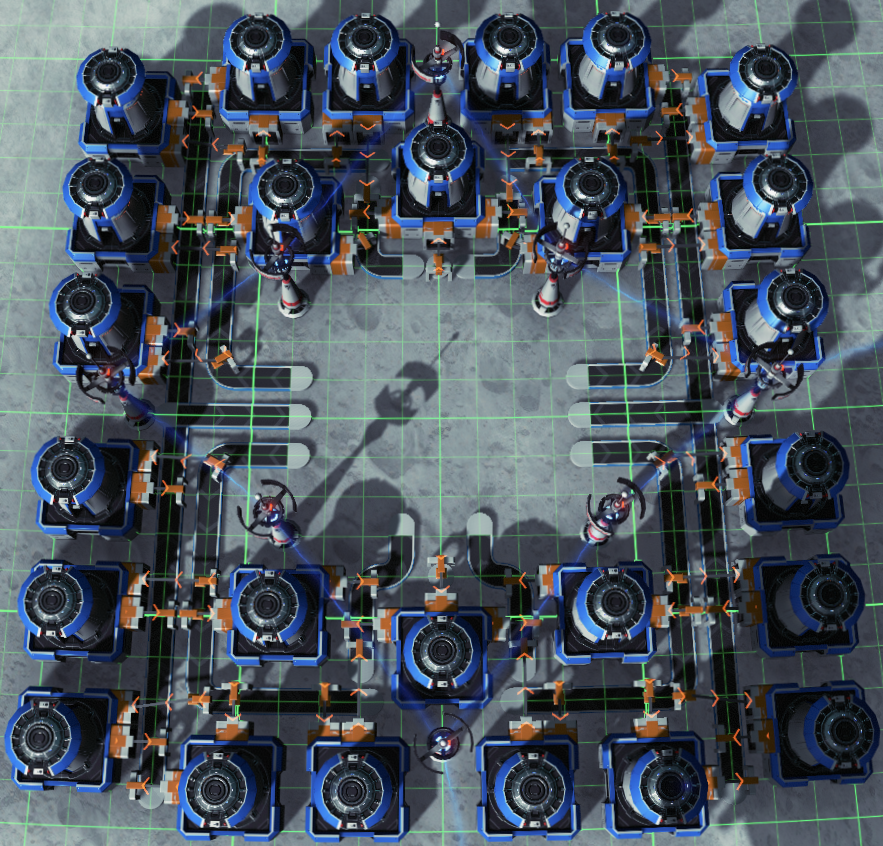
Picture
Blueprint
Assembler
20
blueprint[drive.google.com]
Chemical Plant
8
blueprint[drive.google.com]
Miniature Particle Collider
6
blueprint[drive.google.com]
Smelter
22
blueprint[drive.google.com]

TODO - 4 Input Assembler Plot


Other Blueprints (Under Construction)
This section if for blueprints that solve particular problems that don't fit into plots, or are useful before logistic stations are available.

Building "Plots"
This design is intended to produce buildings. It can accommodate up to 5 inputs. It can be placed at the 3 tall tropics (64 and 70 latitude). You can populate both tropics with them, but it is a bit of a nightmare to coordinate, and not really helpful. A planet can easily support 40 of them, or 80 if you really really want to.


Research Plot
This is intended to handle research until white cubes. The design cannot be adapted to generate white cubes, and I am still looking for an elegant solution for that. My guess is some sort of design for the polar region of a planet.

Anitmatter Fuel Rods
Antimatter fuel rods are the only assembler product that requires more than 3 inputs, and isn't a building. This design allows fuel rods to be treated as a normal product, in a normal plot.
Future Work
These are the remaining task I need to get done for the guide.

  • Prove concept - Are plot actually more resilient to disruption during enemy attacks as compared to a system that maximizes production per ILS?

  • Research early game plans - I spent a lot of time (probably about 100 hours) trying to work out an optimal plan to get to plots ASAP, under the assumption that combat would come in timed waves. I am hoping that I can rework this to be simpler and less stressful when working with the actual combat system.

  • Determine how games changes impact my design - I have not played in ages, and there are a lot of changes to the game I have not considered.

  • Develop optimal energy plots - I have been working under the assumption that maximizing production per watt is the best survival strategy. This requires fine tuning sorter and logistic stations for each recipe. I also really need to develop a testing methodology so I can compare my design versus a more conventional approach.

  • Add designs for 5 cube research, 4 input assembler
  • Polar region designs
    Changelog
    Mark V
    * 9/2/2021 - Added MK VI layout. Deprecated MK V layout.
    * 9/1/2021 - Updating Future Work
    * 7/23/2021 - Adding blueprint codes
    * 7/19/2021 - Added more items to "Future Work"
    * 7/2/2021 - Removed deprecated Smelter, Research, Fluid, Power and Atomic Layout sections.
    * 7/2/2021 - Updated designs for 1 input smelter, and 3 input miniature particle collider
    * 6/29/2021 - Removed the "Assembler Layouts" section, added design to the deprecated page.
    * 6/29/2021 - Added "Changelog" and "Deprecated Design" sections

    Status
    *12/17/2023 - Combat has finally been added to the game, and I am finally in a place where I can validate if this system I started designing 2 and a half years ago actually works. The combat system is a bit different than what I expected, so I am trying to figure out exactly how I can test the efficacy of this design. I expect it will take several months to an in-depth review, but hopefully I can get some preliminary indications by the the end of 2023.
    MK V Planetary layout (DEPRECATED)
    The planet is divided into rows of "plots". Each plot is a self-contained unit of production. A plot take in inputs through logistics stations, performs one process, and outputs the results through logistic stations. A plot may smelt iron ore, assemble a thruster, or refine crude oil, but it only does one thing. By decoupling the inputs from the outputs, you can easily increase production to respond to increased demand, and you can do it anywhere. Need more gears? Make a new plot. Need more green research, add more labs until you can't, and then make a new plot. Plots can be anywhere, so the entire problem of connecting inputs to outputs just goes away.

    Plots are designed to grow. Because each plot has space reserved for it, you can start with 1 factory and build with the knowledge that you can come back to add production as you need it. When you fill up your plot, you can start a new one. Planets can support 288 regular plots, 40 big plots, and 120 crunch plots.

    • Plots eventually have a logistics station in the middle of them, but are designed to migrate from an earlier technology level with ease.
    • "helper" stations allow those plot to deal with up to 6 inputs or outputs.
    • I assume you will be able to place some sort of defensive barrier around your infrastructure. Plots allow for a compact design that it easier to defend than a spread out infrastructure. This compactness makes it vulnerable to attack from space. A bomb is sure to hit something. I am hoping that the large number of logistics stations will provide cover for squishier buildings, and hopefully can be used as a base for attack craft

    The rows
    For the purpose of this section, away from the equator is up.

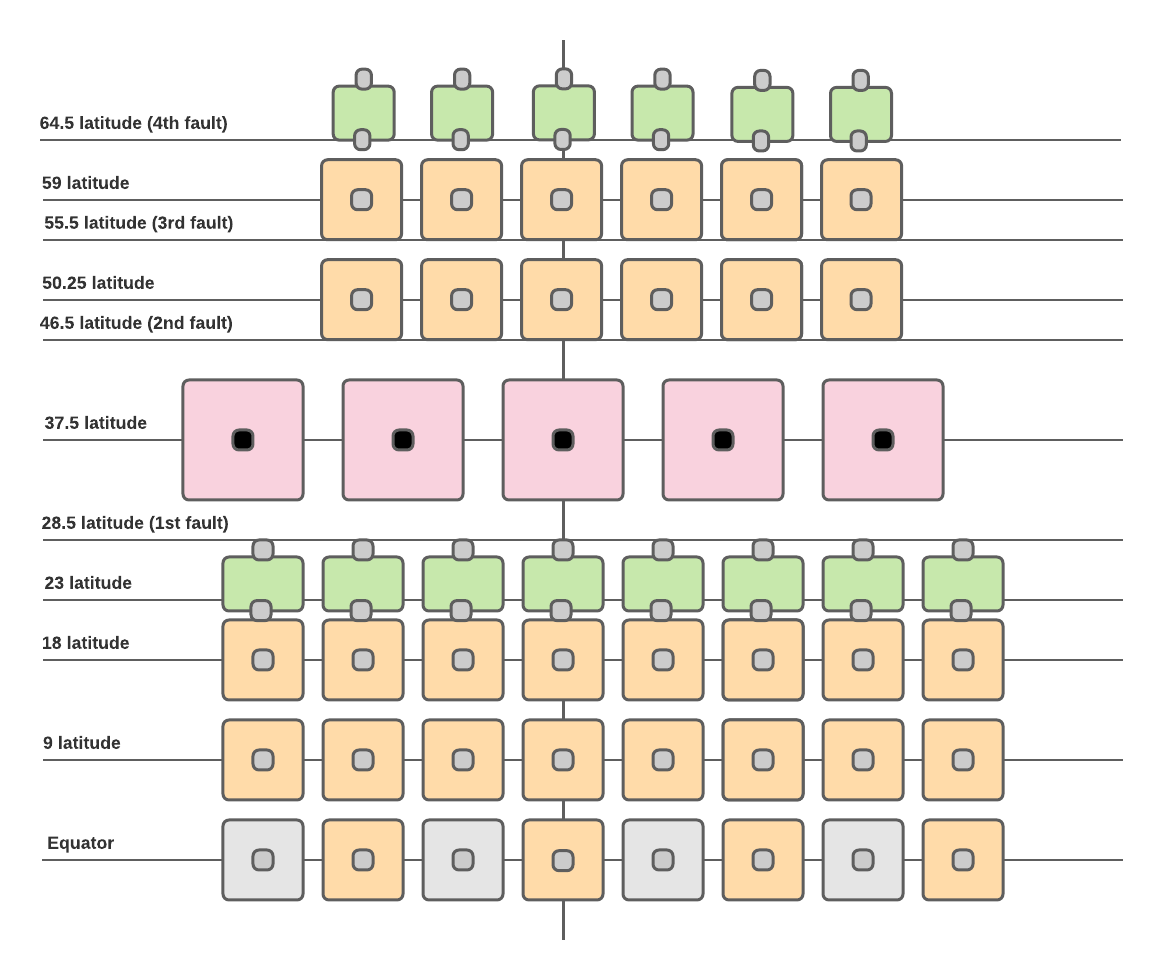
    • Equator and 9 degrees latitude (5 major grid lines from the equator) - Plots are 20x20 with a 5 space gap around each plot. Each row can accommodate 40 plots. Use 1 and 2 input assembler, matrix generation lab, oil refining, and 1 and 2 input chemical plants. Thermal and fusion power plants also fit here. Turbines, Solar Panels, and accumulator can fit in the gaps between plots. I like to keep every other plot in the center row unused, in case I need to put weapon systems around the equator.
    • 18 degrees latitude (10 Major grid lines from the equator) - Plots are 22x22 with a helper station above them that takes the output. Each row can accommodate 40 plots. Nothing can fit in the gaps between the plots in the row nor between in the gaps above them, but turbines, solar panels and accumulators can fit in the gap below. Use 3 input assembler or chemical plants. 1 or 2 input plots can also be used if you ran out of space in 1A.
    • 23 degrees latitude (3 major grid lines below first fault) - Plots are 20x15 with a helper station below them. Each row can accommodate 40 plots. Use 1 or 2 input assembler plots here, with the inputs supplied by the helper stations. This region has significant grid crunch issues, which limits the geometry of the plots. While 3 inputs plots are possible here, I like to leave two open slots in the logistic station.
    • 28.5 degrees latitude (1st fault Line) - The output logistic stations from the row below butt into the space. What to do with the gaps between the 1st and 2nd plots lines will be broken out into a separate section.
    • 37.5 degrees latitude (5 major grid lines above first fault) - Plots are 30x30 with a 10 space gap around each plot, and have an interstellar logistic stations. Each row can accommodate 20 plots. These plots are used for 1 input smelters. I may change my advice on this at some point, but right now smelters seem to be the best option.
    • 50.25 degrees latitude (2 Major grid lines above the second fault) - Plots are 20x20 with a 5 space gap around each plot. Each row can accommodate 24 plots. Use the same plots you would at the equator.
    • 59 degrees latitude (2 Major grid lines above the third fault) - Plots are 22x22 with a helper station above them that takes the output. Each row can accommodate 20 plots. Use the same plots you would at 18 latitude
    • 64.5 degrees latitude (fourth fault) - Plots are 20x15 with a helper station below them. Each row can accommodate 20 plots. Use the same plots you would at 23 latitude
    • Polar Region - At this points no longer become feasible. I will break out the polar region into a separate section.

    Resource Extraction
    Resources outside of manufacturing zones should be exploited. Each group of veins should have it's own logistic station, and independent power supply. I recommend about twice as much power generation as required by the miners.

    Inside of the manufacturing zones I normally try to contain veins to a single plot. Having access to resources inside of your perimeter is probably a good idea.


    Power provides an interesting problem. Obviously protecting you power supply is of paramount importance. If the enemy can blow it up, everything you built stops working. The obvious solutions are to over produce, and to physically distribute. Without a clear understanding of the threats the game may provide it is difficult to come up with any solution other than to diversify, and attempt to wholly contain the supply chain for power supply within your defensive borders. And outside of a lot of oil in the region, that does not seem feasible. For now I recommend a mix of everything. Burn hydrogen within the building region, place accumulators between plots, Turbines covering the upper and lower bounds of the planet... The only caveat would be, it you can compactly place power generation inside the building zone, do it.
    Blueprints Overview (DEPRECATED)
    Building that consume material should be placed in plots. I try to keep the number of buildings per belt at a minimum, and the number of buildings per plot at a maximum. All designs with less than 3 inputs can use either an Interstellar logistic Station, or a Planetary Logistic Station. I think you should use an ILS everywhere once you unlock them. Since all outputs go to a logistic station, which sorts them for you, there is no need to have separate output lines per product.

    Unless otherwise noted, I recommend using Mk 3 sorters and belts. For upgradable factories (assemblers, smelters) I recommend using the most basic version.

    Limitations
    Plots can only fit in the rows that accommodate that accommodate their geometry. Below is a list of shorthand values for "restrictions", and a detailed explanation of where the plots can go. I have not tried every plot, in every location, so mistakes are likely. If you find that these restriction are wrong, please let me know.

    • Standard - These plots can fit in the equatorial, 9 latitude, 18 latitude, 50.25 latitude and 59 latitude rows if a planetary logistic station is used. If an ILS station is used they can not be placed in the 18 and 59 latitude rows, but will still work in the other rows.
    • ILS - These plots require and ILS and can only fit in the equatorial, 9 latitude, and 59 latitude rows.
    • Helper - These plots can only fit in the 18 latitude or 59 latitude rows, and must use a planetary logistic station.
    • Crunch - These plots can be used in the 23 latitude and 64.5 latitude rows.
    • Big - These plots can be used in the 37.5 latitude rows.
    1 Input Blueprints (DEPRECATED)
    Factory
    Dimensions
    Number of Buildings
    Restrictions
    Picture
    Video
    Blueprint
    Artificial Star
    20x20
    8
    Standard
    TODO
    Assembler
    20x20
    20
    Standard
    TODO
    Chemical Plant
    20x20
    10
    Standard
    TODO
    Energy Exchanger
    20x20
    4
    Standard
    TODO
    Fractionator
    20x20
    10
    Standard
    TODO
    Mini Fusion Power Plant
    20x20
    12
    Standard
    TODO
    Miniature Particle Collider
    20x20
    6
    Standard
    TODO
    Oil Refinery
    20x20
    16
    Standard
    TODO
    Ray Receiver
    22x22
    8
    Standard
    TODO
    Smelter
    20x20
    28
    Standard
    TODO
    Smelter
    30x30
    66
    Big
    TODO
    Thermal Power Plant
    20x20
    12
    Standard
    TODO

    Notes
    • Artificial Star - Generates 600 MW. An ILS filled with Antimatter Fuel Rods can run this plot for over 33 hours without additional fuel. Mk 1 sorters are optimal for this blueprint.
    • Assembler - For now I recommend using the 2 input assembler blueprint for 1 input recipes. I may alter this recommendation based on the implementation of the blueprints feature
    • Energy Exchanger - I treat energy exchangers as factories that generate full accumulators. The plot will work for the discharge mode, but I have never used it that way.
    • Fractionator - This design is impacted by an issue that causes belts to move fewer than the full capacity of the belt. Deutrium generation is about 10% less than mathematically predicted, and the fractionators flash instead of producing a solid light. I don't know if this is a bug, or intended design, and I have not tested this since March 2021.
    • Mini Fusion Plant - Generates 108 MW. An ILS filled with Deuteron Fuel Rods can run this plot for about 22.8 hours plus 3.5 hours per level of vertical construction. Mk 1 sorters are optimal for this blueprint.
    • Ray Receiver - TODO
    • Thermal Power Plant - Generates 26 MW. The stockpile duration depends on the fuel used. Hyrdogen Fuel Rods are by the far the best option providing about 8 hours of power plus 1.5 hours per level of vertical construction.
    2 Input Blueprints (DEPRECATED)
    Factory
    Dimensions
    Number of Buildings
    Restrictions
    Picture
    Video
    Blueprint
    Assembler
    20x20
    20
    Standard
    TODO
    Assembler
    15x20
    12
    Crunch
    TODO
    Chemical Plant
    20x20
    8
    Standard
    TODO
    Matrix Lab
    20x20
    8
    Standard
    TODO
    Oil Refinery
    TODO
    TODO
    TODO
    TODO
    TODO
    TODO

    Notes
    • X-Ray cracking requires two logistic stations, one to input oxygen and one to output it. I don't ever use X-Ray cracking, and I don't want to come up with a two plot design to cover the process. If you would like to submit one in the comments, I will add it to the guide.
    3 Input Blueprints (DEPRECATED)
    These designs require an ILS. Alternative design using two PLS are included.

    Factory
    Dimensions
    Number of Buildings
    Restrictions
    Picture
    Video
    Blueprint
    Assembler
    22x22
    20
    ILS
    BLUEPRINT:0,40,0,0,0,0,0,0,637626303809265609,0.8.19.7662,3%20Input%20Assembler,"H4sIAAAAAAAAC+1ceXgVVbLvm52EJWFfAgkTBZQtkECCCaT7toIgmxuCKERARFQExBWQwDAJzqiJiCMBkaBjRkTHaAIhQTAoEFznKe6iEwVxQRaRHeG+U+ec6lNcKozvm/d97493+/vq9i9wf1116tTZq69lWVacFrhaaYHLZwUsa7v+51bWvT7977aV6jQR4qtps45i/d9WZkxvK6Avy1wxVugKXf+PL99/+HfY//LzuOdHnOf/Q9d/diWviraspNiTVuLwxtK3V0dLH/cWMun/1rTQFbpCV+gKXaErdIWu0BW6QlfoCl2hK3SFrtAVukJX6ApdoSt0ha7QFbr+x5c887Ity2lo2Y5v+uRKivf+mO+C7Ii+0NojvgfJAz5yBqkPP+OdGGuR4ytqk0FxhFXgggA5xXcuOVzd8pwIq8QGbRRHWRV+ECD3YTTLI9Fkq8w5GVgpCRT/FkhzQYDcmyFHqjKnOs2tOvutoY9kUWxZ6S4IkN9lyFGKPNLTRvHxQLkfBMhtGXK0IieLchZpbxvcV5S3ry7zPzQ5jJBVrkb+XOeTp7bZ89Peq0oWxP1ba+208MeyWywp9x8Smr+K7mr9VXytMzwg0vJF6lqGqmqA5T5wptDZXDyp2hI4zlfszOjUbEPK48PWbZl7cQY8YIrQCRb4AqjdJ0Gs8nqJ00s4C7JLKEYzAzEOl2misllsa7qqY5mmYnAjUe5GuuzhjOMaYpiaHBeDE4rK/SBAbsyQG3nlbhrvYH0jPiMC5YwOlgs1wRdtyI0luSbBeSI5VZEJ/qFRuR8EyJbWHEE0N1EOW+R8GZinw9TgeNE44nUDac2YHa/IRYRs8A+BfBcEyE0YcoK6LXVaWHm6egzeK4h7NTmeITdFbzcW4QltmeIuX+e7IEDeyZCbwUfeh8XOtFMr7c3FQ6tr3ix2YppkipDdUDVaePrFtHQXouyQ+F6K9JogR5gwbS613zrHWX50nnjAVdX2/XP0A9ZWNRVN87p30+QDZonvgePCgsK0hTI/2YkUPYoy3+CJu5atBwHzOzDmt5TkVQlOw87Jzlsv7suiOHp9vgsC5KYYLJGG3Apj/E1p+ohqwBdFbLFnlDbfMPaChEsGLEzMBNOhebYTEk1MD9PFAfepqtKdIuJoESzROmDaMaa3gY8af45zTTsR27fvz6J47z29XBAgX4KmxxhyW3XLFfVcogPG4O2iZ9mu+7U4RnM7LDeGJ8U/ikj7UUdbe4acqOJ8kSznF5aVQzHtjrcx5PZoNmqjuLVwVmvtsFqG3AEDBccsir/5YIULAuQwhpyE5M4wcggPUxwQcR7QvcoOhpysbrbx9v3ZOsY3V1kkxleJb70TFONgTUf1lDIn2qrxBkDEdACMYLT/QQbK2DnOJNlERZgOneNc32SL0F5b9Vju6kuivi93MUyhO44KamEp6o+lTmswXw78BkeLfjxa9+VdGe0XSO2BlbLsahwrca6ERiKGocUHyt2bbm8rGwkMN/CA6CDtFyrPpzpiLBbNUvXniGnZIxntneTncxOdNFn2q6rzCiZ6vcsLpHuahY0iyPOdMdZhxuDL3FFJ8W8/XJwOUt8g2AWDRpqrgwbxFwP7uCBgehJj+kWyzn8odLp3nGO3hYZC8B137xsAAuQnGfLFGHEwXr/17v4siukg2I0hd1XRVuKFK8U7vyv3gwCZlNkjd0PNGJ4U0+p6h9HcHeNceljHOeLTgnhakzsy5B6SHFPkTC0ukTMFinf/mOaCAHkFQ+6JVdVQ9ChvNVRVhfjpC8tdECBnMuRU+bkp2et+Ke7y574uCJC7aIIvypB7Kc0jnXbgJDnZMRi/VBzTjY2w3ugwM2sw+Kr88S4IaB7JzMnTsJ5x6AUcczxDjF8JG24VnoauCcfuDOvcGWK6xP9KcBLb2mKGtC+L4rL3810Q0I4qfeFGex+lfRGZ1BscIXqUCN2rZDEe7wsfeaeSnQuPjJBjNcV/vOJVFwTIPVFzmCFnYLlxhkTxGTF2ndHjVwKjORMDJVF0BBgoiD+4qzgTBMgtGHI/+flNB8dqkC/m5IOra0Zc4FwXXuzAbGnbmmfdXS92GoBzchivggcCPZbbXi9C8aqq3i4IaL+Y0Z6lyl1E2rXBr4sB/3U96Kcw5GxJdoudcY3qZN8N5LohdSJwBlZHtCuQTgPTbUstHQKxZwdLf6zv2tYnBcmtrru82Nk494QcFDqJus68vcKPA8FlQuKg7OGm7ANknb+ZZ/d4Y38OmEzxS3e/4oKA+dMZ83Ow7FGideH0GvFxEevHdc+ygSHbSO7srYQMTt/5RB8QIM9nyI4ilzk/SWe51ckbSz0nhon5ym+7leOg3NABRgS1Mr/6I1dMaoscnKshjheOi9cN5WVGu4tePy2GYChrzQdznOqwEmfGnmaiqAXuwh+V9smCMpDRfinG+wudkzJw1oR44/F8FwS0P8Fovwy1i39xsI0jjhG9S4ye7C1gyAODTad4fuAjKfUNQ4Pgo6bjcK87onjs1go/CJAx7dcXZ8iXyzJHFDnfDShyYF5K8drm6S4IkK9izB6sbnlOLCxY9aTe4ALX0nPUmxjyEIy0MHCUDlPEP4jm+YNuoqMY8hUyTO4vdn6NnO5gE52dMt2BqOveukCMnqquh4vv3eJTTTRA6noomo5bQhQfFZqPau3DGO3DsLoaAEE2EoMjZqb6QYA8gyEPx3I3ED0ptjDEdFVwN0MegZpjRcPwPdVmPcWFhztWggD5LoY8EsmF0lEDq63Gc53T2oEnhcM++l457VZBuYtpIFei6c30kpnikua5mSCgfbx17i7PVUiGdYhaDRlsN053QYB8I2P61Wj6nSJalWaD6VSLayDXIDlaSFu9DkN85pfPK0GA/Bqj+VokR+q4phicdlKPoIMZ8ih1Wyq14WYF4gMiwg7oKJvNkK+TAbo425llF+XAqAkD4LwN0zJ821/MWPG2mbMsEd9bBQ+IOru6RivTy4jpBp8SDjulnfYoo30MljvcivfKjZiG6WUM+XpFLvF2sihe9dj4tSD1LSXGYqC0Am06yhA/f33DfiCg+UpG8w1odiCQ5DVNxPcmxbggQB7DkG9EzbinQjHtw4cz5HHqlqe0yaWjwSdEPZ/QdX0DQx6PmmO9qjK408l8FwTI1zLkXH0j78YZfFTMV0CAXMCQoWuWqz4MDIp9ov/26T48lyFPQG9jTFNM94yHMOSJ0l2Jy5yDZwpEd3RTtdVlmZ4h1lYt6vJsv5QKNUO82adaUkzQDHESltv04QYPGV3hBwHtkxntN0vttbOdQ1p7XtlsT3vbmV2zuu0t92YLt1hnbxWA9snouMa646eYbvsOZbTfgsGCAx7F3wunfa8dN4EhT4GPmvC5TsamOQ7sq0CwbC2b46R13ZjdfGW5v6elppcQz9CXB8RaJIKYfquqtjJn0gWpcsRMXlXq+KNS5UzpN9GfTdujBgJox9CLBA8EU7HefdA4vMmOwl+MmZkBAuZfw5h/G5b9UGCEV3bE+wqvrwCpbxV4O2q+88mJcgyzZxU7VcMmymUFeHx2rio7DPowWjYI2oS9A6stPaEoB1Z/gNsfbF0NfggT7btS96pidJFbJYHos8s+TRovFq3yn4TJFNOdzPuYst+J2mU/LqeYBncW5nfWQVPEkKdLzY/l2VU7+8n5OMWXfVruggD5CEOegY5DT1P82kVvrgcB8giGPFN+ts6w5yZacsmclzzfzn7BEpP8cdXTHy73v7VvjfQ6LFxmQMRFnO20u1C7mfQY/N34+/uBgPapjPZZ6LSxesCnGL9U32hyt9Jc5CTALEn3rIjpbmYOo/keY7Zq1yWTip2/bMp21HBc4Z87WUUbNBSYFcYFdRL3qmApsXHbl+JwEWnhekSZx2i/D8kYIBS3nfa4CwLkzQz5fmV6mfMwTvYKSr3ZMhxf4mQPGsoy69w2/gA+oKHnOIPpBOBBRvtsRS4hA4PBj/1c7gepb742BzVHeysDg+nW2FxG81wkm67J4MOCeFiTlzHkB5EcB8tlOQEwOEKUN0KX+RGGPA+rq59lq+ZJMI20xQw5DyMtXy+drQfmOkNg6VzafENAdMm4dIZd2gVMdc3HOI+HNaeeuyCO3vbxehDQPpbRvgC1m81Ig48Is49o019nyH+ED9ipTt03wjuFRLzhjdgMECA/rwk+nyEvVLdctc7WcxfEO2AQ1APhnYzmP8nPyBynM2yHNdyfRfFTx8fYIECuQc2EnK/Mnu7sk4fGt8gjrWg4NBaD4MZ3h2WlNW6XiRMA2G8I3q0vkNge7h2aUrwwu8AFoQeosUT7IqV9pLe7QXGM6Fli9EDgZ8r9kKquEu+8G3BDfd69qHf7ftObqNM4mDk9zJj+Z6xvSx/RU7xfeHy/9noJo/0vilxGyAYnLot2QYA8hyE/jKZjWSneI7Tu0ZpfYMiPoOYwPcmjGMbuMN08RzPkR5FsFq8G0+b5NEMuxOp6ofPKvmoIMphO9hYy5CJ1y3NkBegJD+Kdorw7dZmv8p1LfkxSRU/yxse97bTZm7KtPX3t+073lqfOsBHZYpfqGGDYhS4oPGgIWowPwOUyxT7hMJ92GtcVP65udd6wQzF0SwG9+p3GlHuJuplFK8WJ7Sv8IEAuZMhPqFu852WKTwmtp7TmvzHkv6q6LiKHiAZ3T2myHgTINkN+EsmwQ19xJjCA4uzjK6UA+a8MeakKFEgAEZElyknxBBEkE3SgjGPIxUiWR7WajHiwIA7W5FsY8jKM7yiYVunGgZhONR5gyMtNiBY5JkQV7iC0dtCa/8yQn9JFJ7u2BjcRxCaa/DBDXiHNjipyNk9ZqpolwSsapbsgQL6cIT+NZTabFAbTMlcy5JXwAce1MLWYn/adPK795fRc2Ys+uMvsr8AMCSY08kxITi5VL1qCgWL6MoM3iDa9Qbfrpxjtq9Qt1dvFOhurq75J7TPyc1qKtzVkk53qqX3SPdMv1ZoCMaZTAPCs+qPOxlUQYLoKGhJQx/TQAUz3nbsK+psKVcsbqymGrf4wvQp6nCn7c4o8kqQnGOwTweLTAbOGIZcqcipJgjG42TurK0GA/BJD/rvRvJRoXupQr9e39nweNTeBw1I90UGcPWpEJQhoLmc0r1a3XDXkyM7Q4OEFFX4QIC9lyC9oA5xYiC5pqsHpwlnp2mF/YchrUHO0l8xo8EERogd1mBYz5BfVzfY8TPGoSc9mggB5C0N+CR1m+jOD5ye/XAVCswIp+R9Ixm6IYhok6xnyy4o8neQjGpwJJ3CavJwhlyEZN6YAH9Udw2ZyWAx7K+C04I7hFYBqK2ypN71CvPPjtutBQPtARvurweS6xcXOylLYmHpPrjlfHKPWnDC5A00Nggb8cnRcHBzV6jBFPGXX0UoQ0F7KaK9Qtzynqd5wpbhPt7gKkPoayFoMliTQpo9sEbf//uf1IKD5RUazSgC4dJLweqHyerdJzkdhD8q1doLweJeuxuvyoDCo3JXKcWXkBK6MPYHrzmhfj6ZHeQOgwV+KBvKlbiSLGHIVfOQ+Wey8DqeNIkhKmhY5r8aXiGKMrZ7TssAdsqlAmg55G1BtwQfG1VjntpibLfOpEwrE0cLsaG16IqN9gyIXkdMog2m5xzPk11AzNA412TH4u21F60GA/ApD3ihdNn64SSkk+NuktX4QIOvOz/I1MORNUvP4YmcQbDwKp9UECuWu9fy0z6seb1PgFh9UE1swG/ZXgp32OpouM0j0WRhiOqGvZkyvwfrGxBeKX+nwRQ4IkNcy5M3wkfdTvv2ncZfnyCk1wc+9VeqCAH
    Assembler
    22x22
    20
    Helper
    TODO
    TODO
    Chemical Plant
    22x22
    8
    ILS
    TODO
    Chemical Plant
    22x22
    8
    Helper
    TODO
    TODO
    Miniature Particle Collider
    20x20
    6
    ILS
    TODO
    Miniature Particle Collider
    20x20
    6
    Helper
    TODO
    TODO
    Smelter
    22x22
    20
    ILS
    TODO
    Smelter
    22x22
    20
    Helper
    TODO
    TODO

    Notes
    • ILS Assembler - This design has one input line feed 10 machines. For casimir crystals, make sure you don't use the longer input line for hydrogen.
    Technology Migration (DEPRECATED)
    Early Game - Start to Planetary Logistics Stations
    In this phase of the game you need to be able to automate the construction of a lot of different components, but the volume requirements are quite low.
    This basic smelter setup is all you need to get you started. Drop of ore in the storage container, pick up Ingots and take them to the next step in the process.
    Mid Game - Planetary Logistics Stations to Interplanetary Logistics Stations
    Using logistic stations automates moving products between plots. Production requirements increase until the plot is full filled up.

    Late Game
    During this phase you are upgrading your assemblers. The short belts will never need to be upgraded except for a few recipes, and the sorter may need to be upgraded as well. At this point you will start creating multiple plots for each recipe.
    Deprecated Designs
    Designs that I no longer recommend are listed here.

    Factory
    Inputs
    Dimensions
    Picture
    Video
    Reason
    assembler
    1
    20x20
    N/A
    I dislike the asymmetry
    assembler
    1
    20x20
    N/A
    The exterior belt seems like an unnecessary risk
    assembler
    1
    20x20
    This design is fine, and uses less power than the 2 input design. Depending on how blueprints are implemented, I probably will bring this back
    assembler
    2
    20x20
    The output sorters of the inner assembler are 3 long.
    assembler
    2
    20x20
    Replaced by the "building plot". Having redundancy is nice, but having one design that works for all buildings seems easier. I will revist this when combat comes to the game
    Smelter
    1
    20x20
    Replaced by a design with more smelters
    Miniature Particle Collider
    3
    20x20
    New Design uses is a bit more resilient and uses a tiny amount less power
    129 kommentarer
    WhiskeyPinata 30 jul @ 16:37 
    thanks for the response, and the guide ^^
    Aicanaro  [skapare] 24 jul @ 15:47 
    Not really. I figured I would come back when the game is out of early access. I spent a couple hundred hours after combat came out to evaluate if the redundancy and production isolation was actually beneficial, and I concluded it was not. I was pretty much either wiped out, or defended without any real damage. While I still love organizing a planet this way, I can't really advocate for it. It is clearly not the most efficient way to do things, and it resiliency is not important.

    I keep an eye on combat changes to see if something seems like it would require this sort of design. I do think once the game is released I'll do one last pass on this.
    WhiskeyPinata 14 jul @ 0:24 
    Are you still working on this by chance?
    fijagr 17 jan @ 1:54 
    "New players should go start a game and make a complete mess of things."
    That's probably the bes advice I've ever seen in construction games. :steamthis:
    Valkerion™ 29 jun, 2024 @ 18:26 
    Sprayers are also the #1 most prioritized thing for me with my new run, they make everything so much more efficient I wouldn't ever do a run ignoring them. But I also run on very reduced resource availability with high dark fog settings.
    Just shows how many different ways there are to approach everything lol.
    Valkerion™ 29 jun, 2024 @ 18:20 
    One thing I may add since I saw you say you never use X-Ray cracking. I realized on my latest run that the ideal production of hydrogen and oil is contained setups to eliminate bottleneck of either resource.

    One refinery directly into another (adding coal) and you get pure output of 3 refined oil, eliminating hydrogen. While 2:1 refineries to x-ray cracking can eliminate oil, with priority hydrogen fed to itself and all excess as pure hydrogen output along with free energetic graphite. Granted the latter can still bottleneck from the graphite, I find that it is the second most in-demand resource for my entire factory and practically a non-issue, with graphene being first (which, is generally still EG).
    Aicanaro  [skapare] 16 mar, 2024 @ 9:03 
    I'll see what I can do with sprayers. I have been procrastinating it, because I am really intrigued by another problem that is not Plots related, that I have been spending hundreds and hundreds of hours trying to nail down.
    mrcS 26 feb, 2024 @ 4:48 
    I like the idea to drop plots, because it is easier to expand when it is needed. i worked with that design before dark fog patch and it worked very well. But now the problem is, that sprayers do a lot to make the manufacturers efficient of using ingredients. With that in mind I would appreciate if you find a way to implement them in your designs. I tried it on myself and didn't find a way yet.
    Will 29 jan, 2024 @ 21:44 
    Not a fan of sprayers either myself - never saw the point in them when there's just so much empty space I could build more things in.
    Aicanaro  [skapare] 17 jan, 2024 @ 5:25 
    I am not really interested in sprayers, as they trade off space for power, which I just don't find interesting. I think the way to handle them is to rip out some of the machines, and place depots with logistic distributors on top to receive the sprayer formula. In the gap rows you set up a network of logistic distributors to send the stuff everywhere. I think this would work will on top of battlefield analysis bases, as they would provide repair and building assistance as well.