

◎ - Neutron Star
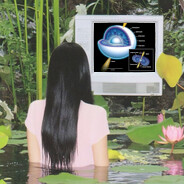
A neutron star is what’s left behind after a massive star dies in a dramatic explosion called a supernova. When a star much larger than our Sun runs out of fuel, it can no longer hold itself up. Gravity takes over and crushes the core so intensely that protons and electrons merge into neutrons. What remains is an incredibly dense ball of mostly neutrons, basically a giant atomic nucleus the size of a city.

Even though a neutron star is only about 20 kilometers (12 miles) across, it contains more mass than our Sun. That means the matter inside it is packed tighter than anything we can experience on Earth. Imagine taking a mountain and squeezing it until it fits into a teaspoon. That is the kind of density we are talking about. In fact, a teaspoon of neutron star material would weigh billions of tons on Earth.

Neutron stars also rotate at unbelievable speeds. Some of them spin several hundred times per second. Others shoot out beams of radiation that sweep across space like lighthouse beams. Those ones are called pulsars. When the beams cross Earth, we see them as regular pulses, which makes them incredibly precise cosmic clocks.

Their gravity is extremely strong. If you were somehow able to stand on the surface (you cannot, but go with it), you would be crushed instantly. The gravitational pull is hundreds of billions of times stronger than what you feel on Earth. Nothing could survive that force, and even light struggles near their surface.

Here are some simple, clear facts:

• Origin: Formed from the collapsed core of a massive star after a supernova.
• Size: About 20 km wide, roughly the size of a city.
• Mass: Around 1.4 times the mass of the Sun, packed into a tiny space.
• Density: A teaspoon of neutron star matter weighs billions of tons.
• Gravity: Extremely strong, nothing can stand or land on it.
• Spin: Many rotate hundreds of times per second.
• Magnetism: Some have magnetic fields trillions of times stronger than Earth’s.
• Types: Regular neutron stars, pulsars, and magnetars.

Even though they are incredibly strange by everyday standards, neutron stars are also very useful to scientists. Their predictable pulses help us study space time, test theories of gravity, and measure distances across the galaxy. They also give us a look at matter under conditions we cannot recreate on Earth.

If you want, I can format this differently or make it longer or shorter.
A neutron star is what’s left behind after a massive star dies in a dramatic explosion called a supernova. When a star much larger than our Sun runs out of fuel, it can no longer hold itself up. Gravity takes over and crushes the core so intensely that protons and electrons merge into neutrons. What remains is an incredibly dense ball of mostly neutrons, basically a giant atomic nucleus the size of a city.

Even though a neutron star is only about 20 kilometers (12 miles) across, it contains more mass than our Sun. That means the matter inside it is packed tighter than anything we can experience on Earth. Imagine taking a mountain and squeezing it until it fits into a teaspoon. That is the kind of density we are talking about. In fact, a teaspoon of neutron star material would weigh billions of tons on Earth.

Neutron stars also rotate at unbelievable speeds. Some of them spin several hundred times per second. Others shoot out beams of radiation that sweep across space like lighthouse beams. Those ones are called pulsars. When the beams cross Earth, we see them as regular pulses, which makes them incredibly precise cosmic clocks.

Their gravity is extremely strong. If you were somehow able to stand on the surface (you cannot, but go with it), you would be crushed instantly. The gravitational pull is hundreds of billions of times stronger than what you feel on Earth. Nothing could survive that force, and even light struggles near their surface.

Here are some simple, clear facts:

• Origin: Formed from the collapsed core of a massive star after a supernova.
• Size: About 20 km wide, roughly the size of a city.
• Mass: Around 1.4 times the mass of the Sun, packed into a tiny space.
• Density: A teaspoon of neutron star matter weighs billions of tons.
• Gravity: Extremely strong, nothing can stand or land on it.
• Spin: Many rotate hundreds of times per second.
• Magnetism: Some have magnetic fields trillions of times stronger than Earth’s.
• Types: Regular neutron stars, pulsars, and magnetars.

Even though they are incredibly strange by everyday standards, neutron stars are also very useful to scientists. Their predictable pulses help us study space time, test theories of gravity, and measure distances across the galaxy. They also give us a look at matter under conditions we cannot recreate on Earth.

If you want, I can format this differently or make it longer or shorter.