

5
已评测
产品
228
帐户内
产品

Emperor Sheev 最近的评测

正在显示第 1 - 5 项,共 5 项条目
有 20 人觉得这篇评测有价值
有 1 人觉得这篇评测很欢乐
总时数 2,038.1 小时 (评测时 2,027.5 小时)
Salty Veteran player's pros and cons of the game:
+ Foxhole is the only game of its genre, and this allows you to experience incredible highs that other wargames can only gesture at. It is the only game with an integration of logistics, infantry, and vehicle combat on a massive scale.
+ Prior to the most recent update, the game was approaching a state of balance between its two factions where both could exploit their unique tools in interesting ways.

- The airborne update has completely shattered the balance of the game in favor of the Warden faction, which has better and more easy to use ships, planes, and infantry weapons
- The developers have no community management to speak of, and release balance patches at a glacial pace, often with no real understanding of the ramifications on game systems their design decisions have. (Example: Giving the faction with an already better navy scout planes that have spammable torpedos, essentially killing all naval gameplay for the other faction)
- The developers will leave issues with the Colonial faction in the game for years at a time, while hotfixing minor balance gripes of the Warden faction within the same month they are made.

TLDR: The game has a winning concept that is being botched by its small team of developers with every subsequent update. Without better communication and a serious look at the game balance, the game will continue to bleed players with no new massive or anticipated updates to come after airborne was added.
发布于 4 月 8 日。
这篇评测是否有价值? 欢乐 奖励
有 3 人觉得这篇评测有价值
总时数 62.3 小时 (评测时 8.5 小时)
If Cadence of Hyrule is Crypt of the Necrodancer with the roguelite elements fleshed out a lot better, Rift of the Necrodancer has gone to the complete opposite end of the spectrum and become a full on rhythm game, which is actually a good thing if this demo is anything to go by.
1. What is in the demo?
This demo contains a well-selected and well-paced series of tracks from what will be the guitar hero style mode from the game, with bosses similar to punch-out and minigames that look similar to rhythm heaven still to come. The current set of tracks use your 3 arrow keys (re-bindable in options) to hit monsters that come down a guitar-string track to the beat, and if you've played the original Necrodancer a lot of their behaviors will be familiar.
There are 3 tracks currently available, with an easy one (Disco Disaster), medium one (Amalgamaniac), and hard one (Ravevenge). Since there are 3 difficulties available for these tracks, that means there is a total of 9 levels to play, with each one being very well charted and reasonable in their difficulty. I especially like the enemy patterns specific to each track that get expanded upon and turned on their head as you turn the difficulty up. It gives a feeling of progression to the tracks that complements you getting naturally better at staying on tempo and not dropping combos.

2. Technical Aspects
Rift of the Necrodancer refines the art style of the original Necrodancer characters by fully adopting the anime-inspired style the original game transitioned to as more DLCs were released for it. The UI and characters are all high quality, and I never found myself getting distracted by visual clutter or effects while playing the game. I also encountered no bugs with this demo, which will likely carry over to the full game given how polished the demo seems to be. My only minor issue is that shield skeletons don't feel like they give the proper visual feedback when you kill them (requires a quick double tap on the beat), but maybe thats because I am used to the original Necrodancer where they drop their shields when hit from the front.

3. Conclusion
There's not much to say other than this demo is incredibly fun and polished, which is a good omen for the full game. The difficulty curve of the current set of the tracks is also appropriate, making it more accessible to new players. Assuming more tracks in the final game fill the difficulty gap between Hard mode Disco Disaster and Amalgamaniac/Ravevenge, this will get even better. Hopefully, there will not be an Aria-style difficulty spike in the story that prevents people from finishing the game in the final version
发布于 2024 年 8 月 21 日。
这篇评测是否有价值? 欢乐 奖励
有 33 人觉得这篇评测有价值
有 1 人觉得这篇评测很欢乐
3
4
总时数 183.0 小时 (评测时 147.1 小时)
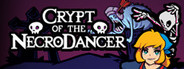
Hi there, I'm here to gatekeep Crypt of the Necrodancer.

After obtaining 31 out of the game's 61 achievements, with several characters left to beat and multiple major challenges ahead mocking me like Sisyphus's boulder, I've come to some important thoughts regarding this game and its ability to keep people playing it in the first place. Although I find the game greatly enjoyable, I will outline 3 major points for why this game may turn off most players from even beating the first part of the story.

1. Necrodancer feels like an old roguelite with some newer coats of paint

If you've played other rogue-like/lites, playing Necrodancer for a few hours will make you immediately aware that the game is essentially the last of the "old" rogue-lites like the first Binding of Isaac, Spleunky, and Rogue Legacy. While these other games have received sequels that built upon their initial mechanics, Necrodancer has been steadily added to over the years with some spinoffs like Cadence of Hyrule and the upcoming Rift of the Necrodancer. Notably, Necrodancer's story, random map generation, and interlocking systems pale in comparison to newer roguelites like Hades or Enter the Gungeon, despite a veneer of meta-progression that has become the standard for today's roguelites.

Contributing to this feeling is the rather bland aesthetic and atmosphere of Necrodancer. Even games released around the same time like Binding of Isaac and FTL are iconic for their grimy and isolated atmospheres respectively, but Necrodancer has what is initially a generic fantasy art style that transitioned to something more anime inspired over the course of 2 DLCs (now Hatsune Miku is even in the game). Noticeable consequences of Necrodancer's inconsistent and blander art style is the contrast between character art of the original set of characters and newer DLCs, the re-skinning of Cadence's character model for all of the characters, and the clutter of different modes and training rooms on the game's main menu.

2. Necrodancer's gameplay is as wide as a puddle, but as deep as the Mariana trench

Necrodancer's rhythm mechanic is so important, that if you remove it (as the character Bard and "no beat mode" do), the game becomes a very stripped down turn-based dungeon crawler, ironically becoming closer to its progenitor rogue-like games than the many other rogue-lites that followed it. By putting a time-limit on each "turn" of a classic roguelike by setting it to a beat, Necrodancer has turned what would otherwise be a simple game into one with an extremely high mechanical skill ceiling. Luckily for Necrodancer, this is the last time Danny Baranowsky composed a worthwhile soundtrack for a game, so the songs (and multiple guest remix soundtracks!) don't let the rhythm mechanics get old.

So, where exactly does all the mechanical skill come from beyond staying on-beat? For Necrodancer, this is from a mix of recognizing enemy patterns, the difficulty of numerous characters, and the superhuman endurance needed for many of the game's later challenges and achievements. Enemy movements and attack patterns are the main "knowledge" component of getting better at Necrodancer, which is made difficult by the lack of telegraphing for many enemy attacks (You have a single beat to react to a red dragon's infinite range fireball!) and the randomness element of throwing a dozen of these ♥♥♥♥♥♥♥ in a cramped room while trying to stay on tempo. Its as if the spirit of Terrence Fletcher from Whiplash has come to throw a virtual chair at you for being out of tune with the single black skeleton that just took 2 out of your 3 starting hearts on the first floor of the dungeon.

3. Necrodancer has a Calvinist approach to player retention. You were either pre-selected to enjoy this game, or are guaranteed to go to hell.

Taking one look at the Necrodancer global achievements has made most people realize something is pretty ♥♥♥♥♥♥ up about how this game designs its main set of challenges. There is a completion rate of ~45% to 8% for beating the game with the STARTING CHARACTER (Zones 1-4) and most other achievements hover around 1% or less, with the achievement for actually completing the main story (Aria All-Zones) being 0.6%. What the hell went wrong along the way that made the majority of players not even beat the game with Cadence? Is Necrodancer just the Steam equivalent of a DDR machine where you have the average person playing 3 songs and leaving or the Asian college kid grinding out full clears on the highest difficulty?

I'm not sure if the game changed gears when it was being developed through early access or what, but the overall escalation in difficulty from Cadence to Aria (and several of the unlockable side characters) is pretty absurd. You go from Cadence, with no unique abilities, to Melody, with a unique weapon you have to use, and finally Aria, who expects you to beat each zone (12 or 15 total levels) in reverse with the worst weapon in the game without missing a beat or getting hit (Dont worry, you get an item that lets you make only one of these mistakes for the whole run). To put this ♥♥♥♥ into perspective, the average rhythm game dares you to full clear a 2-5 minute song to say you truly mastered it on your selected difficulty. Necrodancer asks you to full clear the entire soundtrack in one go if you even want to see the ending of the story. Its no wonder that this game is played by a stable population of a few hundred dedicated challenge grinders, and a transient population of people getting scared off by the high skill floor required to succeed.

4. Conclusion
Knowing myself, I'll keep grinding this game for many hours to come, as the rhythm mechanics and challenge are incredibly fun for me. But if this level of difficulty doesn't appeal to you, then your 15+ dollars are probably better spent on other roguelikes with more respect for the time needed to beat them. I haven't even mentioned the characters that make you re-learn entire mechanics like needing to avoid gold (Monk), playing the game at double tempo (Bolt), or doing both of those things at the same time while being locked to the ♥♥♥♥♥♥♥♥♥ weapon and not missing a beat (Coda, the ultimate challenge and "♥♥♥♥ you" by the developers). Lets not even get to achievements that want you to finish the game with all characters in a row, or one character 10 times in a row. Needless to say, Necrodancer asks of its players more than any other game I've seen to say they've 100%'d it or mastered its mechanics. If you can handle that and dont just want to refund this game before the 2 hour refund window, start rolling that boulder up the hill.
发布于 2024 年 7 月 31 日。 最后编辑于 2024 年 7 月 31 日。
这篇评测是否有价值? 欢乐 奖励
有 60 人觉得这篇评测有价值
有 2 人觉得这篇评测很欢乐
8
9
总时数 16.4 小时
Having enjoyed the GBA Fire Emblem games extensively before playing Dark Deity, I was initially hopeful that the game would recapture some of the charm they had that later games in the series didnt. While it seems to have succeeded in some ways- such as the detailed attack animations and pixel art, actually playing the game is far more tedious and less satisfying than the series it so desperately attempts to pay homage to.

In an effort to differentiate itself from Fire Emblem, Dark Deity has completely changed the simple weapon system that gave surprising tactial depth to the GBA entries of the series. Instead of the easy to remember rock-paper-scissors weapon and magic triangles, Dark Deity has several types of damage (piercing, bludgeoning, flame, etc) that are further divided into four categories (power, finesse, focus, balance) which are upgraded with tiered tokens that improve the stats of each category. The damage types are different for each class and are weak or strong depending on what armor a unit has. This weapon and damage system is a complete mess to navigate for new players, and the bloat of statistics to memorize means you will simply be selecting the weapon type that does the most damage to the enemies you face.

The damage triangles, weapon weight, and durability system of the GBA games were much easier to understand than the jumbled mess of mechanics that dark deity throws at you, and allowed maps to be designed with more fun and challenging objectives in mind. In the GBA Fire Emblem games, you had to conserve valuable weapons and items while considering what the enemy was carrying on the map. Special weapons which flipped the weapon triangle or did more damage to certain classes also meant you had to pay more attention to your unit placement, which led to far more interesting map design. Dark Deity's maps range from decent to so poorly designed they reminded me of the second Fire Emblem game on the NES. Their objectives are somewhat varied but don't come anywhere close to the creativity of some Fire Emblem titles like Thracia 776 or Conquest.

One of Dark Deity's taglines is that there are over 54 different classes to promote your characters into, but one quickly finds out that many of these classes are complete trash and a total waste of your characters. Adopting the branching classes from Sacred Stones was a good idea on paper, but throwing together so many clashing aesthetics from asian magic monks to standard fantasy soldiers makes the whole thing feel tacky and lacking in a unique identity.

Aside from the great pixel art and animations, Dark Deity is lacking in aesthetic and story. There are 30 different characters (on the low end compared to the GBA entries) and all of them are extremely bland. You will see a wide range of generic fantasy tropes with some obvious callbacks to FE characters like Benji (Arthur from FE Fates). Even if a few of them were well written, you would have no real incentive to go for particular supports because you receive no stat benefit for pairing characters together. This is a real shame because the support system itself is a well-made fusion of Path of Radiance's story-gated events with a more convenient version of the GBA games' "stand close to eachother in battle". You will also notice that the music is a constant drone of fantasy genre crap with nothing approaching the quality of the GBA Fire Emblems.

Overall, Dark Deity tries to be a successor to the GBA Fire Emblem games, but fails to recognize what made them good. Whereas the GBA Fire Emblems had multiple simple weapon systems that coalesced into something more complex and fun, Dark Deity uses a complex base of mechanics to achieve a simplistic and boring result. While Fire Emblem's aesthetic isn't exactly the most unique as far as fantasy games go, it is at least coherent enough to have its own identity that lends itself well to memorable characters and music. The end result of Dark Deity is a game that looks, sounds, and plays like a worse version of Fire Emblem. I say stick to your GBA Cartridges and Emulators and stay far away from Dark Deity.
发布于 2021 年 7 月 9 日。
这篇评测是否有价值? 欢乐 奖励
尚未有人觉得这篇评测有价值
总时数 18.7 小时 (评测时 9.2 小时)
rip sev
发布于 2016 年 11 月 24 日。
这篇评测是否有价值? 欢乐 奖励
正在显示第 1 - 5 项,共 5 项条目