


安装 Steam
登录
|
语言
繁體中文(繁体中文)
日本語(日语)
한국어(韩语)
ไทย(泰语)
български(保加利亚语)
Čeština(捷克语)
Dansk(丹麦语)
Deutsch(德语)
English(英语)
Español-España(西班牙语 - 西班牙)
Español - Latinoamérica(西班牙语 - 拉丁美洲)
Ελληνικά(希腊语)
Français(法语)
Italiano(意大利语)
Bahasa Indonesia(印度尼西亚语)
Magyar(匈牙利语)
Nederlands(荷兰语)
Norsk(挪威语)
Polski(波兰语)
Português(葡萄牙语 - 葡萄牙)
Português-Brasil(葡萄牙语 - 巴西)
Română(罗马尼亚语)
Русский(俄语)
Suomi(芬兰语)
Svenska(瑞典语)
Türkçe(土耳其语)
Tiếng Việt(越南语)
Українська(乌克兰语)
报告翻译问题


If you are into political satire and star wars.
Made this video about "Living in America" hope you all like it!
no one talks much these days :'c
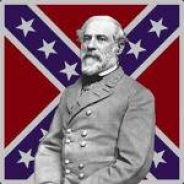
General lee is probibly up there now doing a galactic face palm.
Joshua Lawrence Chamberlin were my two favorite generals.
at Richmond in the early days of the war. Now if you want to talk about terrible generals don’t get me started on Ambrose Burnside, Fighting Joe Hooker, and George B. McClellan.
Thereafter, Lee returned to his earlier practice of frontal assaults into the heart of enemy resistance. In nearly all cases, they failed.
This tendency to move to the direct confrontation, regardless of the prospects or the losses that would be sustained, guaranteed Lee's failure as an offensive commander.
Lee never understood the revolution that the Minié ball had brought to battle tactics. However, two of his senior lieutenants, Stonewall Jackson and James Longstreet, did. They came up with an antidote to direct assaults---a defensive posture---and urged this policy upon Lee.
Jackson in addition saw that, since Union forces were likely to fail with great losses if they attacked Confederate positions, the South should induce the Union commanders to make such attacks. Confederate forces then might swing around the flanks of the demoralized Union soldiers, cut off their retreat and line of supply, and force them to surrender.
Although Lee accepted Jackson's argument in principle, he failed to carry it out at Second Manassas in August 1863.
Although Lee thought in offensive terms, he did not truly understand offensive warfare. Like the majority of generals on both sides, Lee believed he could win by striking at the enemy directly in his path.
History had shown that this was not true, except in unusual cases. But the idea had gained doctrinal status because scholars studying Napoleon Bonaparte thought the great master had won his battles by bringing superior force against some decisive point of the enemy. While this was strictly true, it missed the subleties of Napoleon's genius. Napoleon in fact had succeeded in his earlier campaigns by maneuver and surprise, and had won his later battles by breaking a hole in the enemy's line with canister---or a lethal cloud of metal
The key to understanding Lee as a commander is that he sought from first to last to fight an offensive war---that is, a war of battles and marches against the armies of the North. This offensive war, though it produced many spectacular clashes and campaigns which arouse fascination to this day, ultimately failed because Lee's methods and his strategy were insufficient to overcome the South's weakness in arms and manpower.
There are two errors in this reasoning. The years taken to defeat the South can just as well be ascribed to the missteps and blunders of Union commanders as to the genius of Robert E. Lee. And, most important, the North was not bound to win, whatever its strength. There is nothing preordained about military conquest. The size, power, and wealth of a state do not guarantee it success. Alexander the Great's Macedonia was poor and puny compared to the great Persian Empire it destroyed. Hannibal Barca's Carthaginian army was small and ill-
supplied, yet defeated Rome's legions.
The artillery would not have alot of effect anyway. Lee made many mistakes in his career but that wasn't ok because the mistakes he made were bad ones.
Lee's soldiers loved him because of his personal attributes and his wanting to work, but also because the Confederacy held out so long against a Union with three times the population and eleven times the industrial strength of the South. It was apparent to his soldiers that Lee was better then Union commanders he faced.