


安装 Steam
登录
|
语言
繁體中文(繁体中文)
日本語(日语)
한국어(韩语)
ไทย(泰语)
български(保加利亚语)
Čeština(捷克语)
Dansk(丹麦语)
Deutsch(德语)
English(英语)
Español-España(西班牙语 - 西班牙)
Español - Latinoamérica(西班牙语 - 拉丁美洲)
Ελληνικά(希腊语)
Français(法语)
Italiano(意大利语)
Bahasa Indonesia(印度尼西亚语)
Magyar(匈牙利语)
Nederlands(荷兰语)
Norsk(挪威语)
Polski(波兰语)
Português(葡萄牙语 - 葡萄牙)
Português-Brasil(葡萄牙语 - 巴西)
Română(罗马尼亚语)
Русский(俄语)
Suomi(芬兰语)
Svenska(瑞典语)
Türkçe(土耳其语)
Tiếng Việt(越南语)
Українська(乌克兰语)
报告翻译问题

 After two diaries about the map (DD#35 & DD#61), it's time for the third diary that covers all the other features of the map in this map game.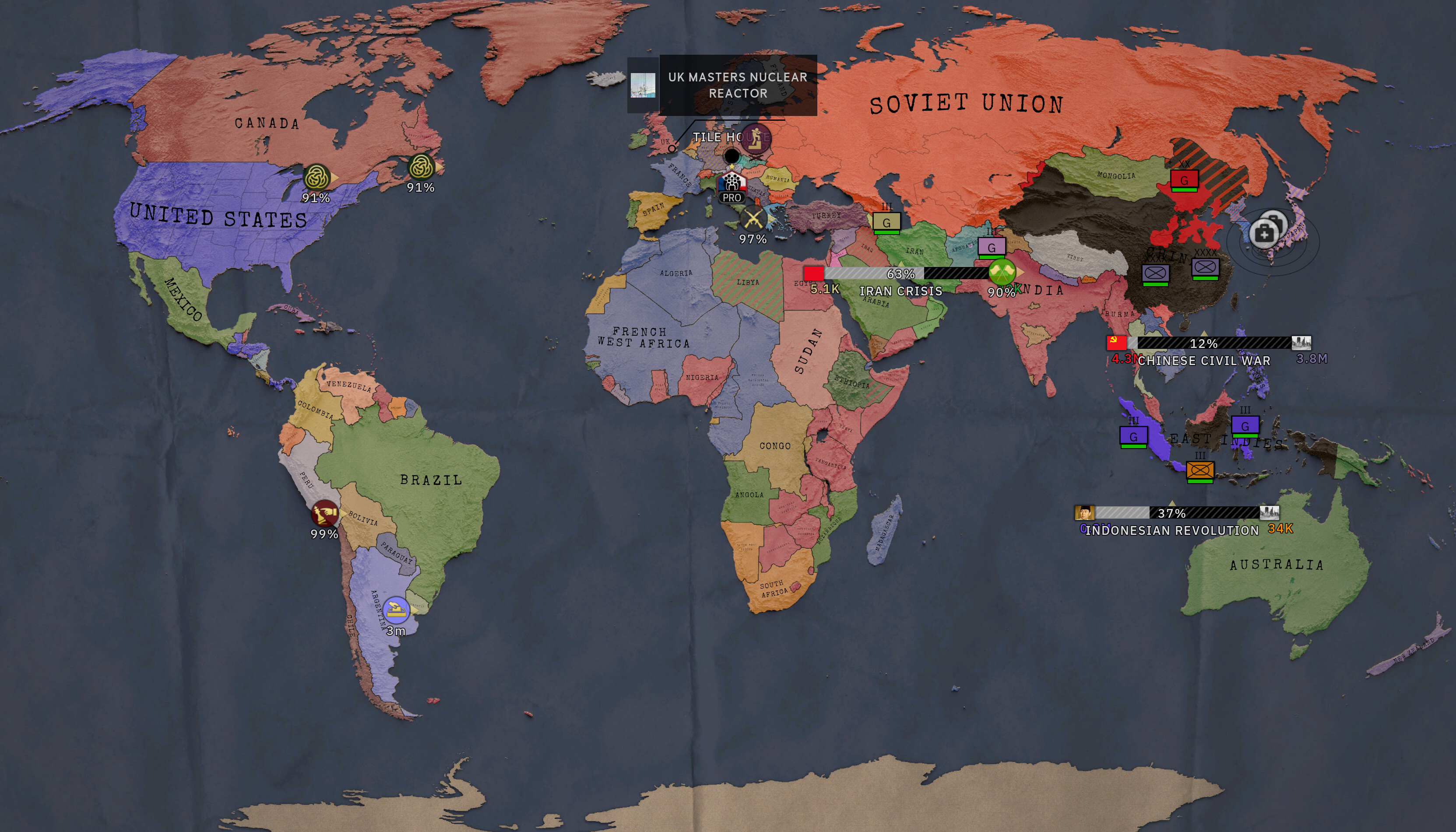
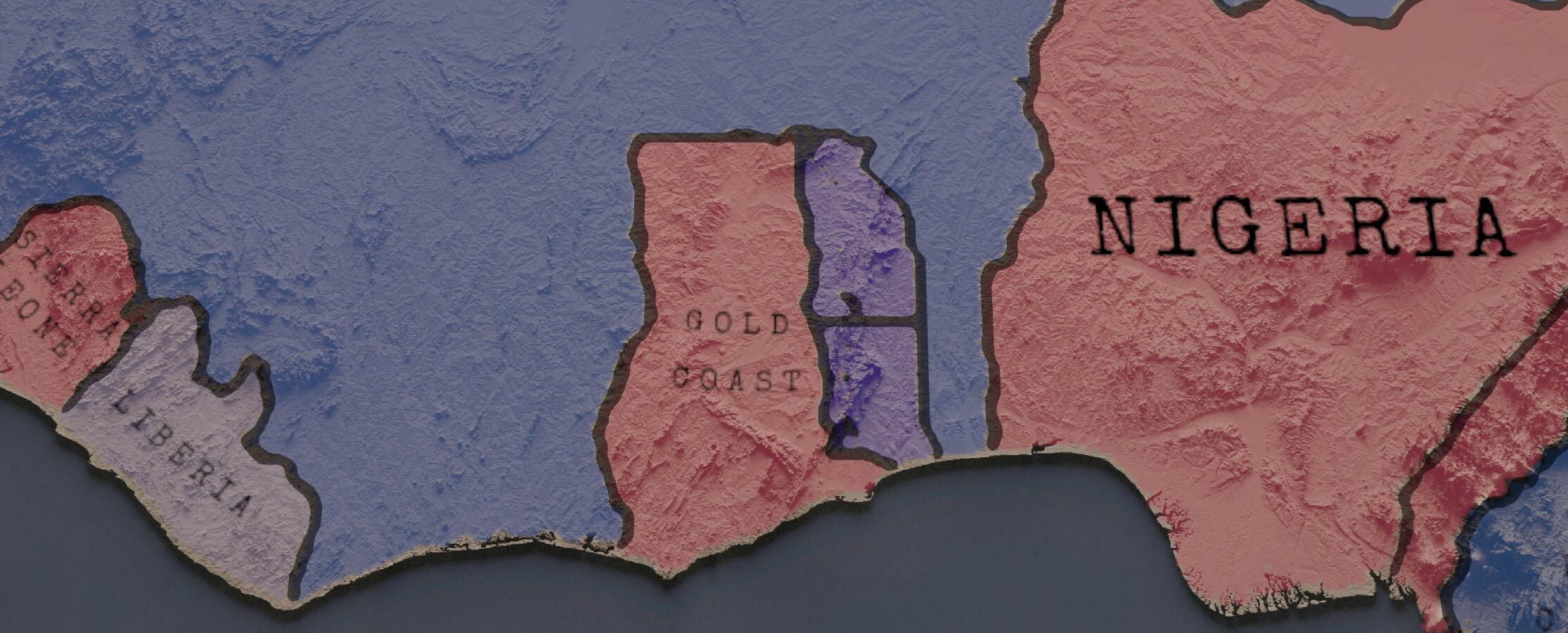
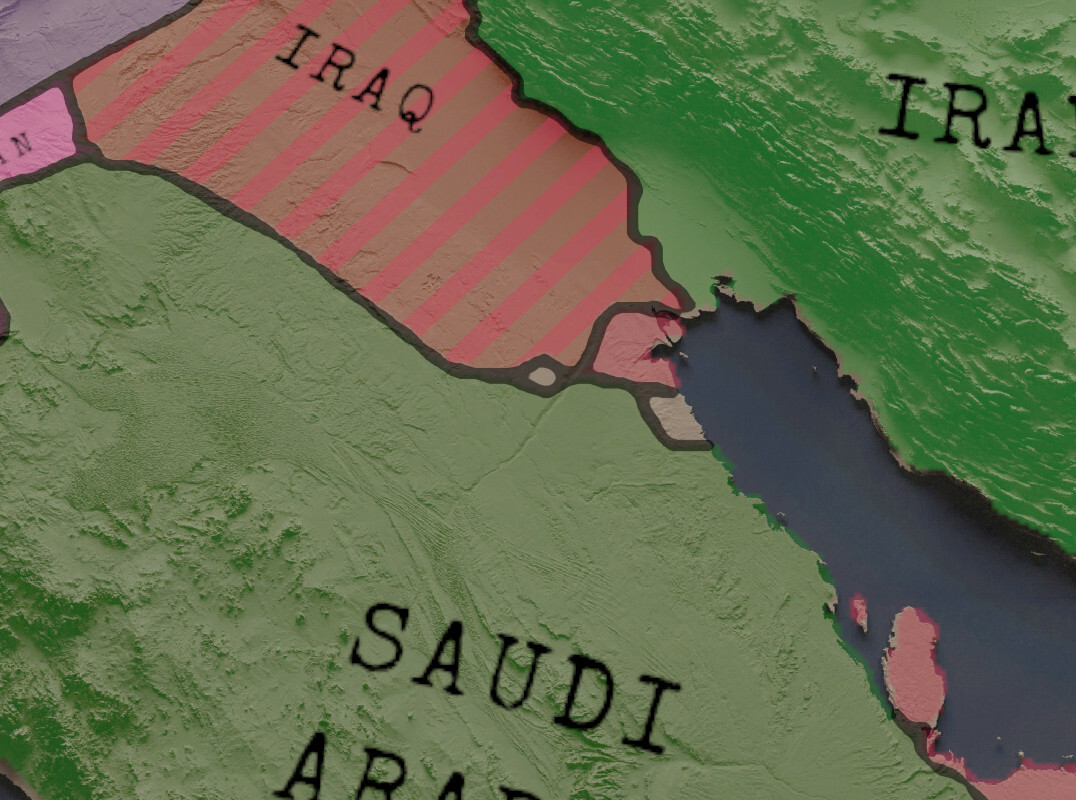 All the borders and areas are fully dynamic. This narrow strip of British Togoland right by the Gold Coast (modern day Ghana)...
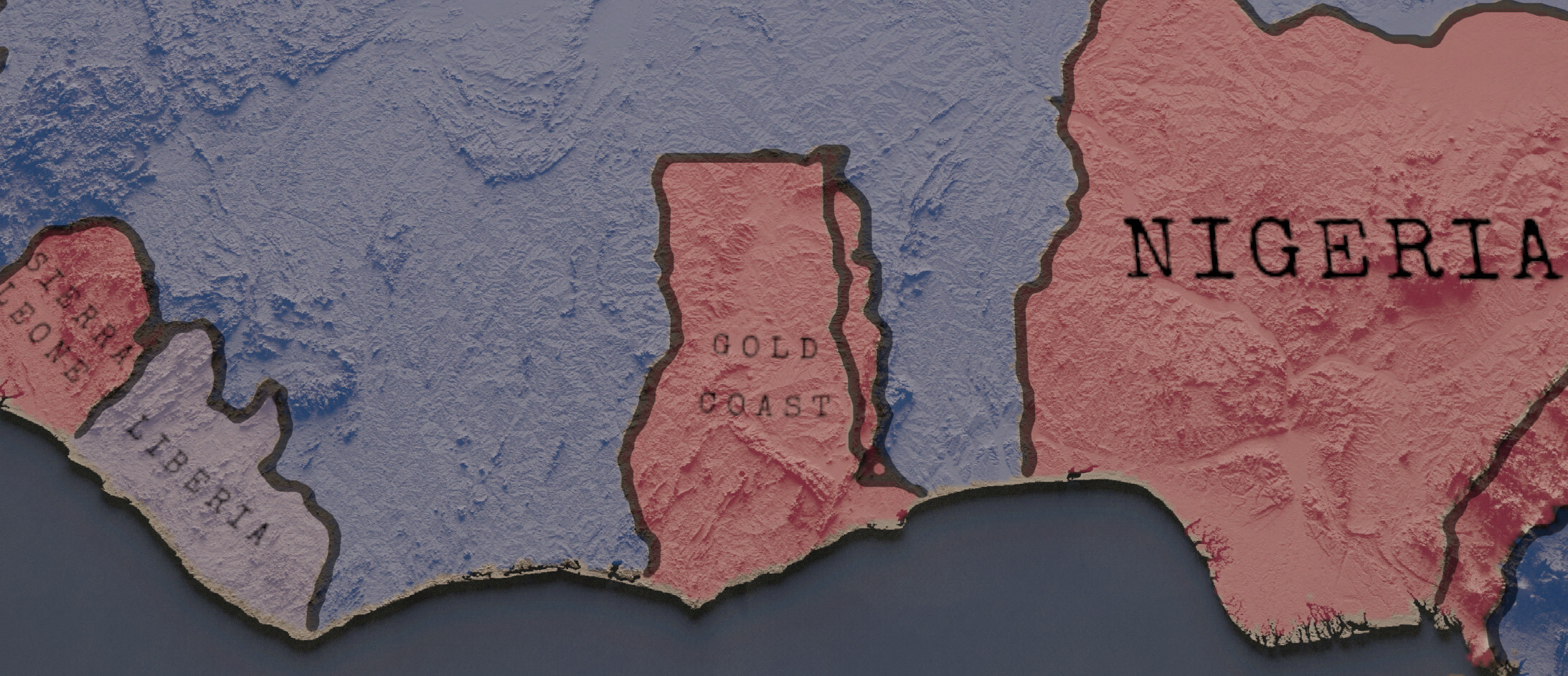 ...usually, as was the case in the real history, holds a referendum to join the Gold Coast after which this territory may be merged with the British colony on the map:
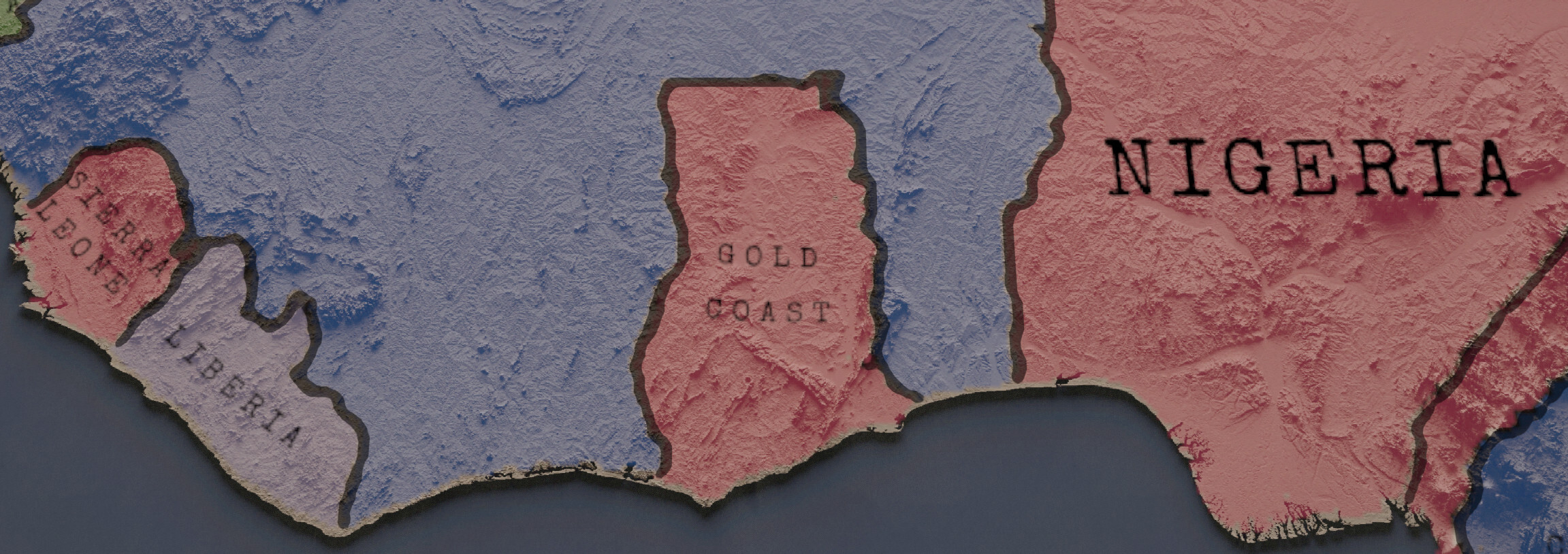 However, other scenarios are possible in the game as well. If French Togoland separates from French West Africa early enough...
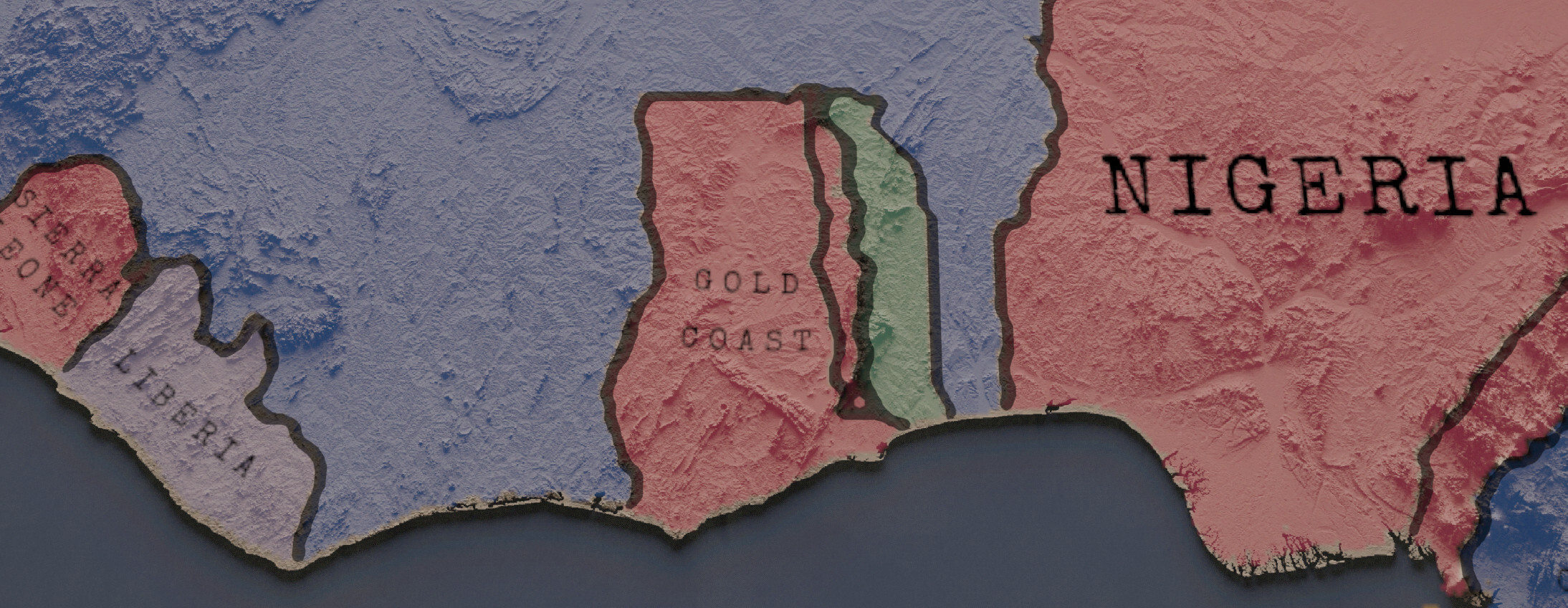 ...then, it may be instead the subject of referendum (as was the wish of Ewe people), and therefore new Togo may be compromised of both British and French parts:
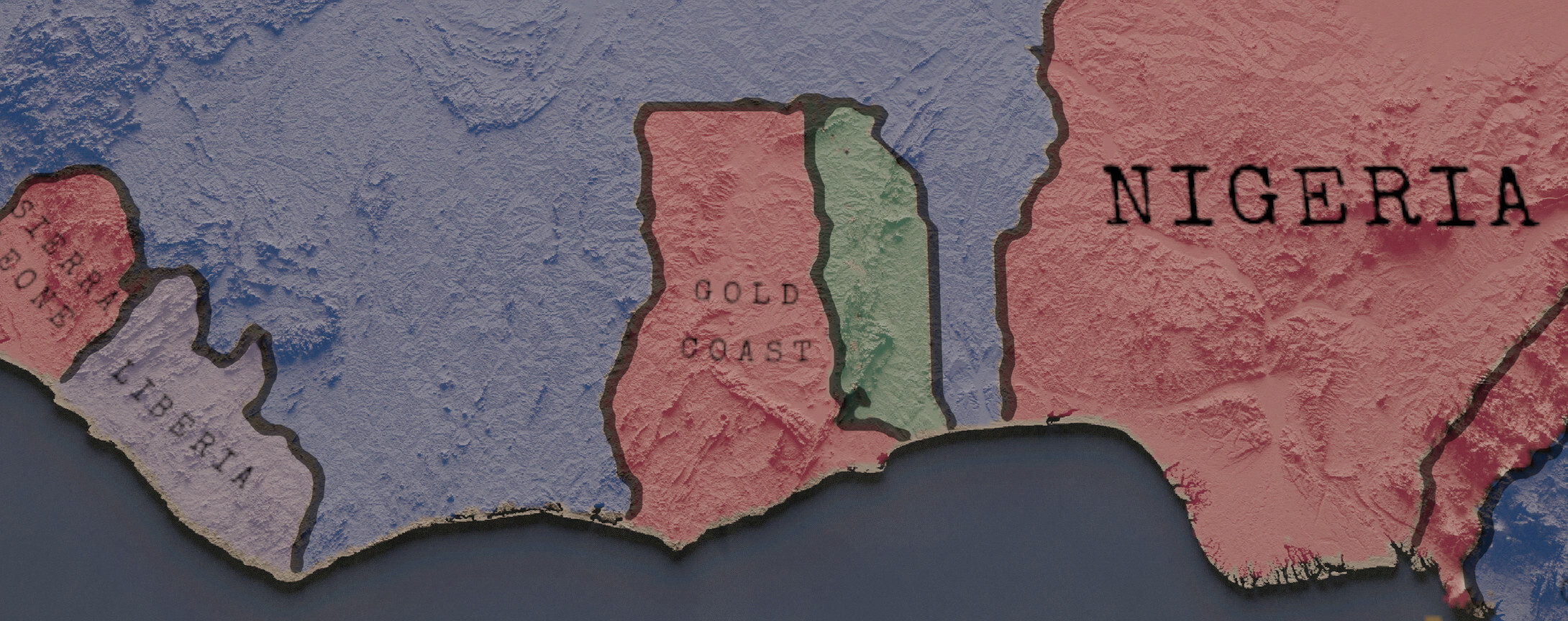 If, after some time, British and French parts fail to integrate and instead pursue separatist paths, they can separate by drawing any new border between them, for instance along one of the parallels as was the custom in a number of 20th century conflicts:
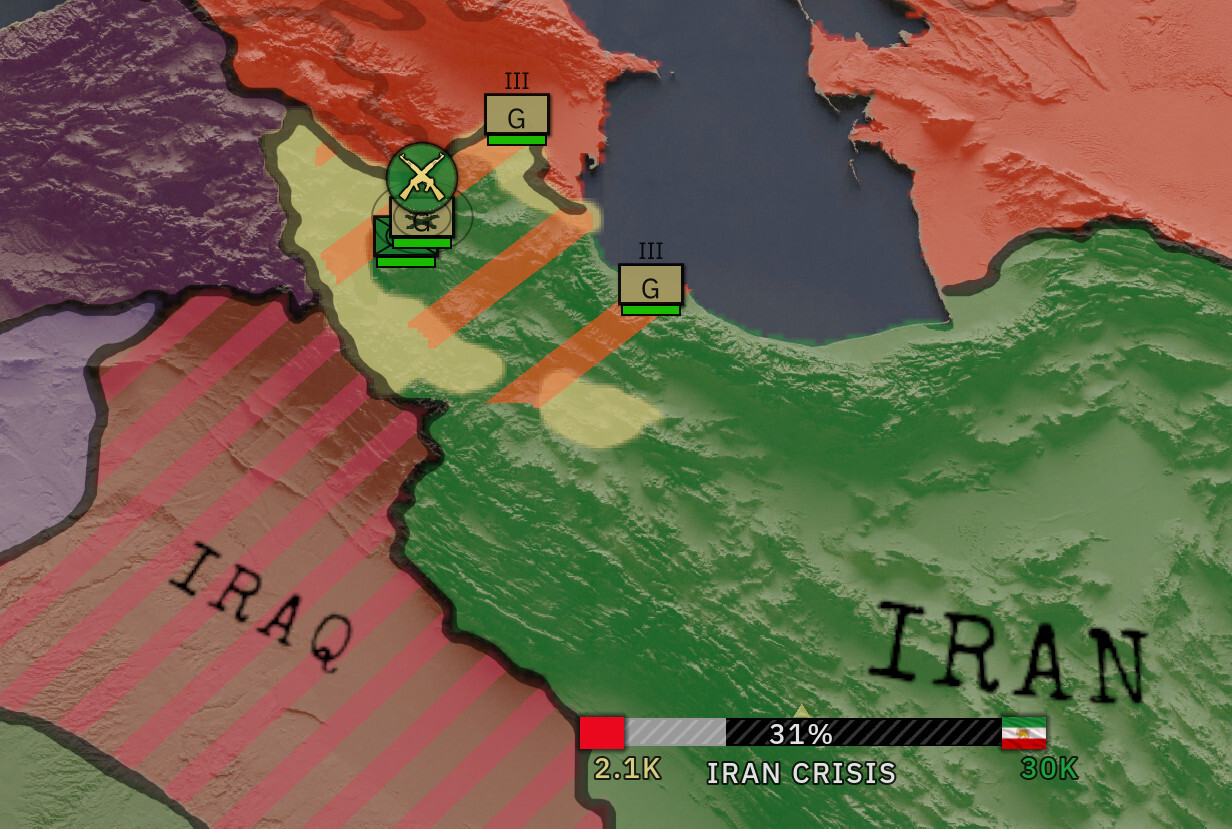
 Controlled area during a conflict has similar level of detail. Military units can control any narrow stretches of land:
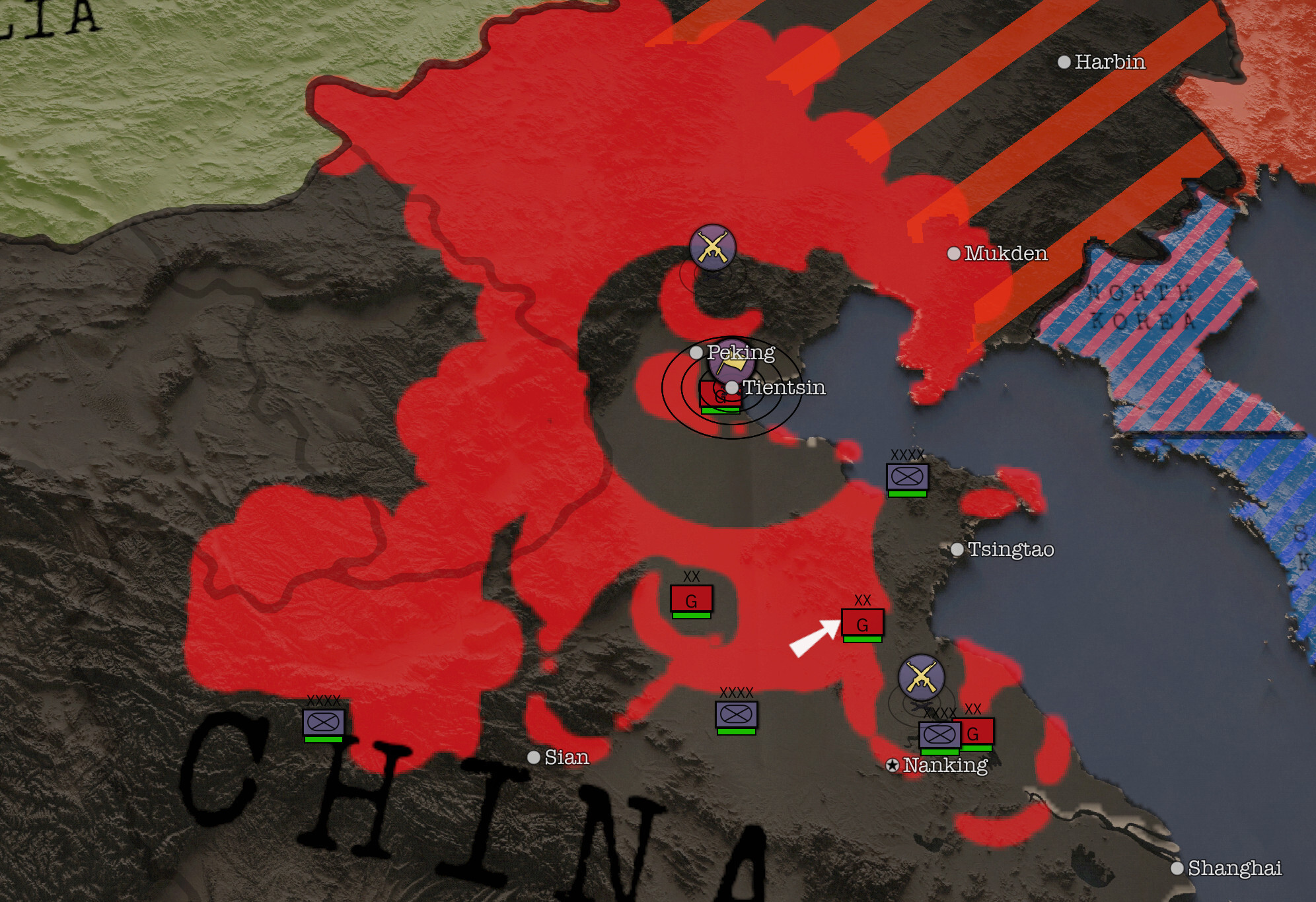
 They can get into any combination of pockets and encirclements:
 The situation may become complex during insurgencies and civil wars: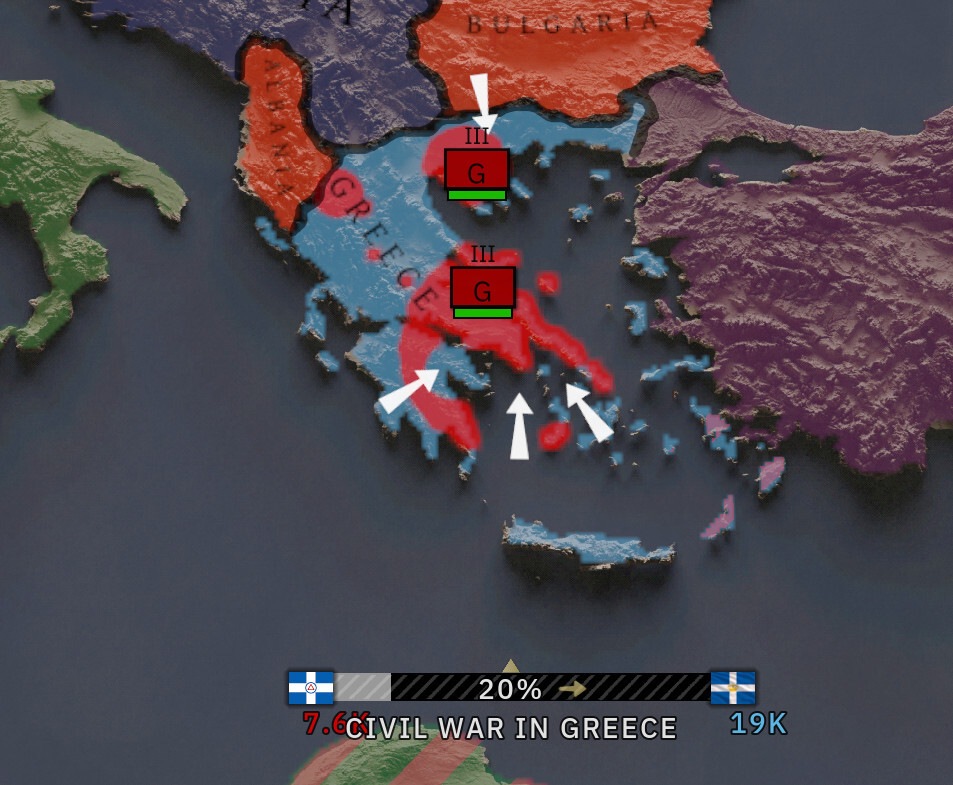
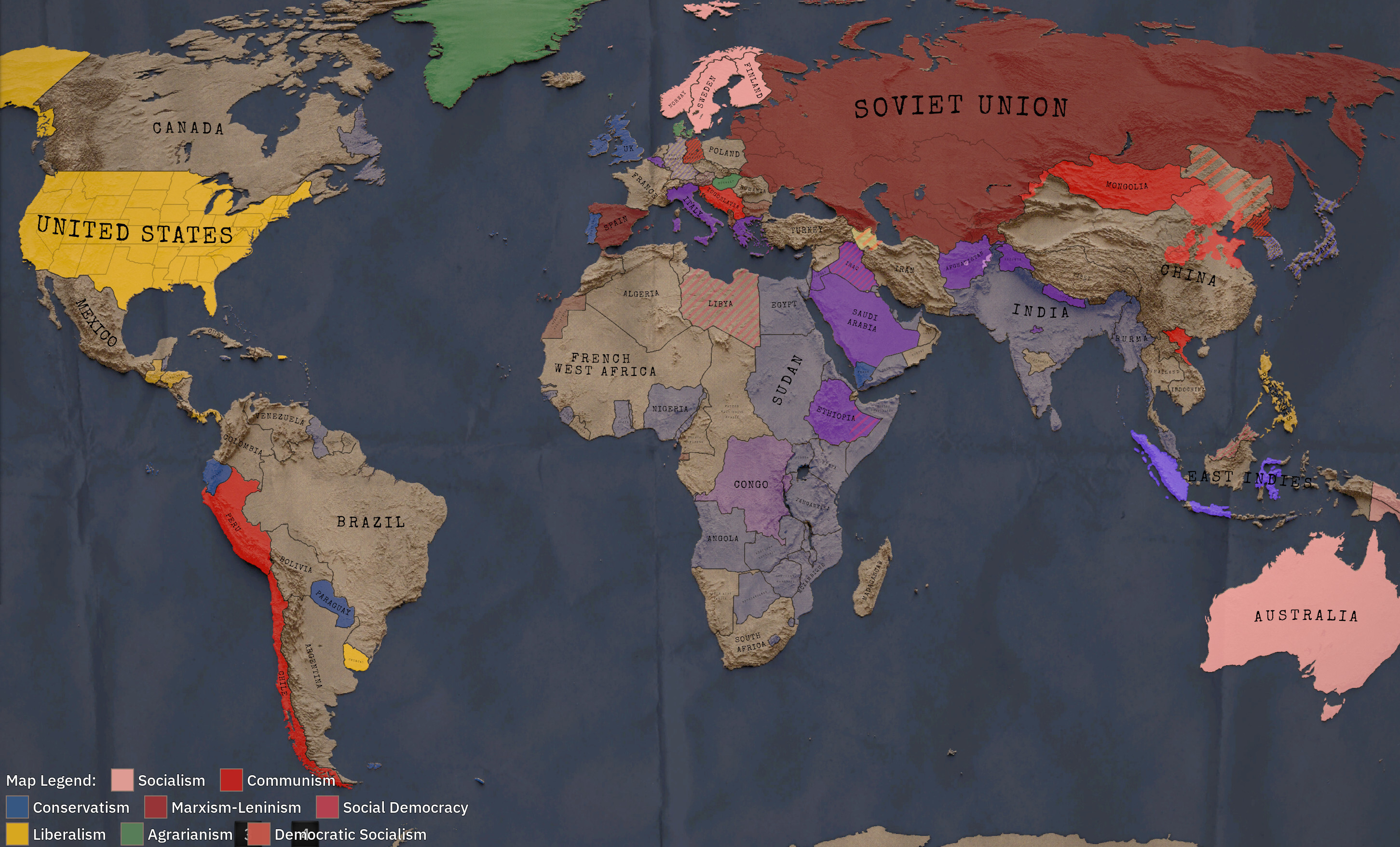
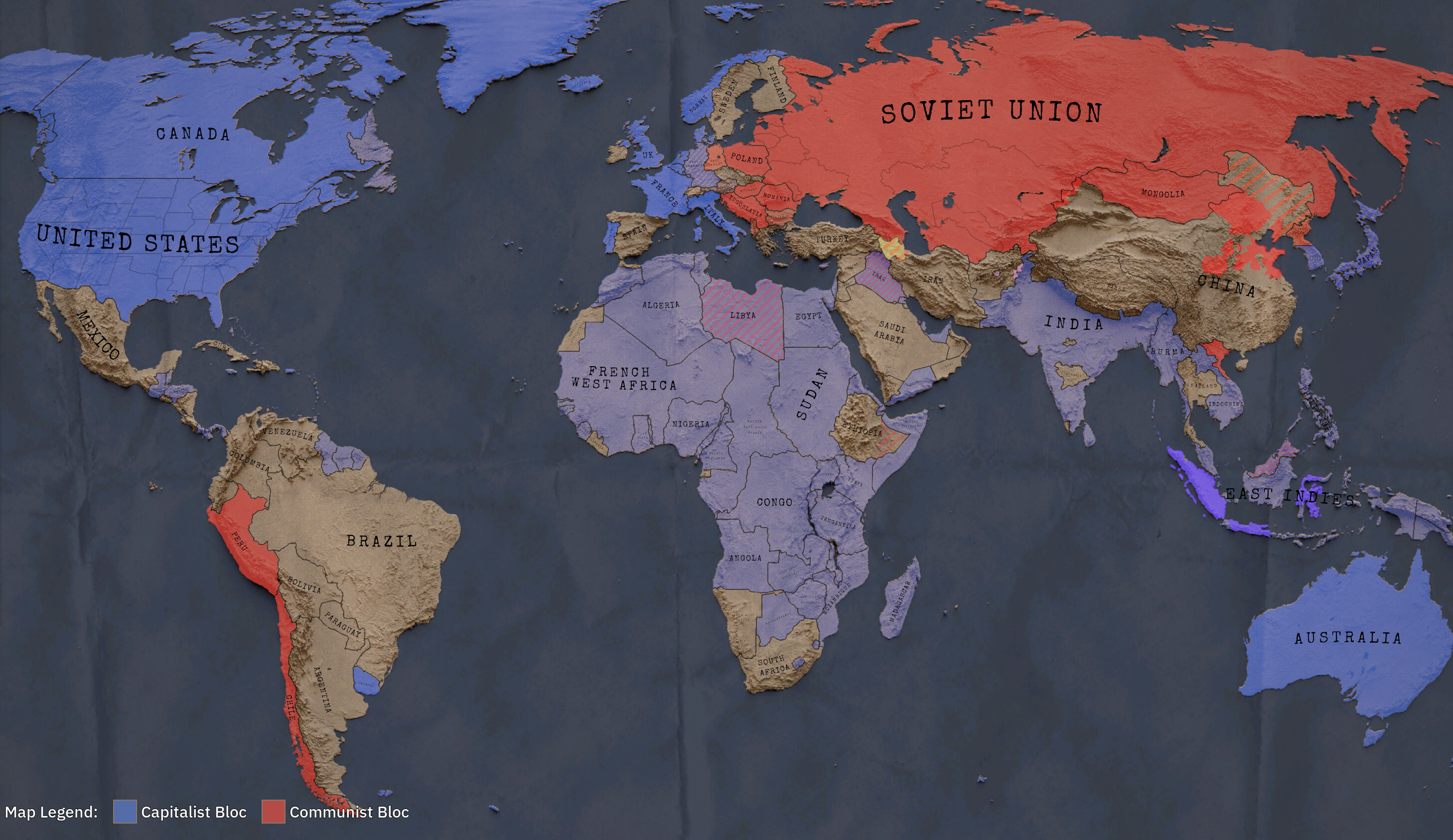 Ideologies:
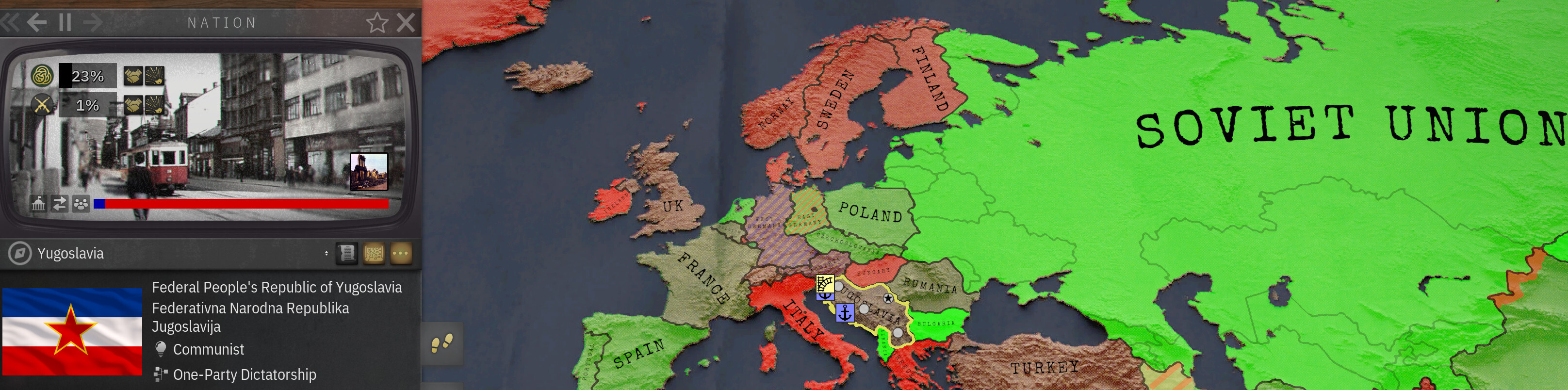
 Diplomatic (alignment) mode:
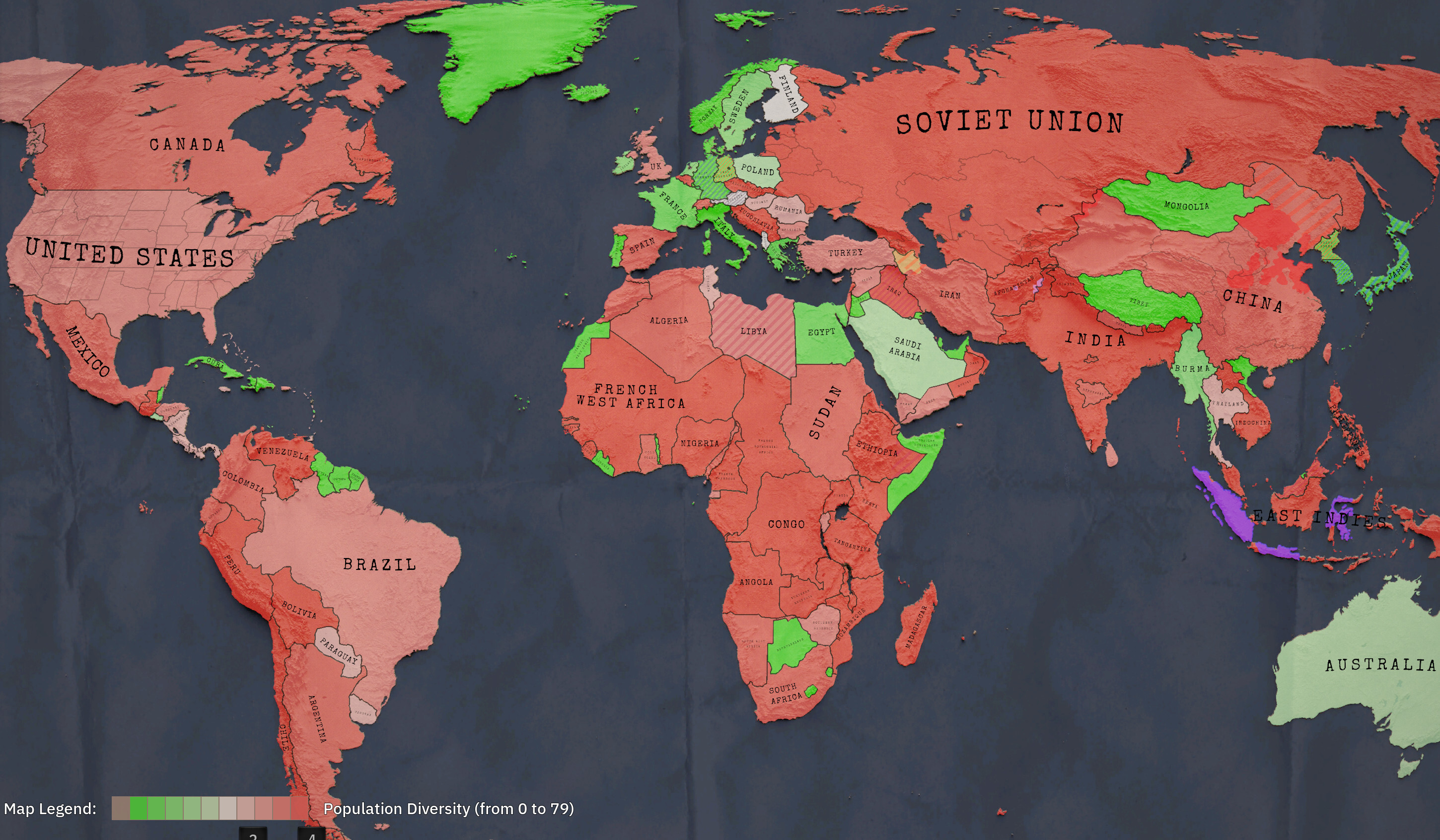
 Population diversity:
 Oil reserves: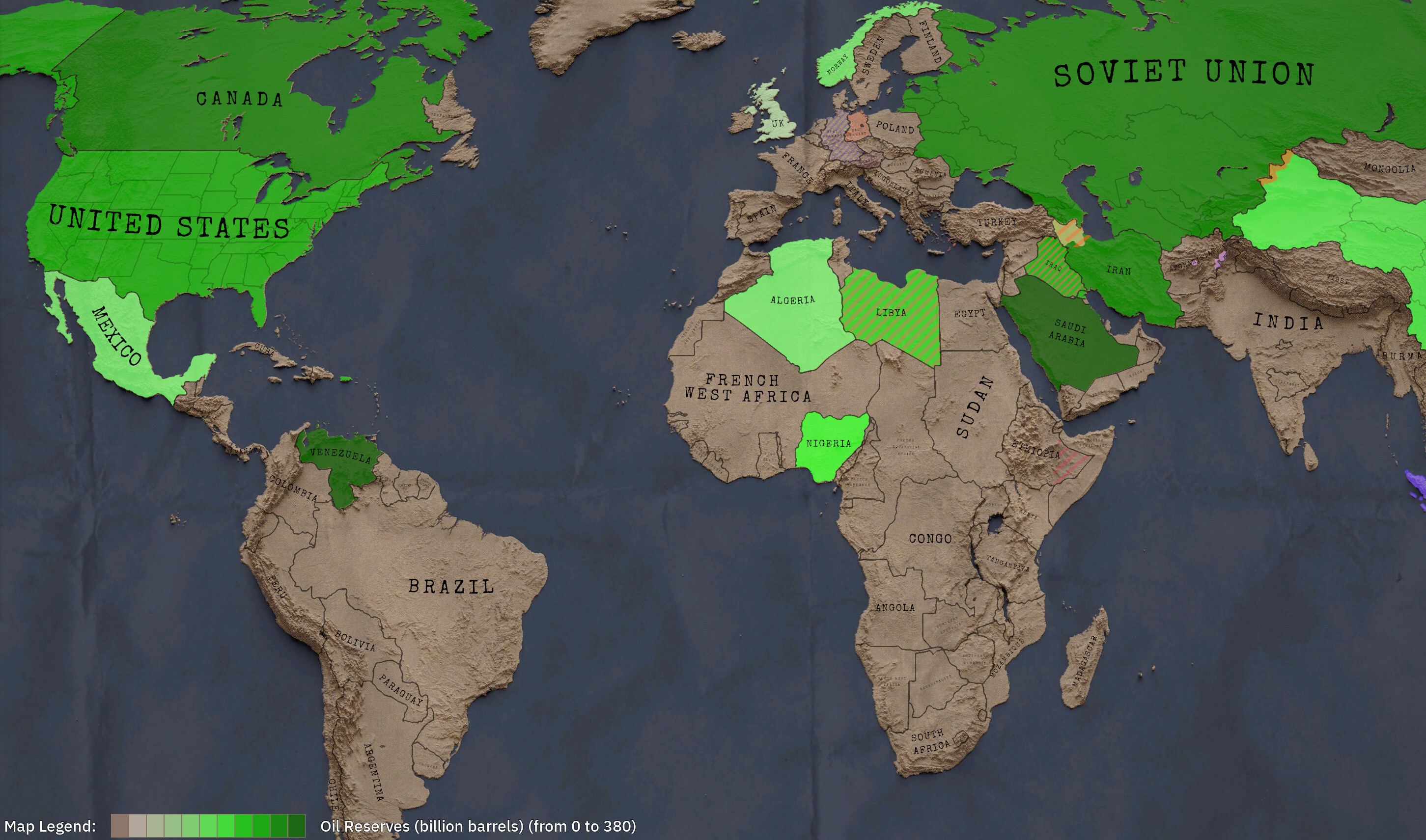
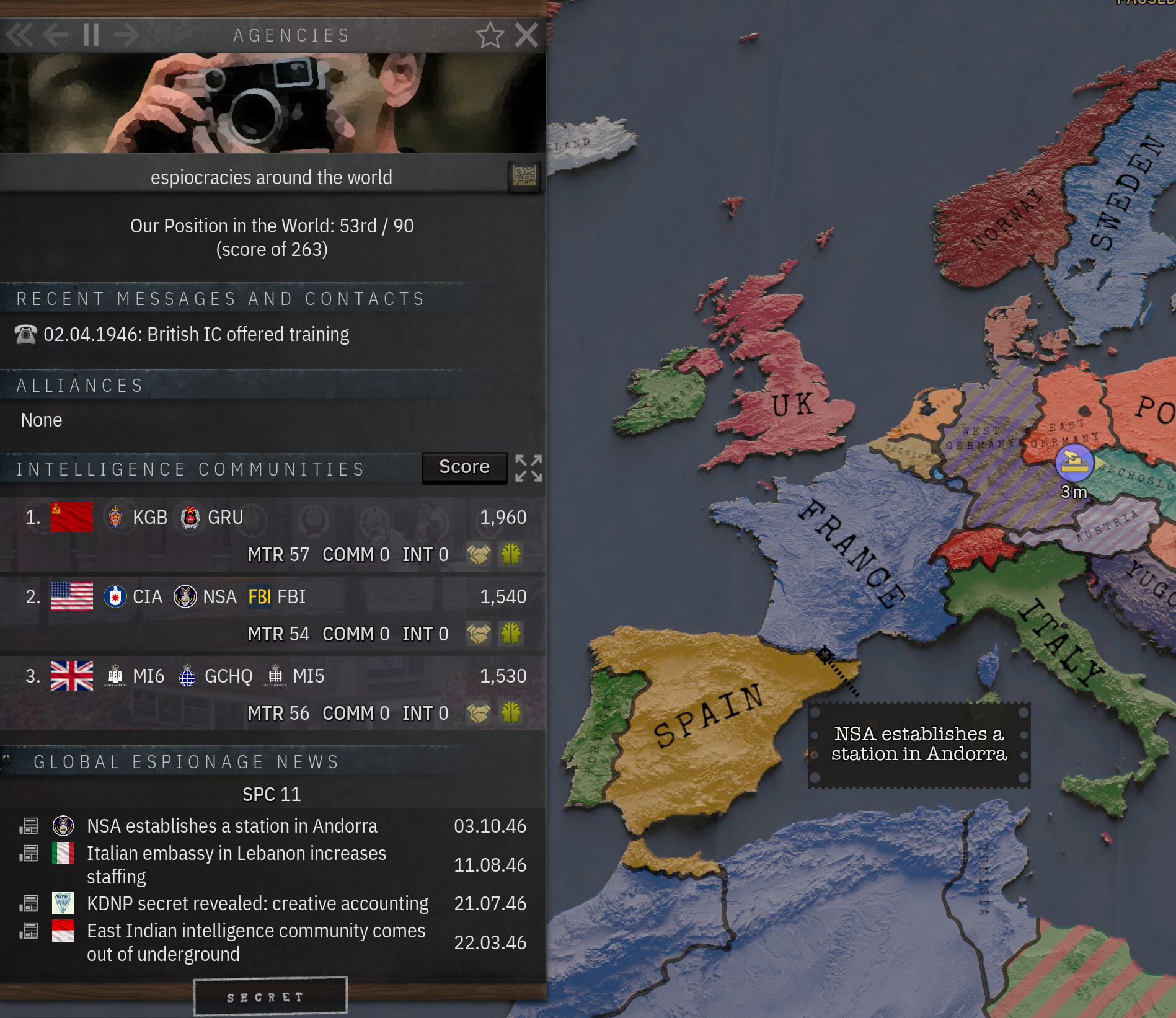
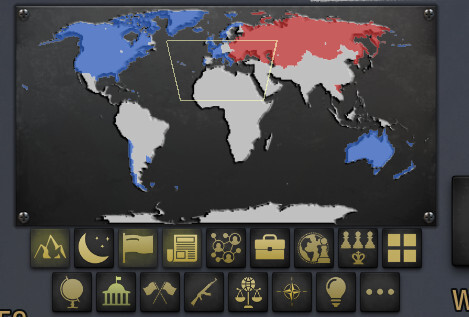 Labels evolve over time, with font adjusting to the phase of the game (post-WW2, early Cold War, mid Cold War etc):
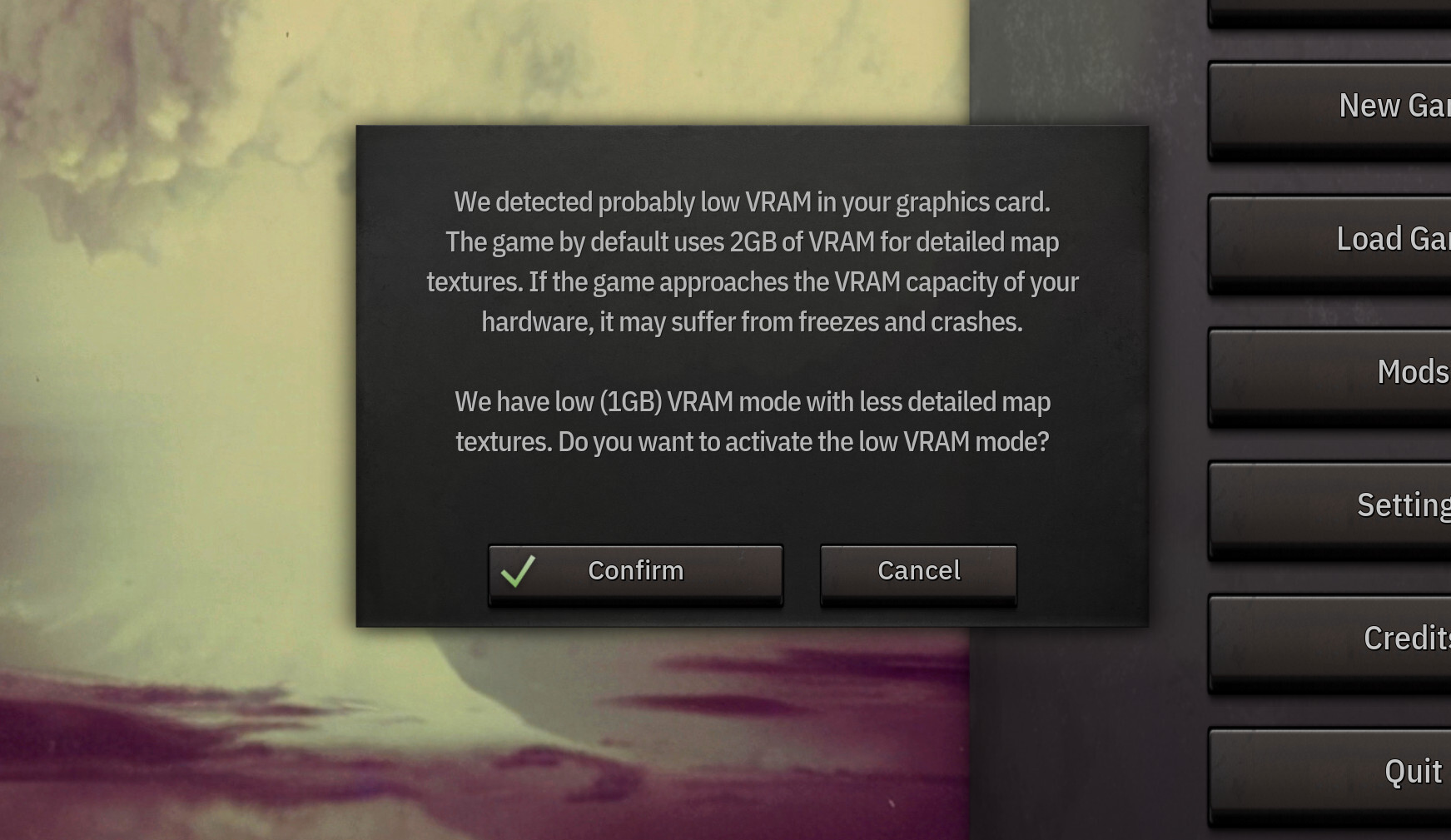
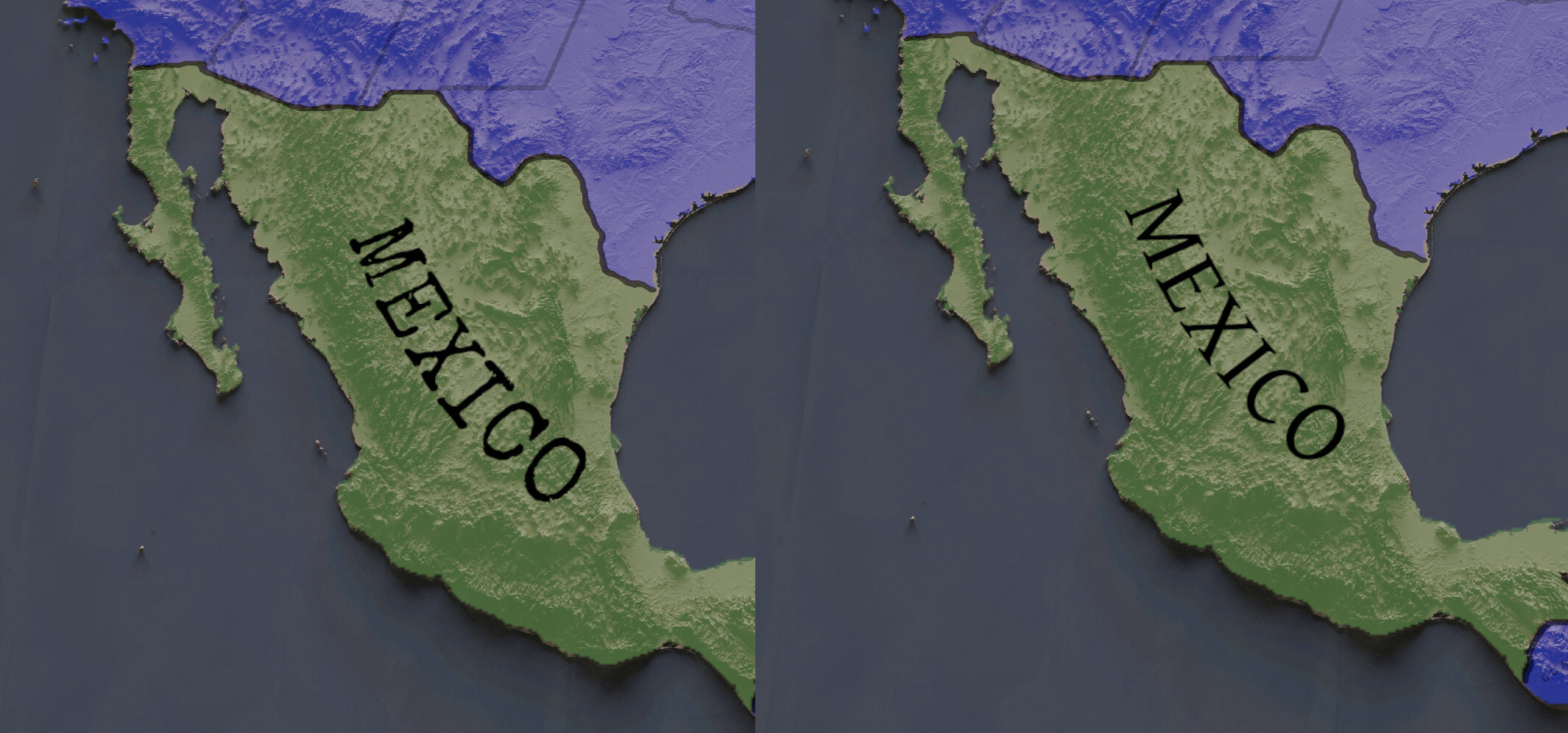 Map textures can be relatively large, so to play comfortably on low-end hardware you can turn on "low VRAM mode" that skips loading of more detailed textures:
 Pre-game simulation can redraw borders along various alternate scenarios that could happen between September 1945 and March 1946, for instance the USSR keeping Baltic states as satellites instead of annexed republics: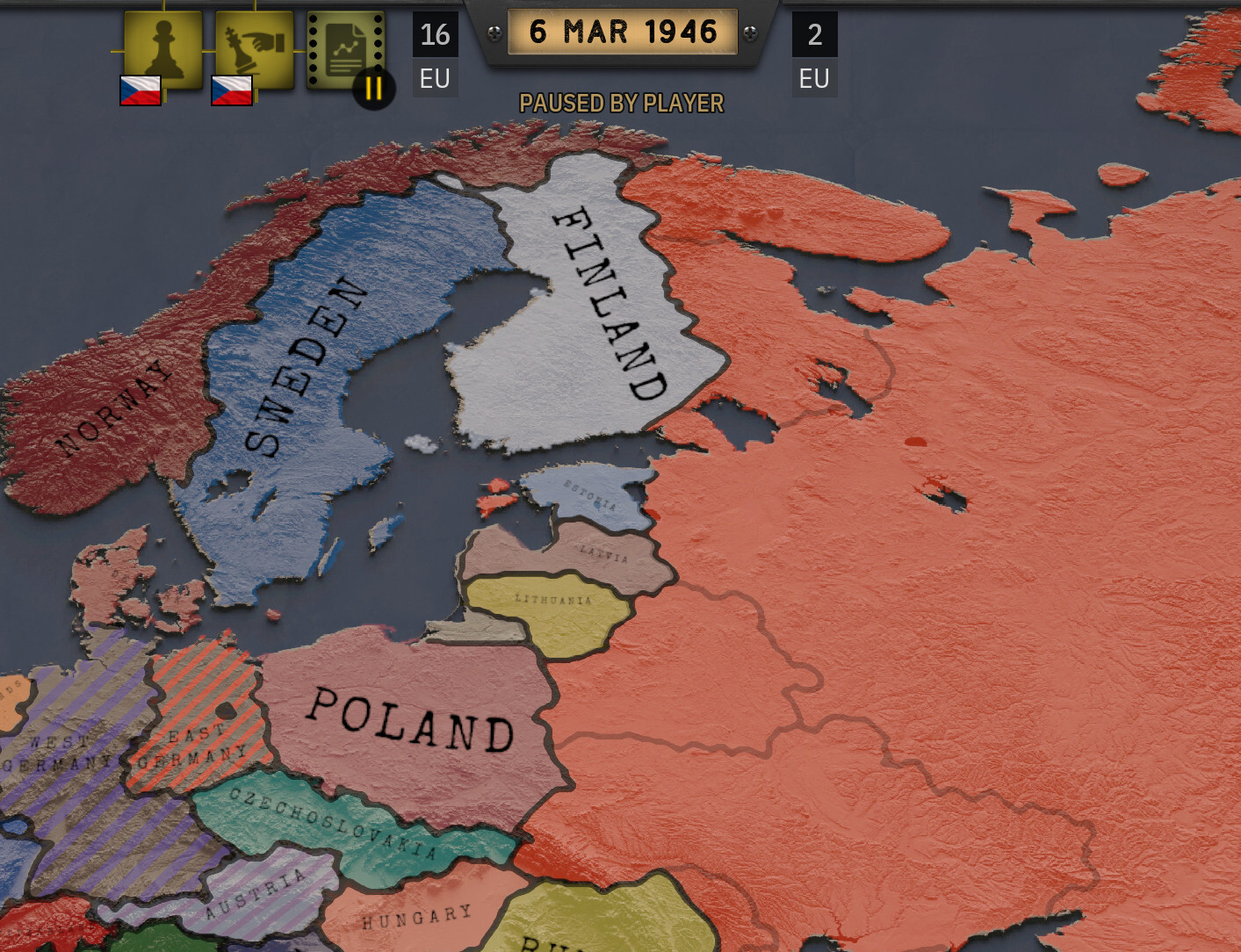



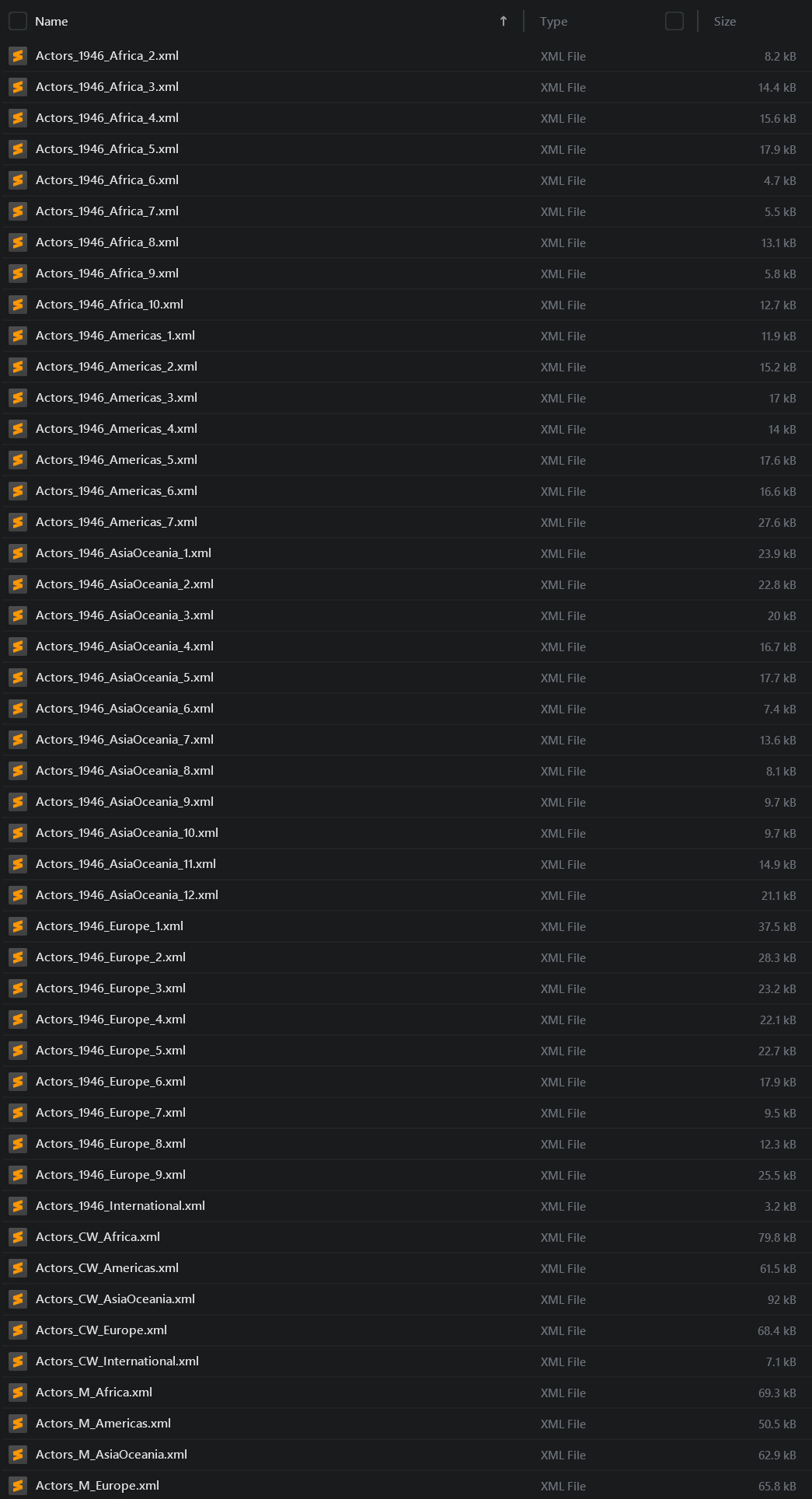 The game will be shipped with a bunch of XML files which contain majority of historical (and alt-historical) data that makes up the game world: actors, countries, intelligence communities, wars, views, ideologies, events, population groups, and technologies (paradigms).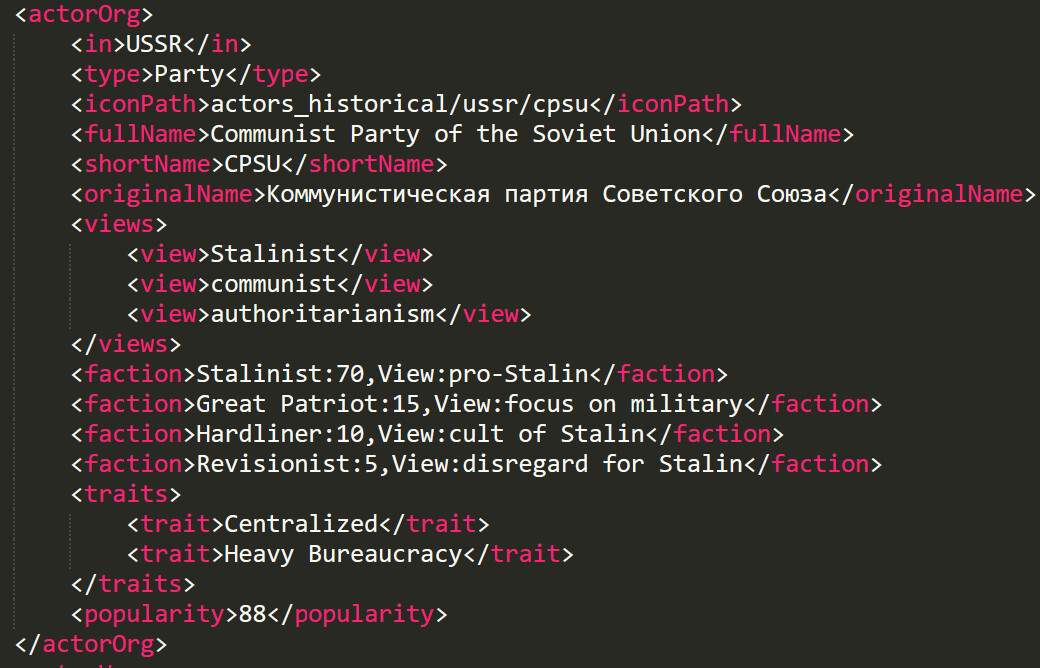
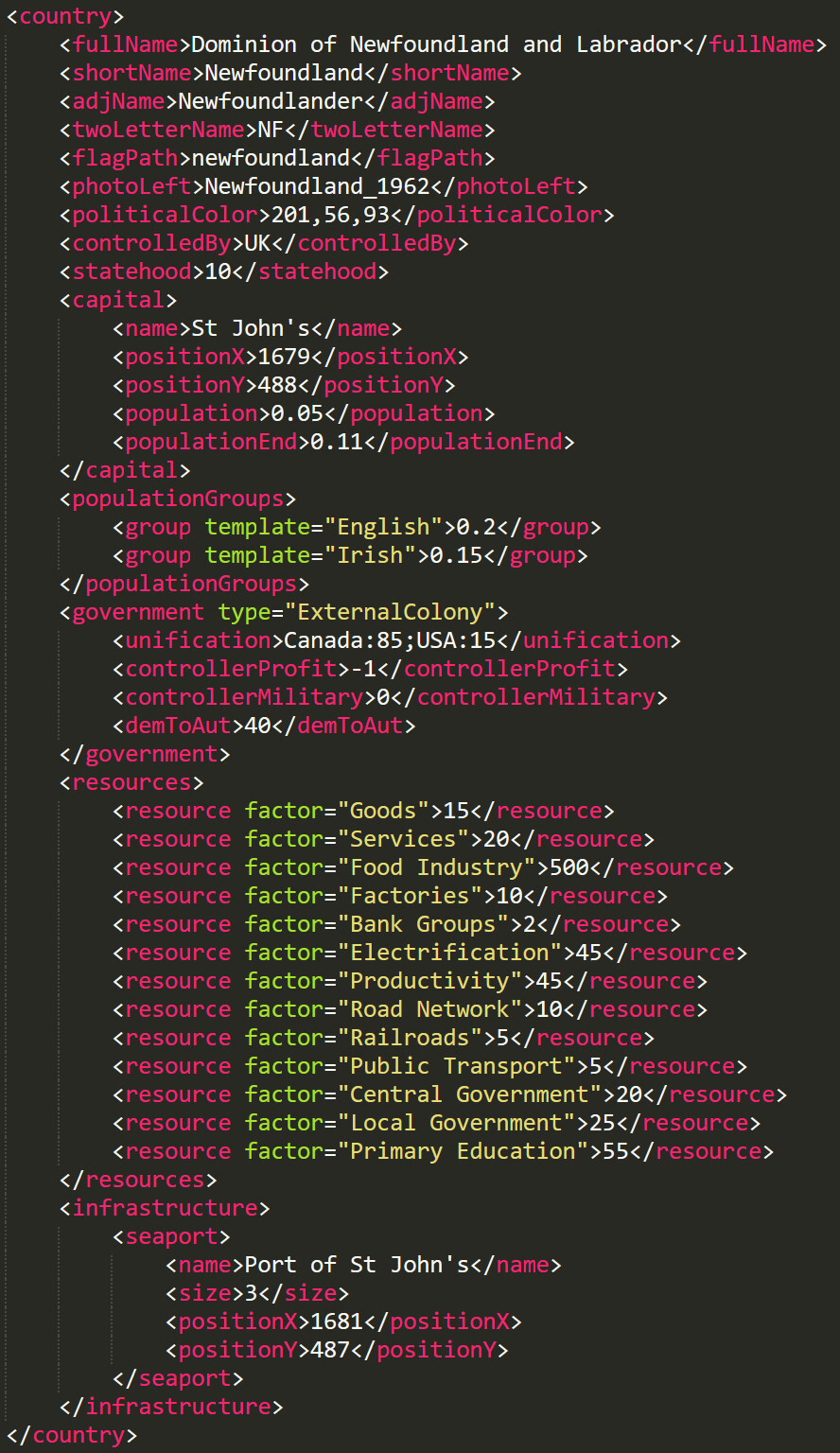
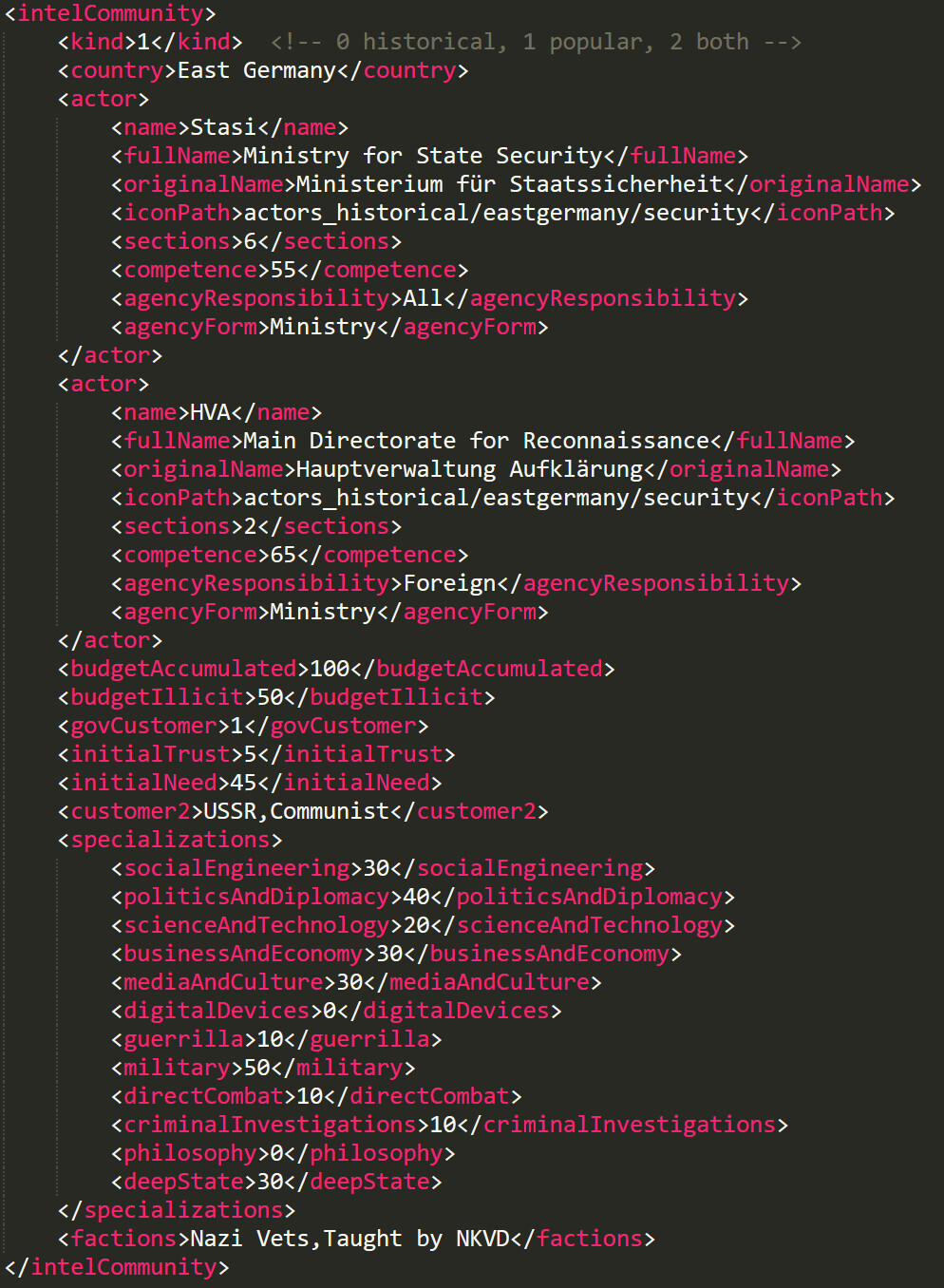
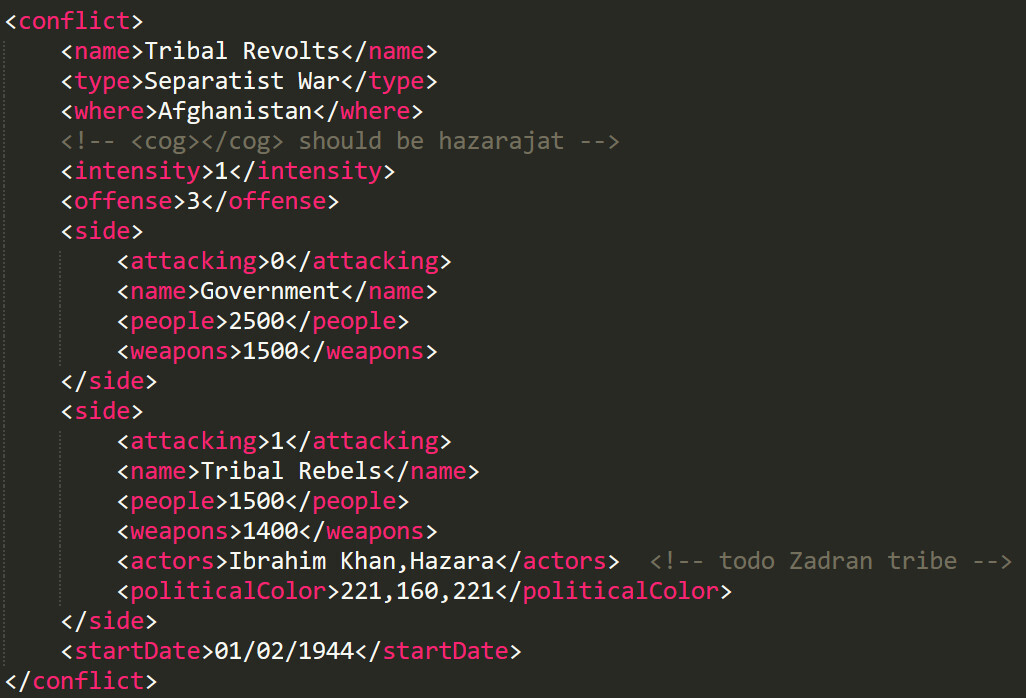

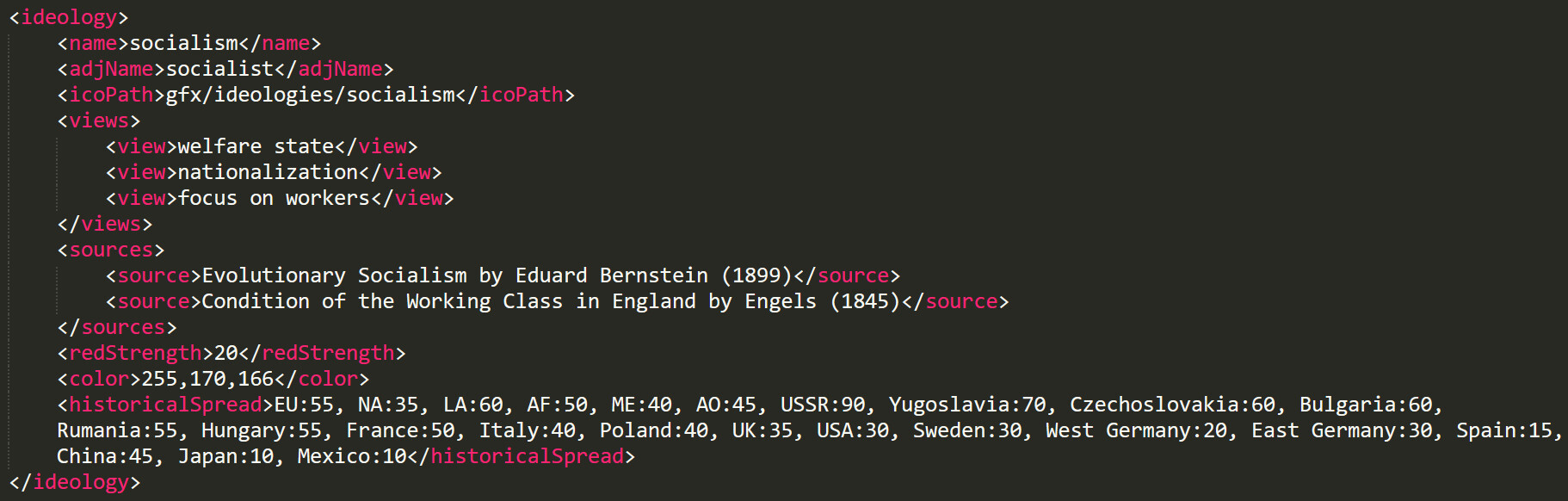
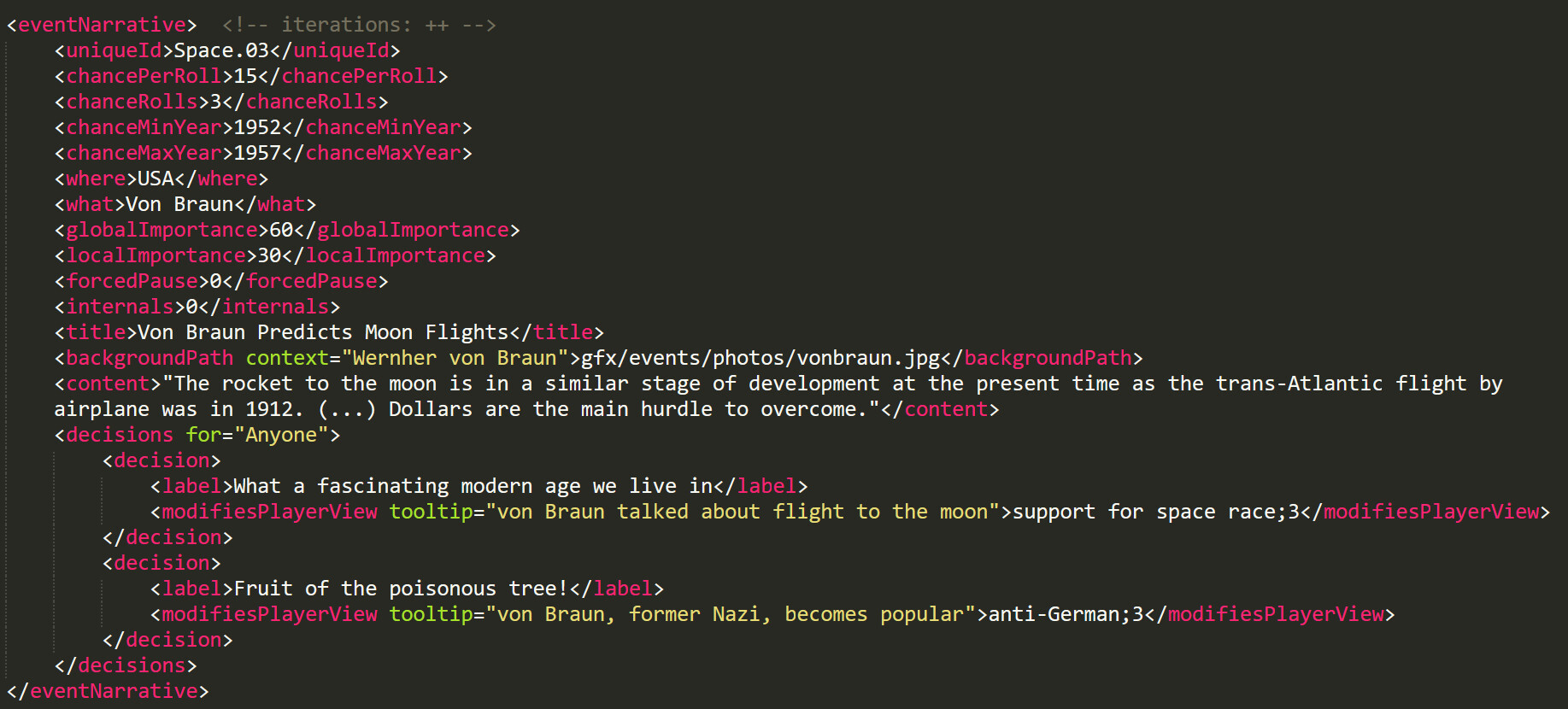
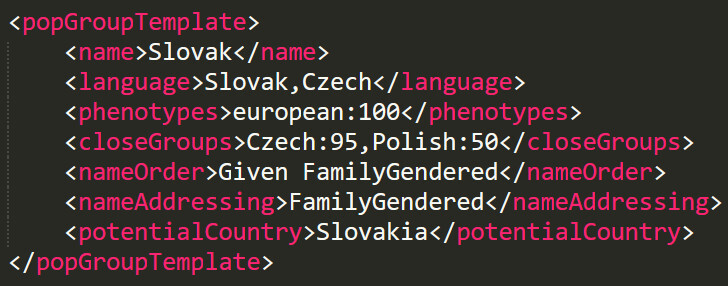
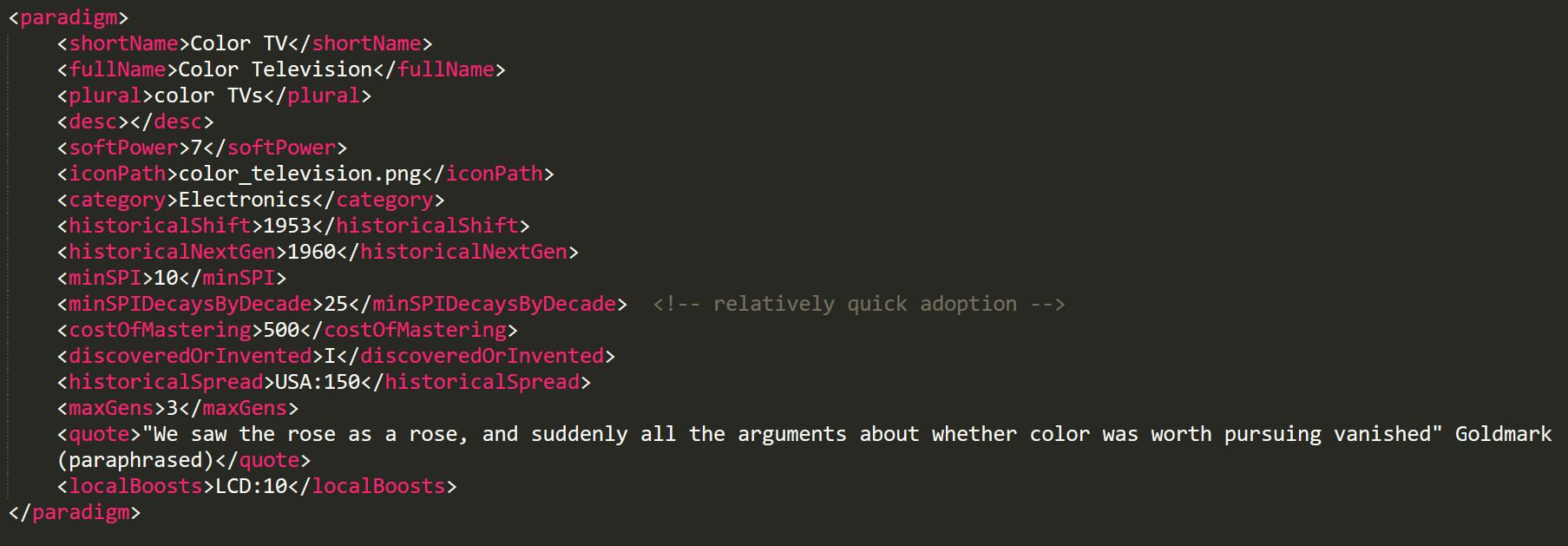 For personal micromodding, you can just open and directly modify any of the files. Here, I modified Tito to actually be a friend of Stalin:
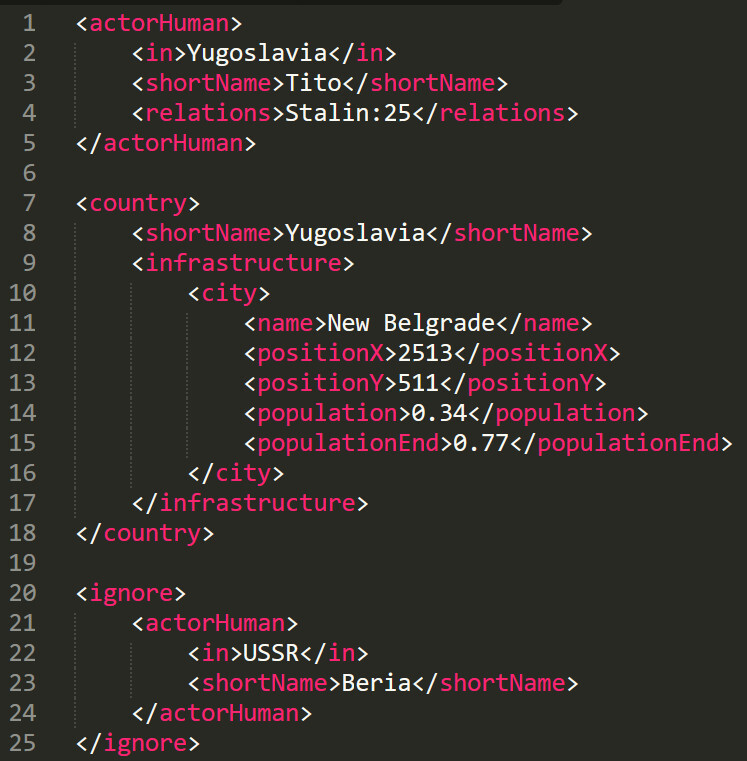
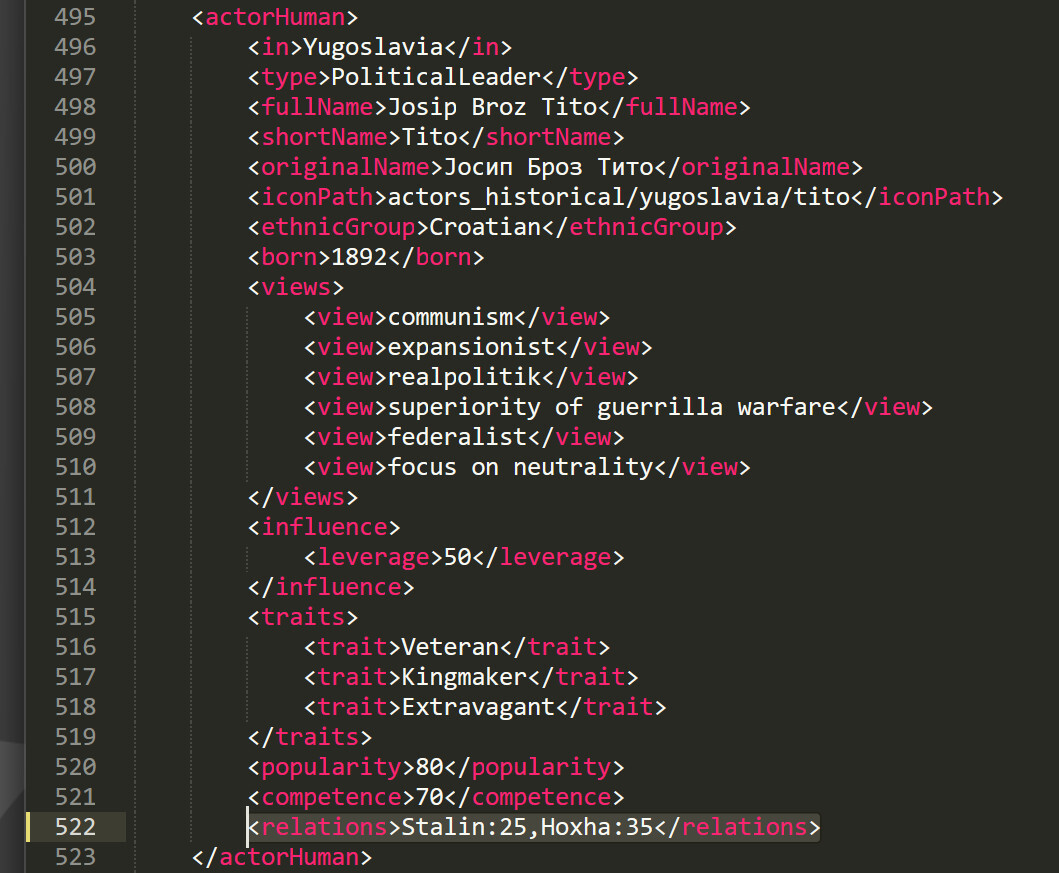 To create a mod that can be easily shared with other players, you can create a new XML file (or multiple files). The game will automatically load them if they exist in one of the subdirectories inside "mods" directory (every subdirectory equals a separate mod). In these files you can overwrite any existing data, add new data in any way or order, or even suggest ignoring previously loaded data.
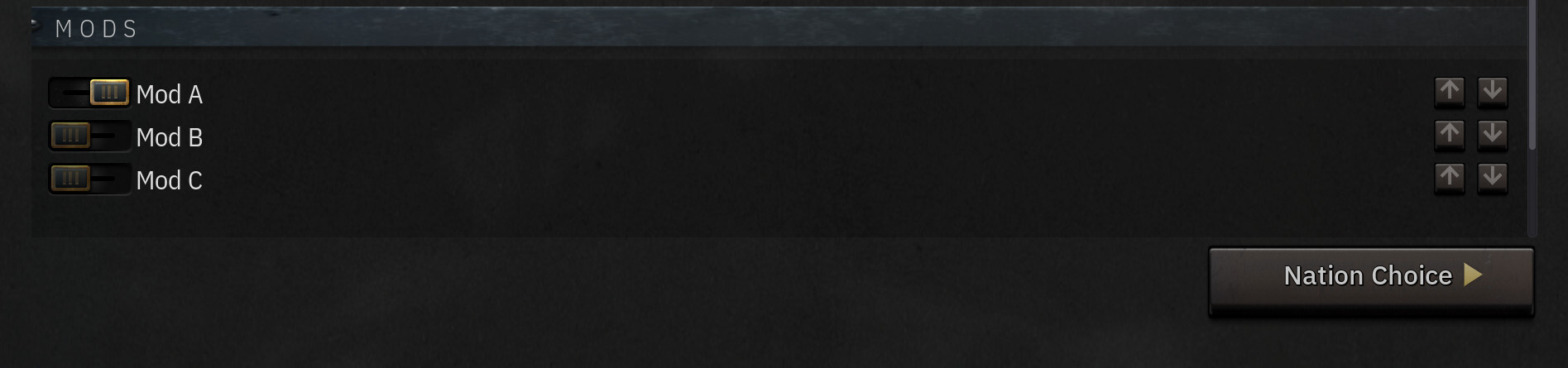
 Since multiple mods can overwrite the same state, you can manage mods directly inside the game, and even for particular campaigns - turning mods on/off and changing the order of loading.
 Nerdy technological detour: why XML, instead of JSON, Lua, or custom format? Out of the all options, XML has the most robust and the most mature loaders that can gracefully handle anything you throw at them...
 ...thanks to solid tag-based syntax. The syntax also makes searching and regexing across thousands of lines actually viable. It also has a few very useful features, such as attributes inside tags or ability to leave comments. Even its main disadvantage in comparison to other formats - that it is less aesthetically pleasing (less concise) - can be resolved simply by using one of the dozens of XML editors that were developed over three decades of existence of this format (and anything more advanced than Windows Notepad already assists you in editing XMLs, for instance by automatically finishing tags).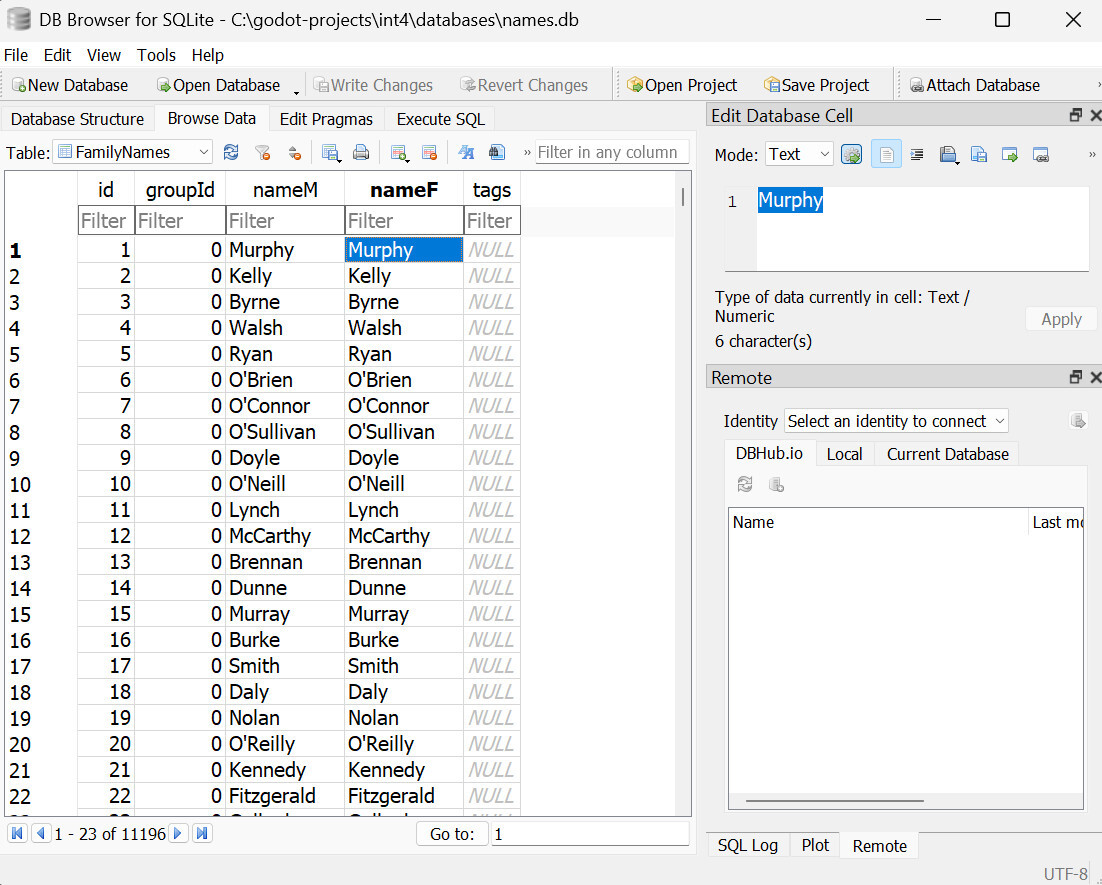
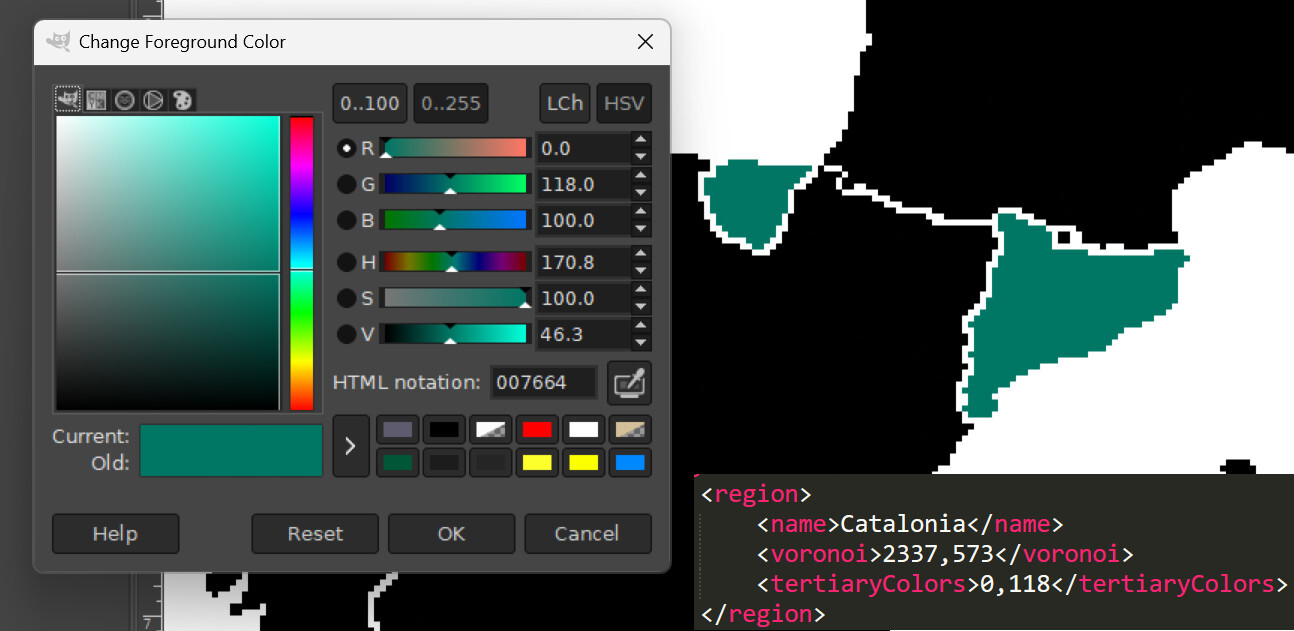
 Data is coded in RGB (red green blue) of pixels. Usually, XML files assign chosen RGBs to chosen entities, for instance tying a region inside a country to specific RGB value, and then PNG files define its distribution on the map:
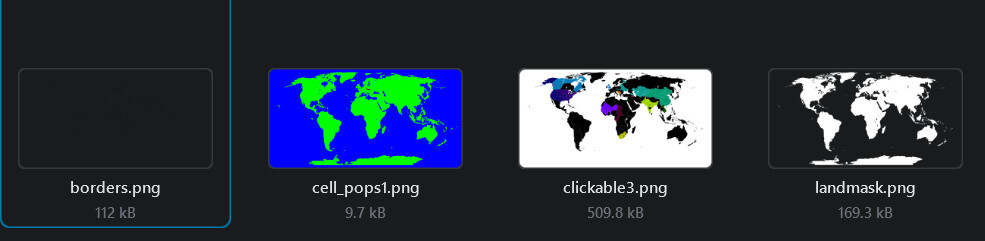
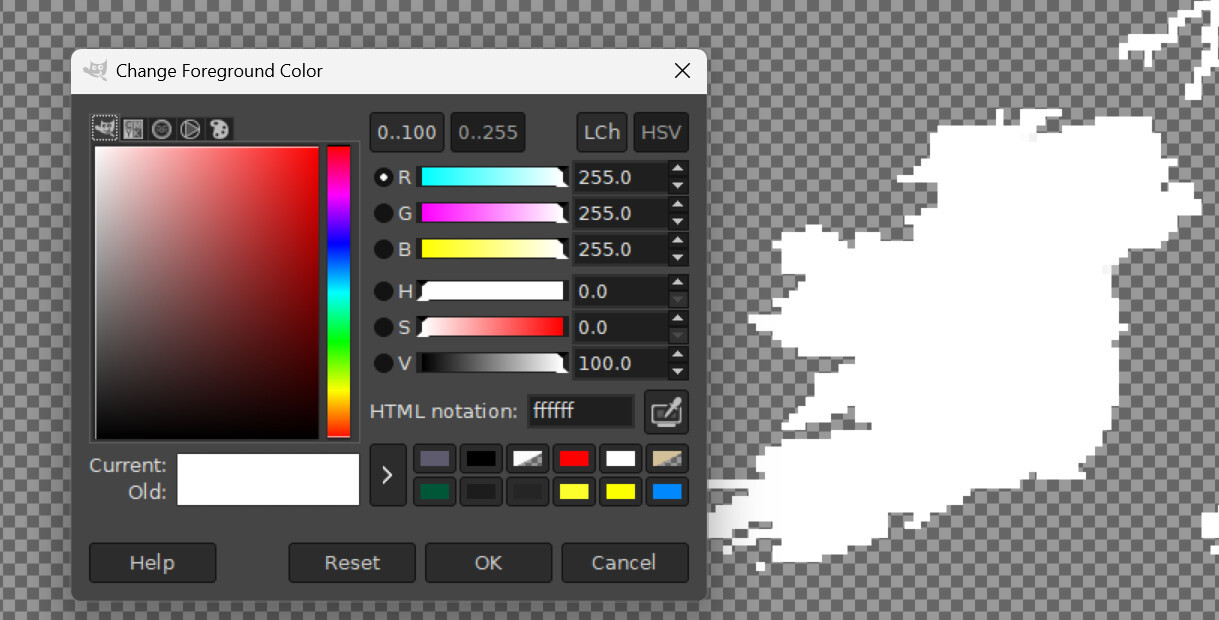
 For basic map data, such as land mass or borders, RGB coding is even simpler: it's just "binary" color-or-transparency.
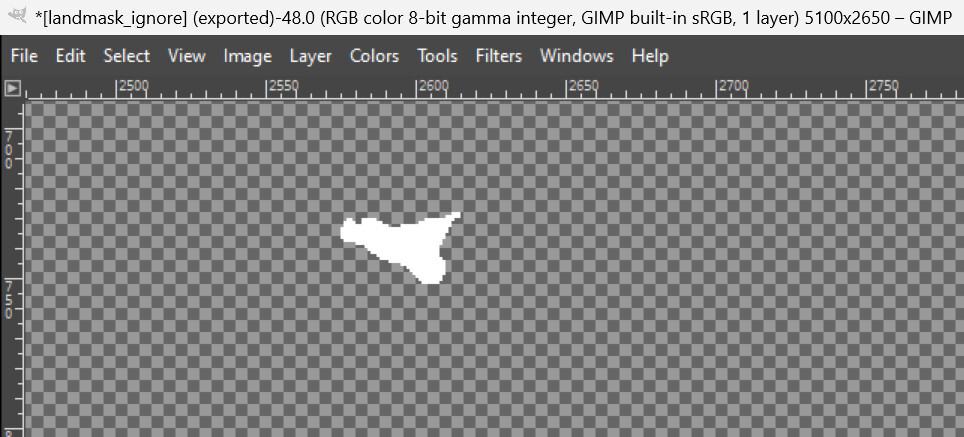
 Similarly to XML files, you can modify PNG files in place or drop new files inside "mods" directory. You can prepare new full replacements for original PNG files (then they just should have the same name as the original file in game files), or tap into overwriting/replacing/ignoring data by appending the intent to the file name:
 In addition to spatial data, visual files such as actor portraits or icons are also stored as PNG files (and JPG in case of larger files, particularly prerendered map tiles) and follow the same modding rules.
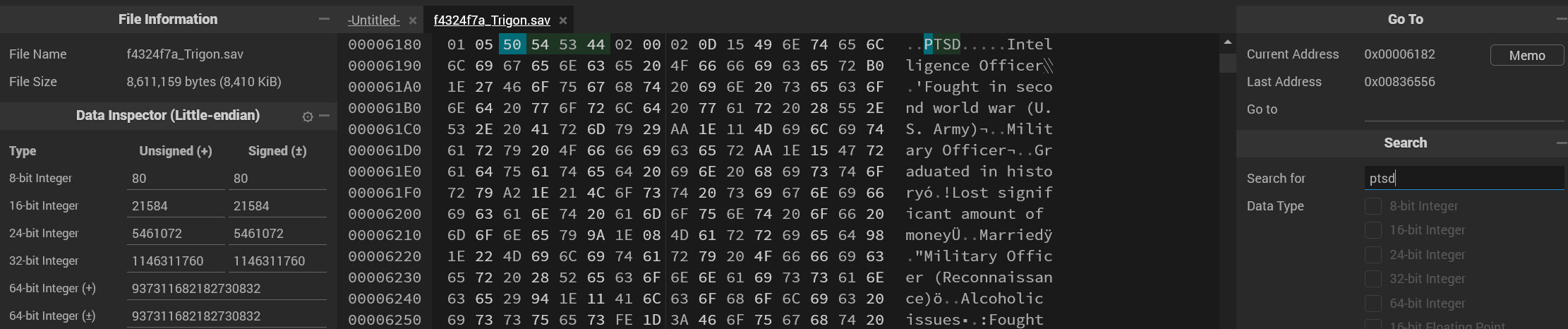 Last but not least: algorithms of AI players are very important for strategy games, and as we indicated in DD#39 they will be moddable - we will dedicate entire separate dev diary to their moddability.
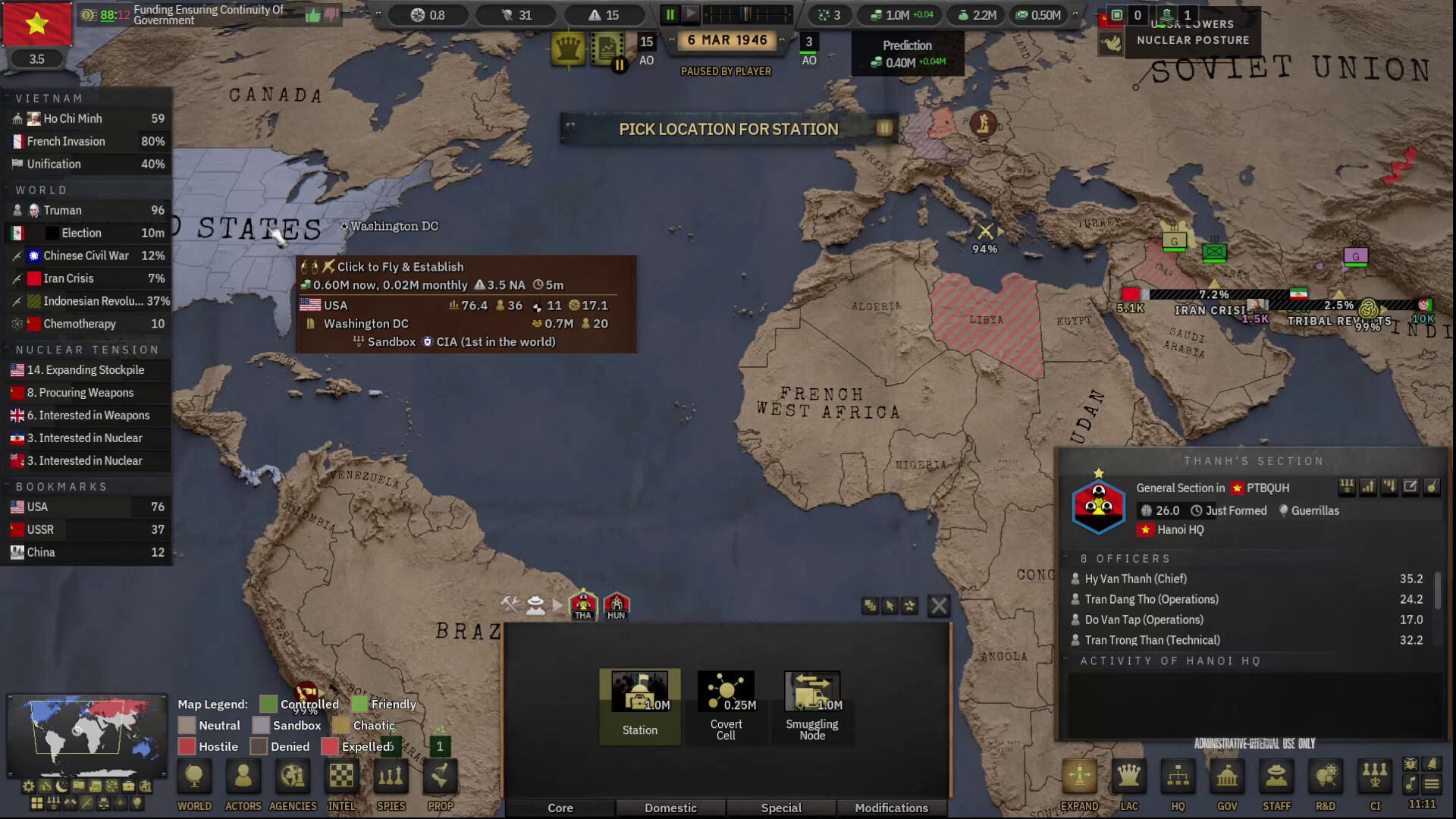 Guerrilla warfare in Iran, in a small battle Azeri militia defeated larger governmental forces:
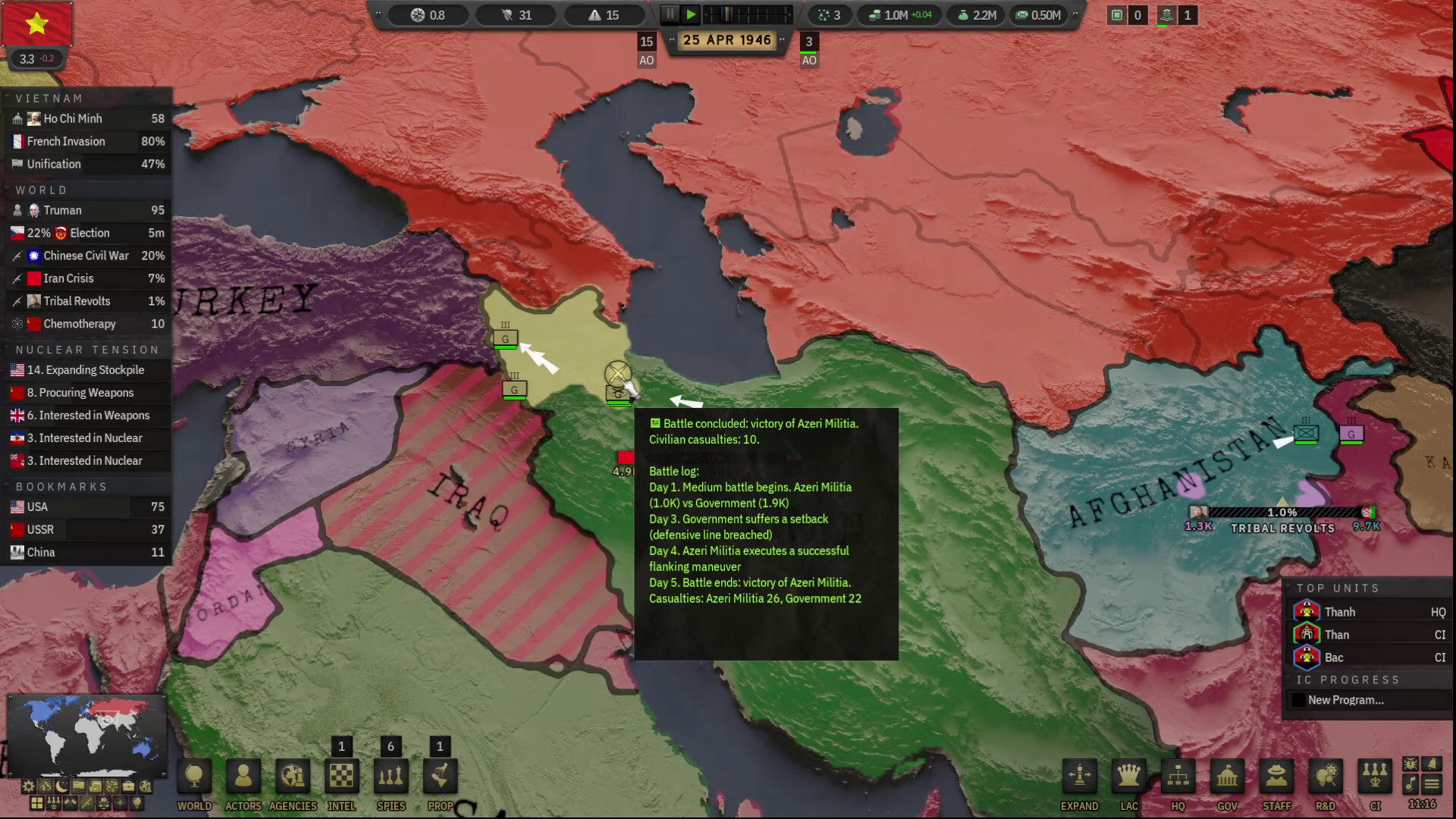 Chinese Civil War progressing in the middle of 1946, while player chooses specialization in guerrilla warfare, which soon will allow them to establish new paramilitary organizations:
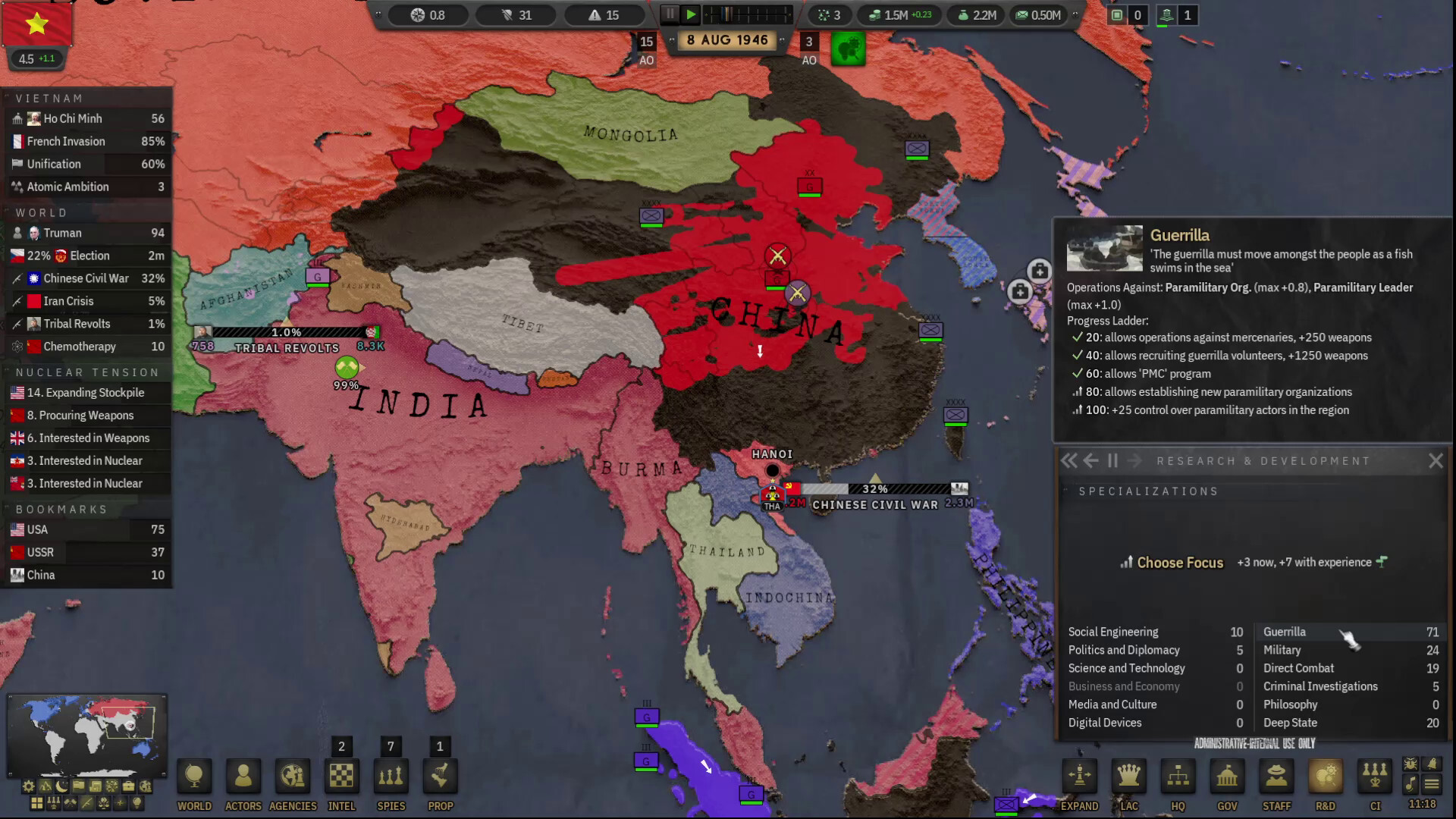 Rare piece of alternate history happened in this campaign: Newfoundland joined the USA.
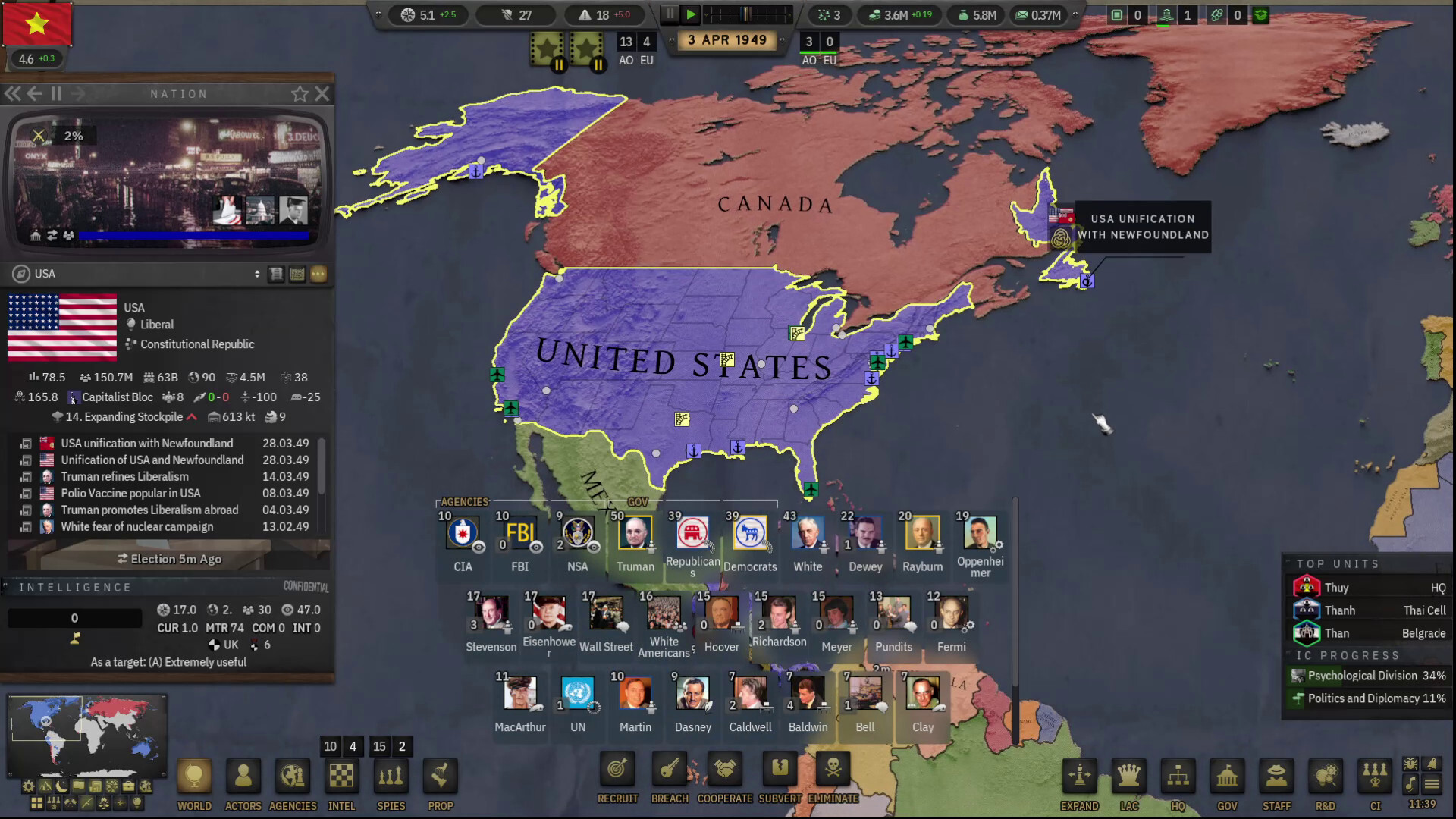 Pacifist politician won presidential election in France...
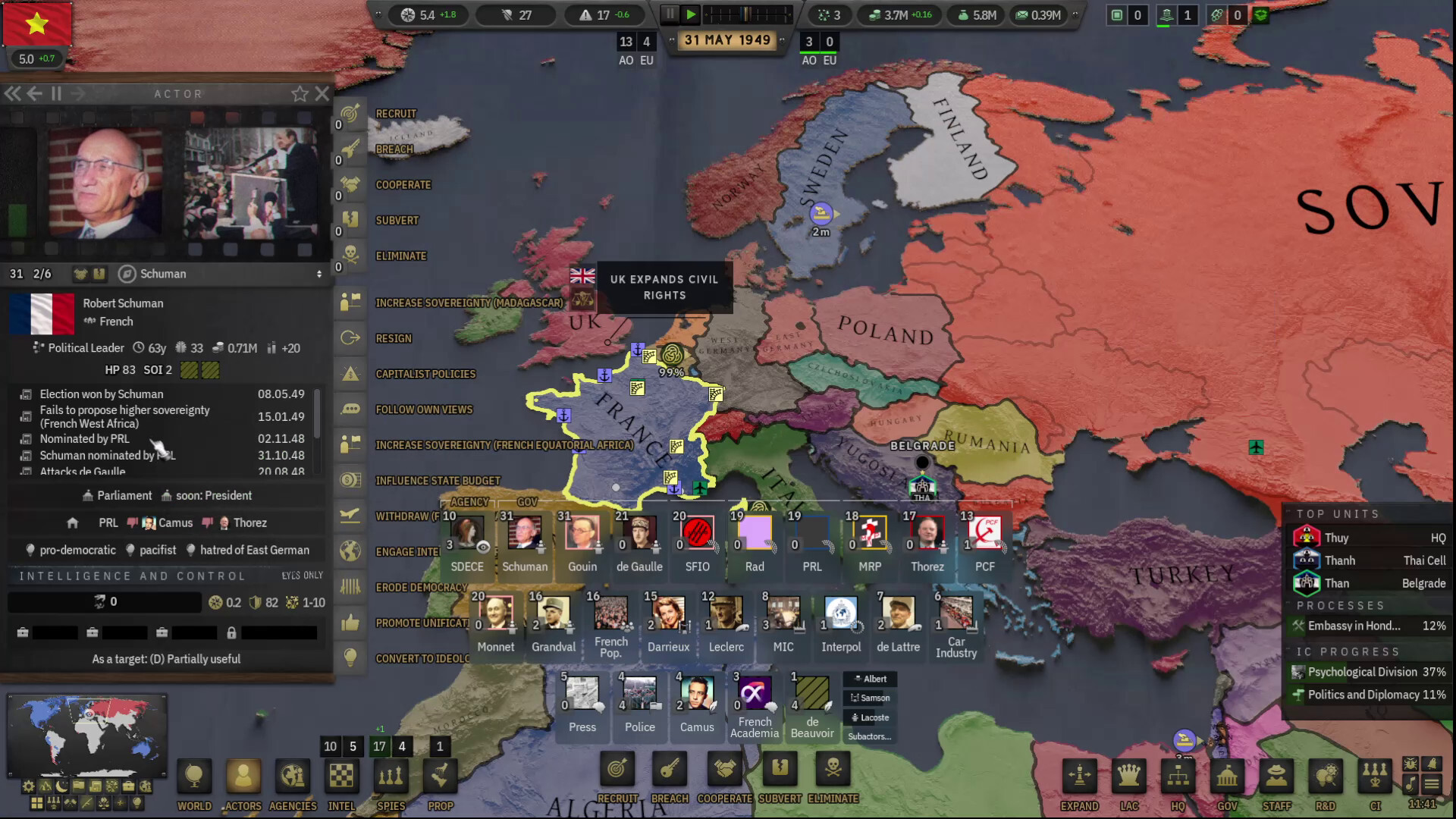 ...which enabled painless unification of the greater Vietnam. In the aftermath, Vietnamese intelligence community thrived, as can be seen for instance from the roster of spies.
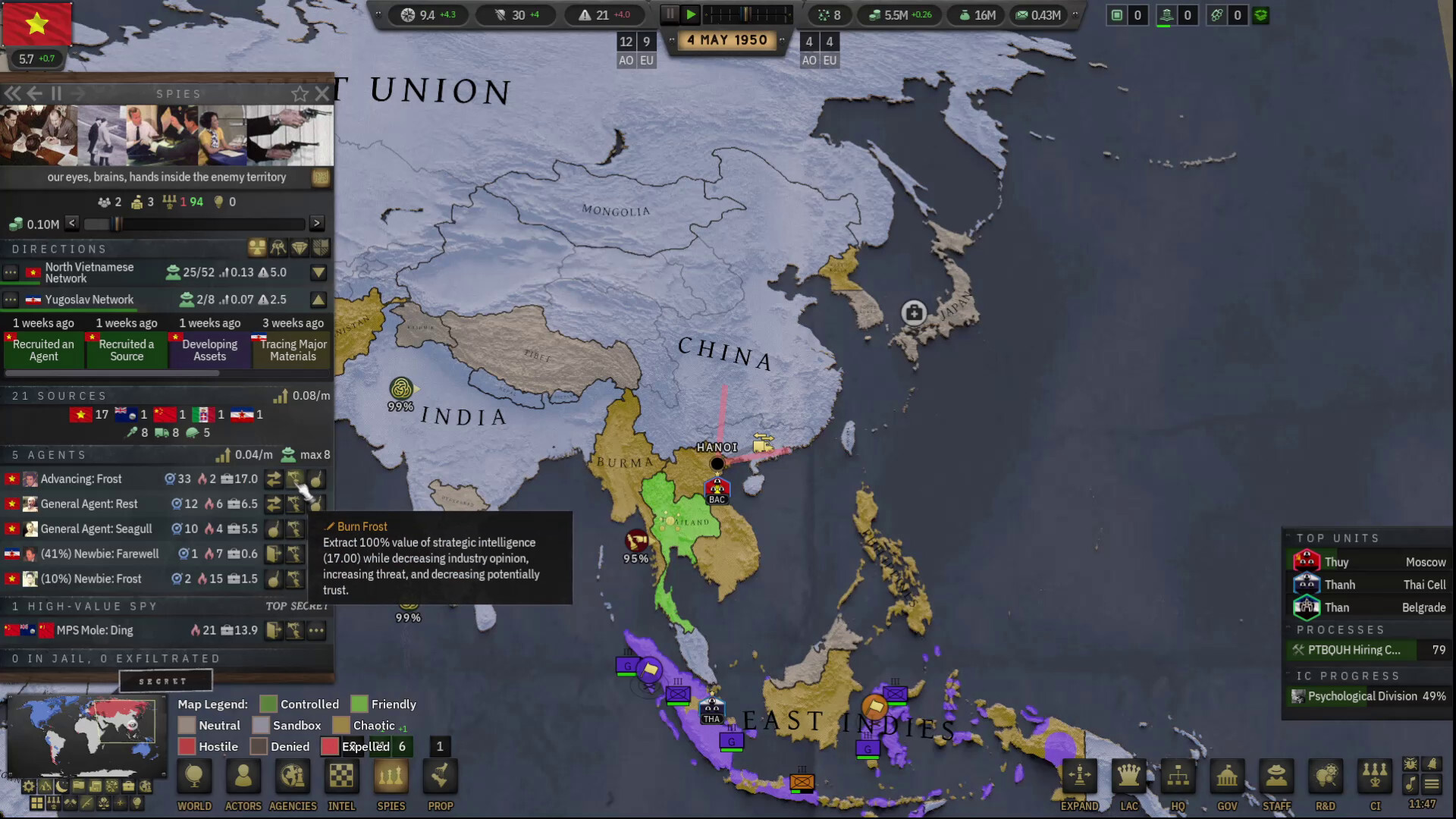 However, there are more influential actors in France than just president - and just mere months later, France decided to retake Vietnam by force.
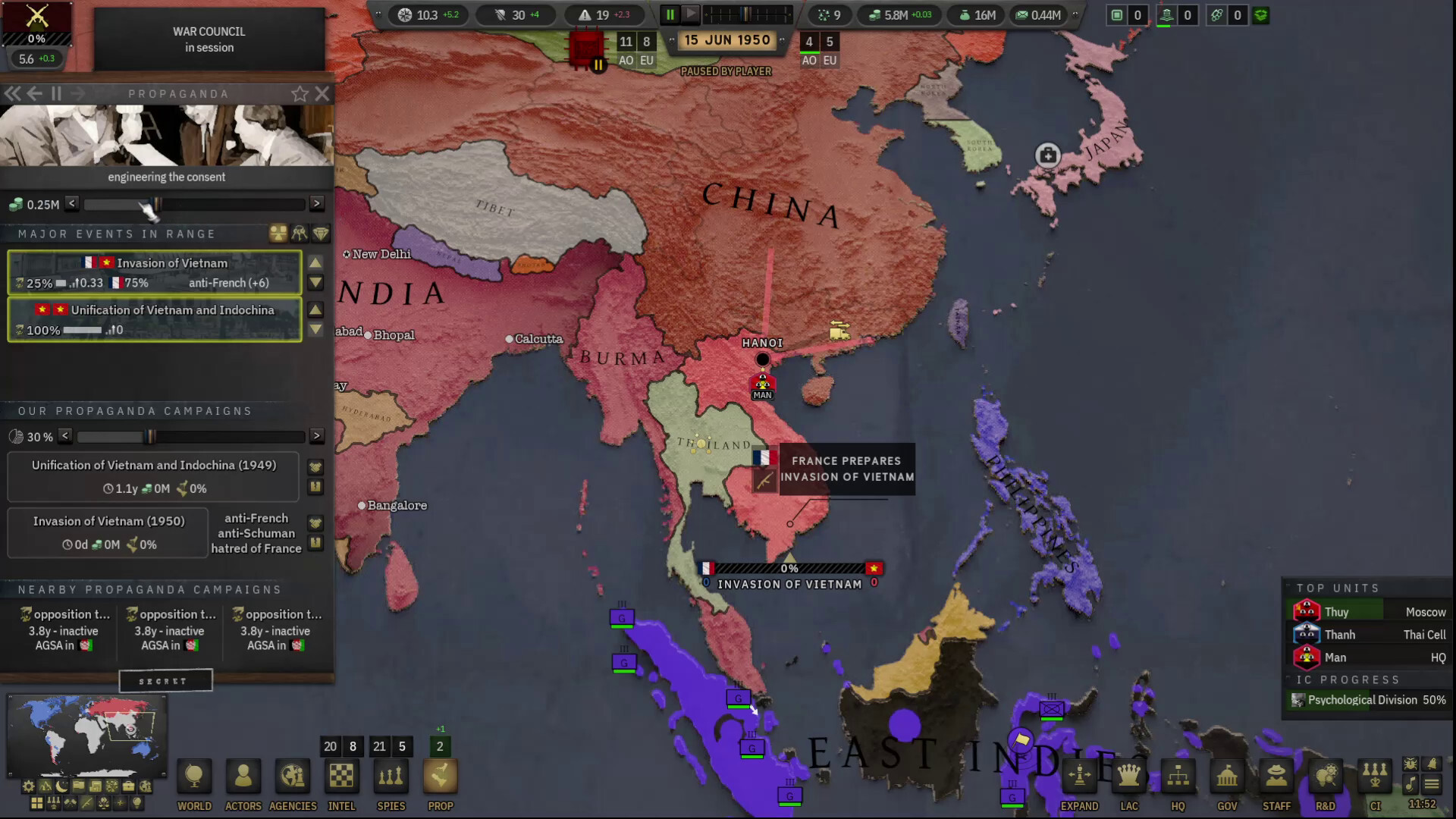 French forces quickly overwhelmed the country. However, this is not always game over in Espiocracy: given favorable circumstances (such as jungles or antagonized population), intelligence community can go underground and immediately begin insurgency.
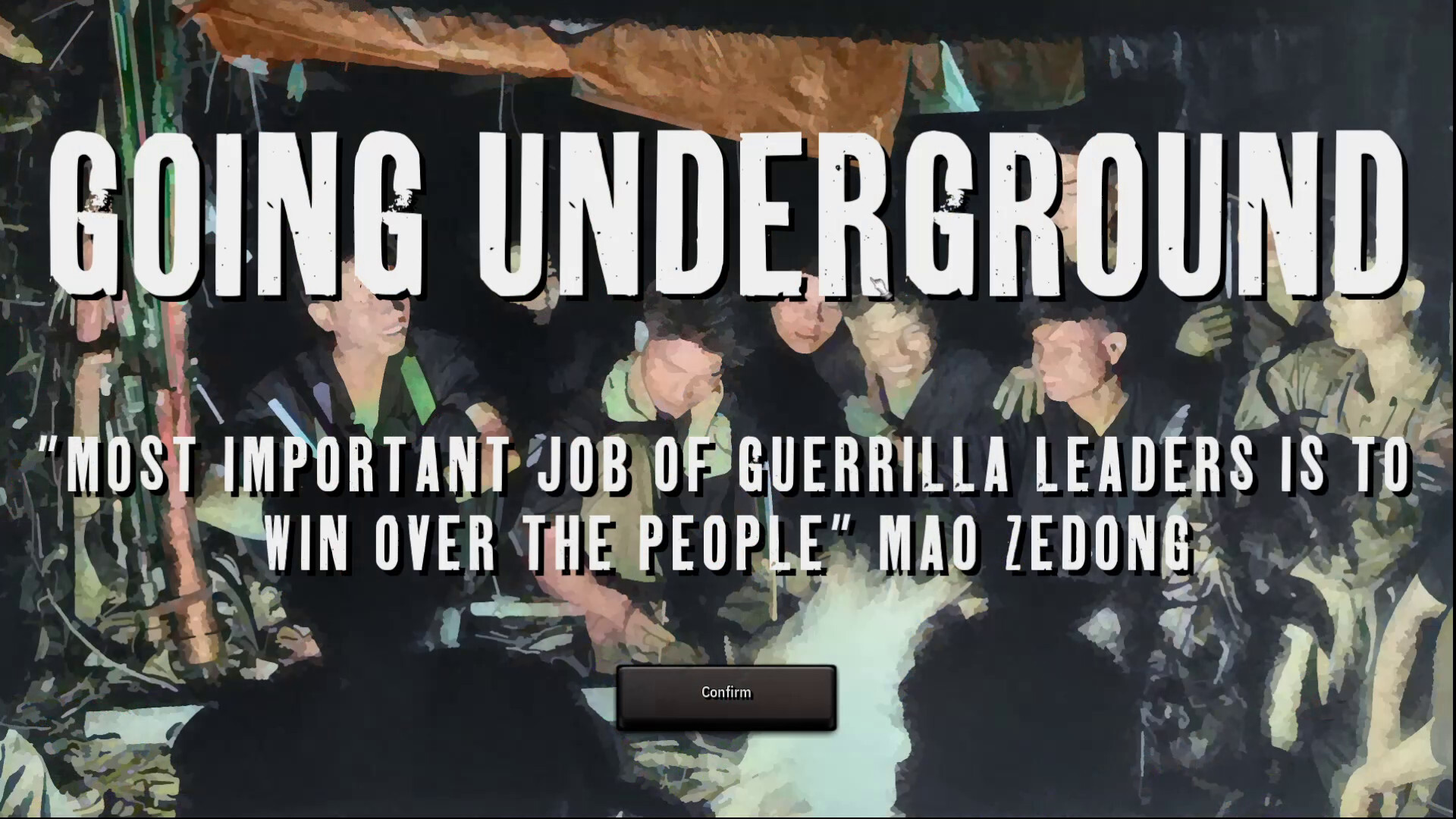 And here's a hint at underground gameplay and ongoing insurgency: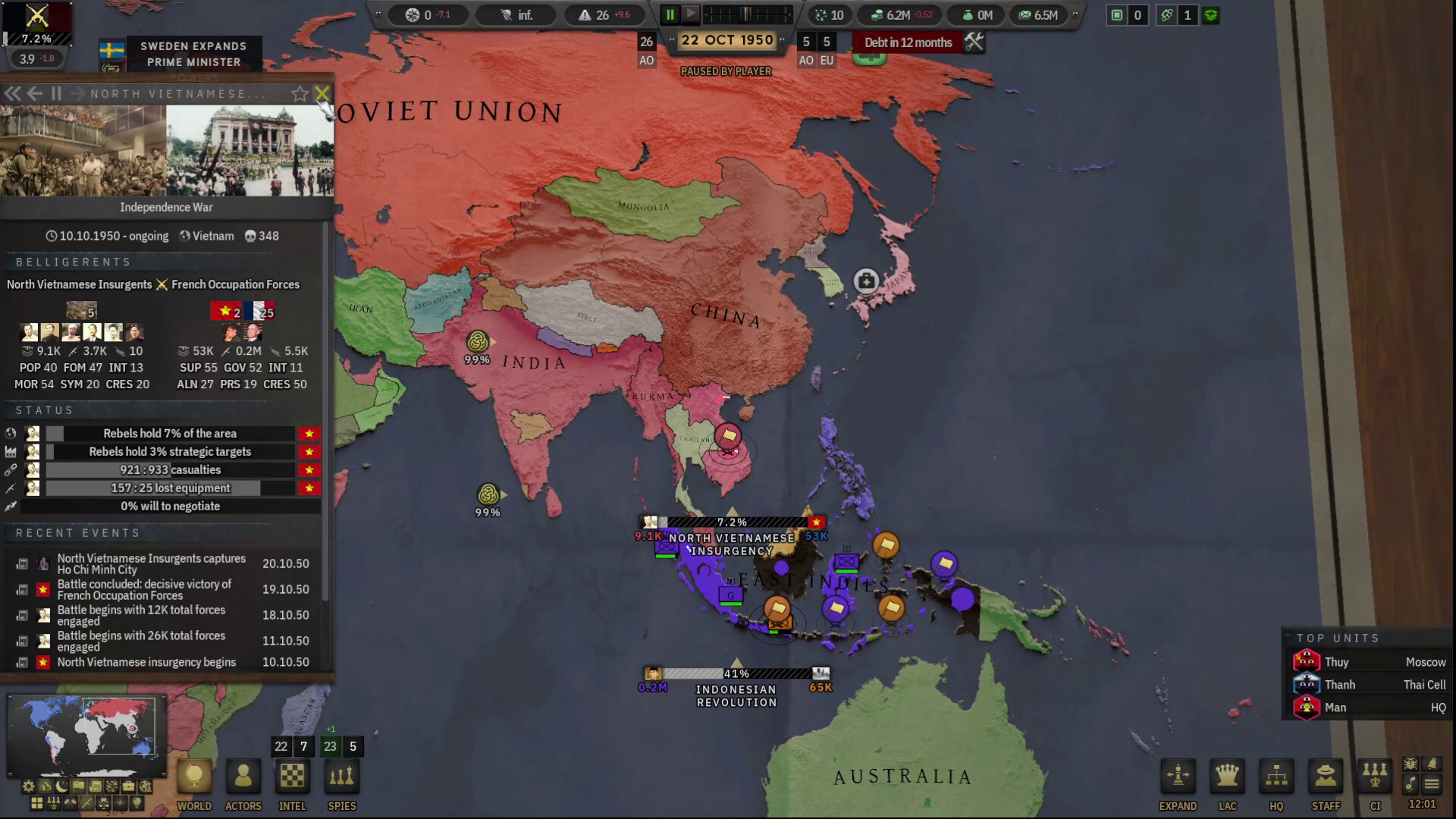



 载入中
载入中

